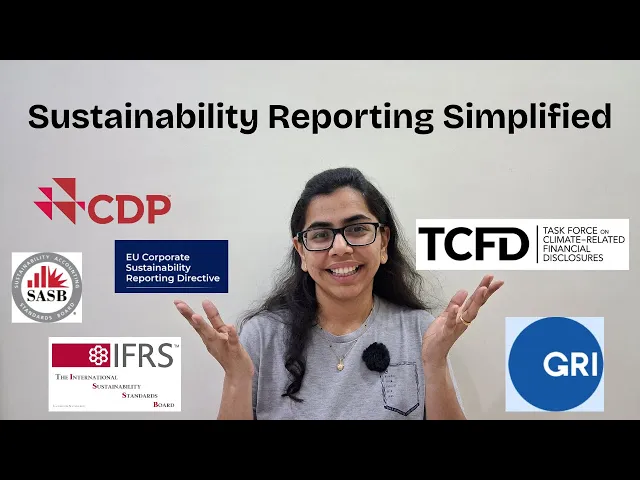
CDP vs Other Frameworks: Case Study Comparisons

Dec 1, 2025
No single framework fits all: compare CDP, ISSB (IFRS S1/S2), CSRD and GRI to choose the right sustainability reporting approach and meet compliance.
How do you choose the right sustainability reporting framework? It depends on your organisation’s goals, regulatory environment, and audience. Here’s a quick overview of four major frameworks:
CDP: Focuses on climate-related disclosures, widely recognised for environmental transparency. Voluntary but aligns with investor needs.
ISSB Standards (IFRS S1 & S2): Integrates sustainability with financial reporting. Covers financial materiality and aligns with TCFD recommendations. Becoming mandatory in some regions.
CSRD: EU regulation requiring detailed ESG disclosures. Enforces strict, mandatory compliance for large companies.
GRI: Offers flexibility to report on a broad range of ESG factors. Voluntary and stakeholder-focused but less structured for climate data.
Each framework has strengths and limitations. Many organisations use multiple frameworks to meet diverse demands. Tools that centralise data and link sustainability metrics with financial systems can simplify reporting and reduce administrative effort.
Sustainability Reporting 2025: GRI, SASB, IFRS, ESRS, TCFD, CDP Explained for Freshers
1. CDP
The CDP, previously known as the Carbon Disclosure Project, is a well-known framework for reporting on environmental matters. While its reputation for promoting transparency in environmental disclosure is established, details about its specific focus, methodology, and how it aligns with financial reporting are not fully explored here. To gain a clearer picture of CDP's disclosure criteria, its approach to materiality, and its practical relevance for organisations in the UK, it would be essential to review official CDP documentation and consult relevant industry resources. Up next, we'll look at how the ISSB Standards address these reporting complexities.
2. ISSB Standards (IFRS S1 and S2)
The International Sustainability Standards Board (ISSB) has introduced two key standards that integrate sustainability directly into financial reporting. While CDP focuses on environmental transparency, the ISSB Standards aim to align sustainability disclosures with financial performance, creating a more unified reporting framework.
Focus and Scope
The ISSB Standards build on the foundation set by CDP, bringing sustainability into the realm of financial reporting. IFRS S1 covers general requirements for disclosing sustainability-related financial information across diverse areas, including environmental, social, and governance factors. On the other hand, IFRS S2 zeroes in on climate-related disclosures, closely following the recommendations of the Task Force on Climate-related Financial Disclosures (TCFD). These recommendations are structured around four pillars: Governance, Strategy, Risk Management, and Metrics and Targets.
While CDP uses a broader framework with thirteen modules covering topics like climate, forests, water security, plastics, and biodiversity, ISSB Standards are designed to provide investors with consistent and reliable sustainability information within financial reports. For companies already addressing CDP’s climate questionnaire, the TCFD-aligned approach of IFRS S2 ensures they’re well-prepared.
Materiality Approach
The ISSB Standards focus on financial materiality, emphasising sustainability issues that could directly affect an organisation’s financial performance or position. This approach is narrower than CDP’s dual-perspective materiality, which considers both financial and environmental impacts.
Under the ISSB framework, companies must link sustainability issues to their financial outcomes. For instance, a manufacturer might report how carbon pricing impacts its capital expenditure or how climate risks disrupt supply chains and revenue. While both frameworks target data relevant to investors, ISSB’s financial materiality lens is more explicit.
Mandatory vs Voluntary
One major distinction is the shift from voluntary to mandatory reporting. CDP remains optional, allowing companies to decide whether to participate. In contrast, ISSB Standards are increasingly becoming mandatory. For example, the EU’s Corporate Sustainability Reporting Directive (CSRD) will enforce compliance from 2025. In the UK, while IFRS S2 is not yet compulsory, the Financial Conduct Authority has indicated future alignment with these standards. Companies already disclosing to CDP are well-positioned for this transition, as CDP’s methodology now aligns with IFRS S2.
Integration with Financial Reporting
A standout feature of the ISSB Standards is their direct integration into annual reports and financial statements. Unlike CDP, which operates as a separate disclosure platform, the ISSB framework merges sustainability and financial data, treating them with equal importance. This approach encourages organisations to embed sustainability into their core strategy, elevating its role within corporate decision-making.
For accounting firms, this integration offers both challenges and opportunities. Financial systems can now automate links between transaction-level data and sustainability metrics, streamlining reporting processes. Learn how ISSB reporting fits into a financially-integrated strategy that bridges finance and sustainability teams.
The ISSB framework also aligns with established standards like TCFD, the Climate Disclosure Standards Board (CDSB), the Sustainability Accounting Standards Board (SASB), and the Value Reporting Foundation's Integrated Reporting Framework.
One key difference is in performance evaluation. Unlike CDP’s benchmarking scores, ISSB Standards require standardised, non-comparative sustainability disclosures. Next, we’ll explore how the ISSB’s approach sets itself apart in practical application.
3. Corporate Sustainability Reporting Directive (CSRD)
The Corporate Sustainability Reporting Directive (CSRD) is a regulation introduced by the European Union to make sustainability reporting a legal requirement for businesses. Unlike voluntary frameworks such as CDP, CSRD aims to create a consistent and standardised approach for organisations to report on environmental, social, and governance (ESG) issues, linking these non-financial aspects with traditional financial disclosures.
Overview
CSRD brings structure to how companies report on sustainability topics like climate impact, resource consumption, and other ESG factors. This directive marks a move towards more transparency and accountability in corporate sustainability efforts.
Materiality Approach
One key difference with CSRD is its approach to materiality. While voluntary frameworks often allow organisations to decide what to report based on their priorities, CSRD is expected to enforce a more thorough and systematic evaluation of material sustainability issues.
Mandatory vs. Voluntary
Unlike voluntary systems such as CDP, CSRD introduces legally binding requirements for sustainability reporting. Companies must adhere to strict disclosure standards, and failure to comply could lead to penalties. This mandatory framework reflects a growing regulatory push to embed sustainability into the core of corporate reporting practices.
Integration with Financial Reporting
A standout feature of CSRD is how it integrates sustainability data into annual financial reports. This ensures that disclosures are automated, audit-ready, and seamlessly aligned with financial data. For instance, platforms like neoeco simplify this process by combining financial metrics with ESG data, helping businesses stay compliant with the directive.
The next section will explore how these regulatory-driven requirements compare with the more flexible Global Reporting Initiative framework.
4. Global Reporting Initiative (GRI)
The Global Reporting Initiative (GRI) offers a voluntary framework that helps organisations share information about their environmental, social, and governance (ESG) impacts. Unlike CDP, which focuses specifically on climate-related data, GRI is more flexible, covering a wider range of sustainability topics. This flexibility allows companies to customise their reports based on what matters most to their stakeholders. However, this broader scope often means that climate data reported under GRI may not be as detailed as the more structured frameworks like CDP, ISSB, or CSRD. This distinction highlights the different strengths and limitations of these frameworks, which we’ll explore further in the next section.
Advantages and Disadvantages
When it comes to sustainability reporting frameworks like CDP, ISSB standards, CSRD, and GRI, each brings its own focus and approach to the table. For instance, CDP zeroes in on climate-related disclosures, while ISSB standards aim to bridge sustainability data with traditional financial reporting. On the other hand, CSRD and GRI take a broader view, addressing a wider range of ESG (Environmental, Social, and Governance) factors. Each framework has its upsides and challenges, depending on how it aligns with an organisation's goals.
Choosing the right framework hinges on several factors: regulatory requirements, the scope of information needed, and the expectations of key stakeholders. While some frameworks are optional, others are legally required. This variety in approaches often leads organisations to seek integrated solutions to meet diverse demands.
To tackle the complexities of using multiple frameworks, many organisations adopt a multi-framework strategy to cater to varied stakeholder needs. For example, platforms like neoeco offer tools that link sustainability metrics with financial data. By automating the mapping of transactions to standard emissions categories, such solutions simplify the reporting process and lighten the administrative load of juggling multiple data streams.
Conclusion
CDP, ISSB, CSRD, and GRI each serve distinct purposes, tailored to different scopes, audiences, and compliance needs. CDP zeroes in on climate-related disclosures, aligning closely with investor priorities. ISSB standards connect sustainability with financial reporting, making them particularly useful for organisations already producing detailed annual reports. CSRD, with its legal backing in the EU, addresses a broader spectrum of ESG factors. Meanwhile, GRI takes the widest view, focusing on the interests of a diverse range of stakeholders beyond just investors.
Deciding which framework suits your organisation depends on your specific situation. For EU-based companies, CSRD compliance is mandatory. If climate risk is a pressing concern for your investors, CDP or ISSB might be a better fit. Organisations prioritising engagement with a wide array of stakeholders often opt for GRI. Many organisations, however, find themselves reporting under multiple frameworks, which can create significant administrative challenges. This makes a unified data strategy not just helpful but necessary.
To manage compliance across these frameworks effectively, it’s crucial to identify overlapping data requirements and shared metrics. Instead of approaching each framework as an isolated task, centralising your sustainability data can streamline reporting. This reduces duplicate efforts and minimises inconsistencies across various reports.
For accounting and finance teams dealing with these demands, tools like neoeco provide a practical solution. These platforms integrate seamlessly with financial systems such as Xero, Sage, and QuickBooks, automatically mapping transactions to recognised emissions categories under frameworks like GHGP, ISO 14064, SECR, and UK SRS. By adopting a "one system for all rules" approach, you can avoid the hassle of juggling multiple frameworks or maintaining countless spreadsheets. Plus, the built-in compliance confidence of these tools ensures finance-grade accuracy that auditors can trust.
FAQs
What are the best ways for organisations to manage the complexities of using multiple sustainability reporting frameworks?
Managing multiple sustainability reporting frameworks can feel overwhelming, but a well-organised strategy can make a world of difference. The first step? Pinpoint the frameworks that matter most to your industry and stakeholders - think CDP, SECR, or ISO 14064. Once you've identified them, focus on a core set of metrics that overlap across these frameworks. This way, you can cut down on repetitive work and make data collection much smoother.
Tools like neoeco can take things a step further. By connecting directly with your financial data, neoeco automates the process of mapping transactions to recognised emissions categories. This means no more juggling endless spreadsheets. You'll not only save time but also produce accurate, audit-ready reports, ensuring compliance is simpler and more reliable. It’s a smart way to manage sustainability reporting with less hassle and greater confidence.
How does financial materiality in ISSB Standards differ from the broader materiality approach used by frameworks like CDP and GRI?
Financial materiality under ISSB Standards zeroes in on factors that could have a notable impact on a company's financial performance or position, catering specifically to the needs of investors and financial stakeholders. On the other hand, frameworks like CDP and GRI take a wider view, addressing environmental, social, and governance (ESG) topics that either influence or are influenced by the organisation, even if they don't directly affect financial outcomes.
This difference highlights how ISSB Standards are closely tied to financial reporting, while CDP and GRI aim to serve a broader audience, including regulators, customers, and local communities. Many organisations opt to use a mix of these frameworks to satisfy the demands of both investor-driven reporting and broader sustainability goals.
What is the impact of the CSRD on companies outside the EU, and how can they prepare for similar regulations in their regions?
The Corporate Sustainability Reporting Directive (CSRD) mainly targets companies operating within the EU. However, its influence often extends beyond EU borders, particularly for businesses with significant operations, supply chains, or partnerships in the region. These non-EU companies might need to align with CSRD standards to maintain business relationships or meet specific reporting expectations.
For organisations outside the EU, getting ready for similar regulations in their own regions is a wise move. Sustainability reporting standards are becoming more common across the globe. Using established frameworks like the GHG Protocol or ISO 14064, which reflect global best practices, can help businesses stay ahead of the curve. Platforms such as neoeco make this process easier by combining financial and carbon data to create accurate, audit-ready sustainability reports. These reports are tailored to meet recognised standards, helping businesses ensure compliance and prepare for the future.