
How Emission Factors Impact Carbon Calculations
Nov 27, 2025
Emission factors are crucial for accurate carbon accounting, ensuring reliable reporting and compliance with sustainability frameworks.
Emission factors are the backbone of carbon accounting. They convert activities like fuel consumption or electricity use into measurable CO₂e emissions. Without them, calculating an organisation’s carbon footprint would be unreliable. Here's what you need to know:
What are emission factors? They act as conversion rates, linking activity data (e.g., electricity usage) to emissions.
Why are they important? They ensure accurate, consistent, and compliant reporting under frameworks like GHGP, SECR, and UK SRS.
How do they work? Emissions = Activity Data × Emission Factor.
Why use updated factors? Outdated data leads to errors, non-compliance, and misrepresentation of emissions progress.
Tools like neoeco simplify this process by automating calculations, ensuring precision and reducing manual errors.
Using the right emission factors ensures accurate reporting, builds trust with stakeholders, and supports effective carbon reduction strategies.
What Are Emission Factors?
The Basic Definition
An emission factor is a tool used to estimate greenhouse gas emissions by multiplying it with measurable activity data, such as fuel consumption, electricity usage, or financial spending. Essentially, it acts as a conversion rate, translating everyday activities into quantifiable carbon emissions.
These factors are usually expressed in units like kilograms of CO₂e per kilowatt-hour (kg CO₂e/kWh) for electricity or per litre for fuels. The "e" in CO₂e stands for "equivalent", meaning the value accounts for multiple greenhouse gases - such as carbon dioxide, methane, and nitrous oxide - combined into a single comparable metric.
By drawing on life cycle assessments and empirical data, emission factors incorporate emissions from processes like extraction, production, transport, and usage into a standardised format. This consistency allows organisations to convert operational data into reliable emissions estimates.
How Activity Data Connects to Emission Factors
Activity data serves as the foundation for calculating emissions. It includes details about an organisation's operations, such as the amount of fuel burned, electricity consumed, or money spent on specific services. When this data is paired with an emission factor, it reveals the associated greenhouse gas emissions through a straightforward formula:
Emissions = Activity Data × Emission Factor
For instance, direct emissions (Scope 1) can be calculated by applying emission factors to fuel usage data. Indirect emissions (Scope 2), which come from purchased electricity, are determined by multiplying electricity consumption by the corresponding grid emission factor. When physical data isn’t available, spend-based emission factors - measured per unit of currency - can estimate Scope 3 emissions, such as those related to accommodation or logistics expenses. The reliability of a carbon footprint calculation hinges on both the quality of the activity data and the precision of the emission factors used.
Common Emission Factor Examples
Emission factors can vary significantly based on the type of activity and regional specifics. For example, factors for electricity, diesel, or natural gas are derived from nationally recognised methodologies that account for local fuel mixes, generation technologies, and evolving regulations. Similarly, transport-related emission factors differ depending on the mode of travel - air travel generally has a higher factor than rail due to its greater carbon intensity. In cases where direct data isn’t available, spend-based factors enable organisations to estimate emissions based on financial transactions.
Using up-to-date, region-specific emission factors is essential for accuracy, as generic averages can misrepresent local carbon intensities. Tools like neoeco help automate this process by matching financial data with the latest emission factors under frameworks like the GHGP and ISO 14064. This ensures precise, audit-ready reporting and supports meaningful action on climate goals.
How Emission Factors Are Created and Updated
Which Bodies Set the Standards
Emission factors are developed through detailed scientific studies and are aligned with both national and international carbon reporting frameworks. In the UK, government agencies release annual conversion factors that reflect updates in energy production, advancements in technology, and changes in fuel composition. On a global scale, guidelines from organisations like the Greenhouse Gas Protocol (GHGP) ensure a standardised approach to measuring emissions across various scopes. The process of establishing these factors is intricate, requiring ongoing expert analysis and revisions. This continuous refinement is key to maintaining the precision needed for modern carbon accounting.
Why Using Current Factors Matters
Keeping emission factors up to date is crucial for accurate carbon accounting. As energy grids become greener, technologies advance, and fresh data becomes available, emission factors evolve. Using outdated factors can lead to errors and potential compliance risks. For example, as the UK's electricity grid has shifted significantly from coal to renewable energy sources, relying on outdated factors would inflate emissions figures and fail to reflect an organisation’s actual environmental impact.
Accurate and current emission factors play a vital role in crafting effective carbon reduction plans. When organisations track their progress towards net zero goals, using the latest factors ensures that reported improvements are genuine and measurable. This accuracy builds trust with investors, clients, and other stakeholders, reinforcing the credibility of sustainability efforts. Staying updated with the latest factors is also essential for the precise, audit-ready reporting discussed earlier.
For accounting firms handling multiple clients, manually updating spreadsheets with new emission factors every year can be both laborious and prone to mistakes. Tools like neoeco simplify this process by automatically connecting financial transactions to the latest carbon data, adhering to frameworks like GHGP, SECR, and UK SRS. Incorporating updated factors into your sustainability approach ensures reliable, future-proof reporting that’s ready for audits.
2025: Carbon Expert Series: Selecting emission factor databases for carbon accounting
How Emission Factors Affect Reporting Accuracy
Getting carbon calculations right heavily relies on the accuracy of emission factors. Even with perfect activity data, using the wrong emission factor can skew your carbon footprint results. The following sections explain how these factors are determined, updated, and why they are critical for accurate reporting.
Generic vs Region-Specific Factors
Emission factors vary widely in their precision. Generic factors provide broad, averaged values, while region-specific factors account for the actual carbon intensity of local energy grids, transport systems, and supply chains.
Take electricity as an example. A generic global factor might estimate carbon intensity at 0.5 kg CO₂e per kWh. However, the UK's electricity grid, supported by renewable energy sources, typically has a lower intensity. Using a generic factor could overstate emissions, whereas UK-specific factors - such as those published in the government’s annual conversion dataset - offer a more precise reflection of the environmental impact.
Transport emissions further highlight this issue. A delivery van travelling 100 kilometres in the UK operates under different fuel standards and driving conditions compared to one in another country. These regional differences are crucial for meeting compliance requirements. Frameworks like SECR and UK SRS mandate that calculations reflect actual UK conditions. Automated tools can improve accuracy by applying these region-specific factors, ensuring calculations meet the high standards often referred to as "LCA-level accuracy".
Dealing with Uncertainty in Emission Factors
No emission factor is perfect. They all carry some uncertainty due to variations in source data, measurement limitations, and the need to average different conditions. For instance, while a factor might state 2.5 kg CO₂e per litre of diesel, the actual emissions could fluctuate based on fuel quality or engine performance. These small variations can add up when applied across numerous transactions.
The aim isn’t to eliminate uncertainty but to manage it effectively. This involves using recognised databases that document uncertainty ranges, applying consistent methods, and being clear about any limitations. Specialised software can standardise how factors are applied, reducing the risk of errors. By integrating directly with financial systems like Xero, Sage, or QuickBooks, such tools ensure reliable activity data. Features like smart matching minimise mistakes from manual input, while audit-ready controls and policy hubs provide a clear verification trail. This transparency is vital when figures are reviewed by stakeholders or auditors. Expert advice can further help organisations apply factors consistently.
Managing these uncertainties is essential because even small errors in emission factors can have significant consequences.
What Happens When Factors Are Wrong
Using incorrect emission factors can create serious problems. Reporting frameworks like GHGP, SECR, and UK SRS require calculations to be based on current, recognised emission factors. Relying on outdated or unsuitable factors can invite regulatory scrutiny, lead to penalties, and necessitate expensive rework - especially for businesses handling multiple client reports.
Inaccurate data can also result in poor decision-making. Companies use carbon footprint data to set science-based targets and make credible climate commitments. If the data is flawed, efforts and resources may be misallocated, focusing on areas that aren’t the main sources of emissions.
The most damaging outcome, however, is a loss of trust. Investors, clients, and other stakeholders increasingly scrutinise sustainability claims. Figures that don’t hold up under verification can quickly erode credibility. Without the right expertise, organisations may struggle to choose appropriate factors or establish reliable practices. Dependence on outdated methods, like spreadsheets or informal calculations, only heightens these risks.
To address these challenges, a systematic approach is key. Specialised carbon accounting software can link financial transactions to accurate carbon data, ensuring compliance with current frameworks. These tools also offer audit-ready controls, integrate with financial systems to maintain data consistency, and provide real-time updates for continuous verification. This is especially critical for Scope 3 emissions, which often make up a significant portion of an organisation’s total footprint. By adopting such tools, businesses can achieve the precision needed to meet both regulatory and stakeholder expectations.
Using Emission Factors in Your Carbon Accounting Process
Accurately applying emission factors requires dependable databases, aligning factors with specific activities, and leveraging automation tools. Below is guidance to help accountants streamline this process.
Main Emission Factor Databases
For UK reporting, several trusted databases provide emission factors. Choosing the right one ensures compliance and accurate calculations.
UK Government GHG Conversion Factors (formerly BEIS/DEFRA) serve as the primary source for emission factors in the UK. This dataset is freely accessible and includes factors for a wide range of activities, such as vehicle types, fuel grades, and electricity consumption based on the UK’s grid mix.
IPCC Guidelines offer global emission factors, mainly used for national greenhouse gas inventories. These are broader and often applied when region-specific data isn’t available. They’re particularly useful for international operations or activities not covered by UK-specific factors.
ISO 14064 Standards don’t provide emission factors directly but outline the framework for quantifying and reporting emissions. Their emphasis on transparency and consistency makes it essential to document the chosen factors and explain the reasoning behind their use.
For UK accountants, the government’s annual conversion factors should generally be the starting point for calculations.
How to Select and Apply the Right Factors
Once you’ve identified reliable databases, the next step is selecting the correct factor for each activity.
Choose the most specific factor available for the activity in question - whether it’s for grid electricity, renewable energy, different transport types, or other categories. For reporting under SECR or UK SRS, always prioritise UK-specific factors over global averages. For example, if a client operates a diesel van in the UK, using the UK government’s diesel factor ensures the calculation reflects local fuel standards and driving conditions.
Timing matters too. Emission factors change over time as energy grids decarbonise or fuel standards improve. Using outdated factors can lead to overstated emissions, misrepresenting progress. Always use the factor that aligns with the activity data and clearly document the source, date, and any assumptions.
Automating Emission Factor Integration with neoeco
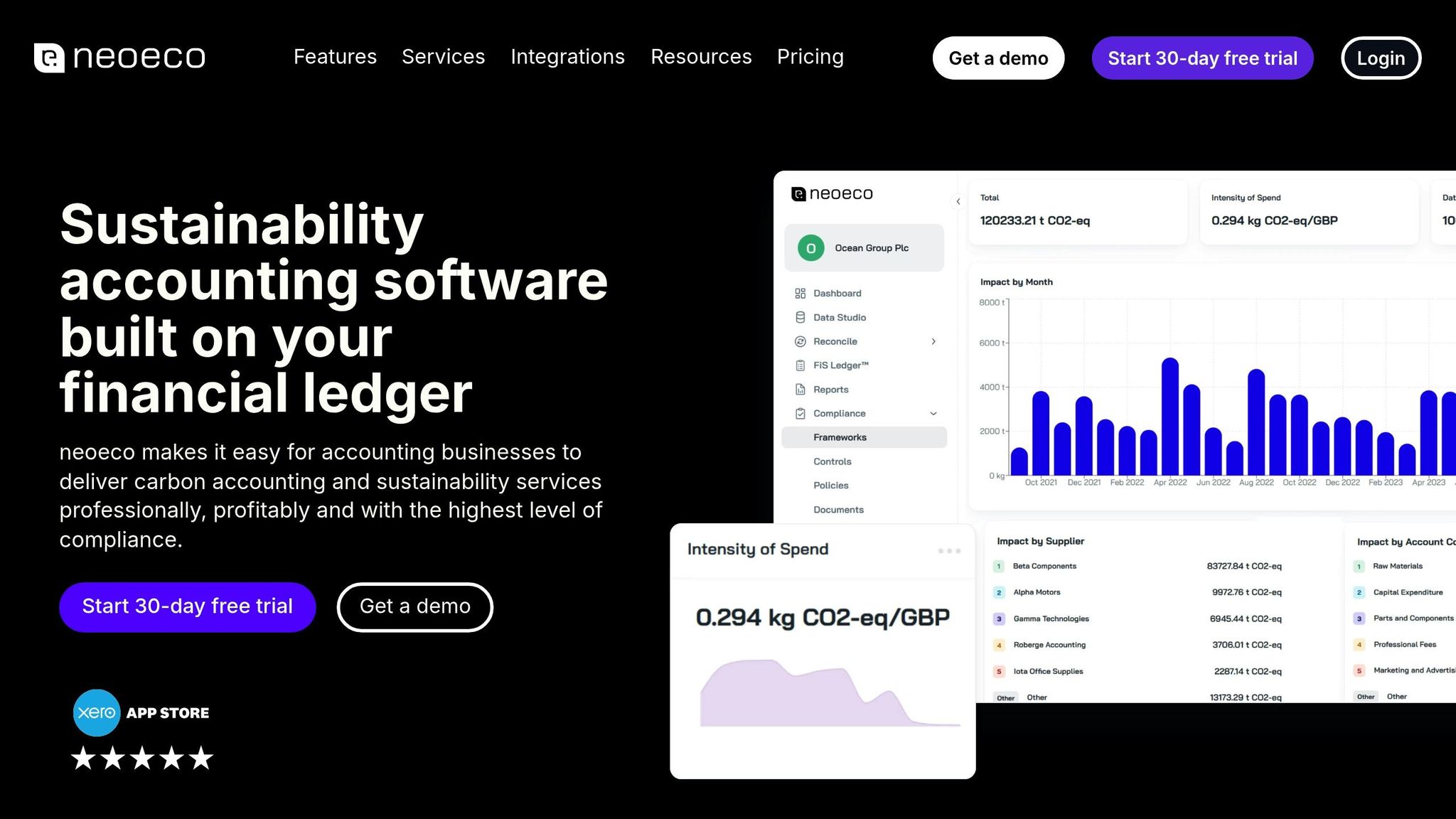
After selecting and applying the correct factors, automation can take over to eliminate manual work and reduce errors.
Manually linking financial transactions to emission factors is time-consuming and prone to mistakes. Automation simplifies this process, ensuring consistency and compliance.
neoeco integrates directly with financial tools like Xero, Sage, and QuickBooks. By connecting to financial data, neoeco removes the need for manual data entry or spreadsheet conversions. Transactions are automatically matched to the correct emission categories, following frameworks such as GHGP, ISO 14064, and UK-specific standards like SECR and UK SRS.
This system delivers precision comparable to detailed life cycle assessments. Plus, it stays updated with regulatory changes - when the UK government releases new conversion factors, neoeco incorporates them automatically.
For accountants, this means less time spent on data management and more on advisory services. The platform also offers audit-ready controls, a secure hub for compliance documentation, and real-time dashboards to track client performance. Reporting tools can generate compliance-ready outputs for frameworks like SECR and UK SRS, complete with your firm’s branding.
neoeco’s approach aligns with Financially-integrated Sustainability Management (FiSM), combining finance and sustainability on one platform. For firms looking to expand into sustainability services, automation eliminates technical hurdles and opens the door to recurring revenue opportunities. Whether you’re managing Scope 1, 2, or 3 emissions, having the right tools ensures accurate application of emission factors with minimal effort.
Conclusion
Emission factors are at the heart of carbon accounting. To meet the demands of clients, auditors, and regulators, it’s crucial to use precise, standardised data and embrace automation for seamless integration.
Relying on outdated or generic factors can undermine both credibility and compliance. The solution lies in focusing on three critical areas: accuracy, standardisation, and automation. Together, these ensure reliable and efficient carbon reporting.
Accuracy hinges on using the most current and specific emission factors. In the UK, this often means relying on the government’s annual greenhouse gas (GHG) conversion factors. Standardisation ensures reports align with frameworks like GHGP, SECR, and UK SRS, making them consistent and comparable. Automation, meanwhile, removes the need for manual processes, reducing errors and freeing up time for higher-value advisory work.
"neoeco makes it easy for accounting businesses to deliver carbon accounting and sustainability services professionally, profitably and with compliance confidence."
neoeco simplifies this process by integrating directly with financial platforms like Xero, Sage, and QuickBooks. Transactions are automatically matched to the correct emission categories using recognised frameworks and the latest conversion factors. When the UK government updates its factors, neoeco seamlessly incorporates them.
For firms tackling sustainability reporting or managing Scope 3 emissions, automation removes technical hurdles, builds confidence, and ensures compliance.
FAQs
Why do emission factors vary by region, and why is it crucial to use region-specific data for carbon calculations?
Emission factors vary between regions because they mirror the distinct energy sources, industrial activities, and environmental characteristics of each area. For instance, one region might depend heavily on coal for electricity generation, while another might utilise a blend of renewable energy sources. These variations play a major role in the carbon emissions linked to energy use.
By using emission factors tailored to specific regions, carbon calculations become more accurate and aligned with local realities. This accuracy is crucial for meeting the requirements of frameworks such as the GHGP, ISO 14064, or UK-specific standards like SECR and SRS. Tools like neoeco simplify this process by automatically aligning transactions with the appropriate emissions categories, ensuring both accuracy and compliance without the need for manual intervention.
Why is it important to use up-to-date emission factors in carbon accounting?
Using old emission factors in carbon accounting can throw off your calculations, potentially leading to an incorrect assessment of your organisation's carbon footprint. This can damage the reliability of your reports and might even result in failing to meet regulatory requirements, such as SECR or UK SRS.
To avoid these pitfalls, make sure to use current and standardised emission factor databases. Tools like neoeco make this easier by automatically linking your transactions to recognised emissions categories using the latest frameworks. This ensures your reports are accurate, audit-ready, and compliant. By maintaining precision and meeting standards, you’ll build trust with stakeholders and secure the long-term success of your sustainability initiatives.
How do tools like neoeco help accounting firms improve carbon reporting accuracy and efficiency?
neoeco takes the hassle out of carbon reporting for accounting firms by automating data collection and aligning transactions with recognised emissions categories, including those outlined in frameworks like GHGP, ISO 14064, and UK-specific guidelines such as SECR and SRS. This means no more spreadsheets or manual calculations - just precise, finance-grade data and audit-ready reports.
By seamlessly integrating with clients' financial data, neoeco simplifies the reporting process, allowing firms to provide professional and compliant sustainability services with ease. Additional tools, such as scenario modelling and custom-branded reports, allow firms to customise solutions for their clients' specific needs, helping both parties stay ahead in an ever-evolving regulatory landscape.