How Smart Meters Simplify Scope 2 Reporting
Nov 19, 2025
Smart meters revolutionise Scope 2 emissions reporting by providing real-time data, simplifying compliance, and enhancing accuracy for businesses.
Smart meters make Scope 2 emissions reporting faster, easier, and more accurate. By providing continuous, real-time energy data, they eliminate manual processes, reduce errors, and create reliable audit trails. This helps companies comply with UK frameworks like the Greenhouse Gas Protocol (GHGP), SECR, and UK SRS without relying on outdated methods like utility bills and spreadsheets.
Key Benefits of Smart Meters for Scope 2 Reporting:
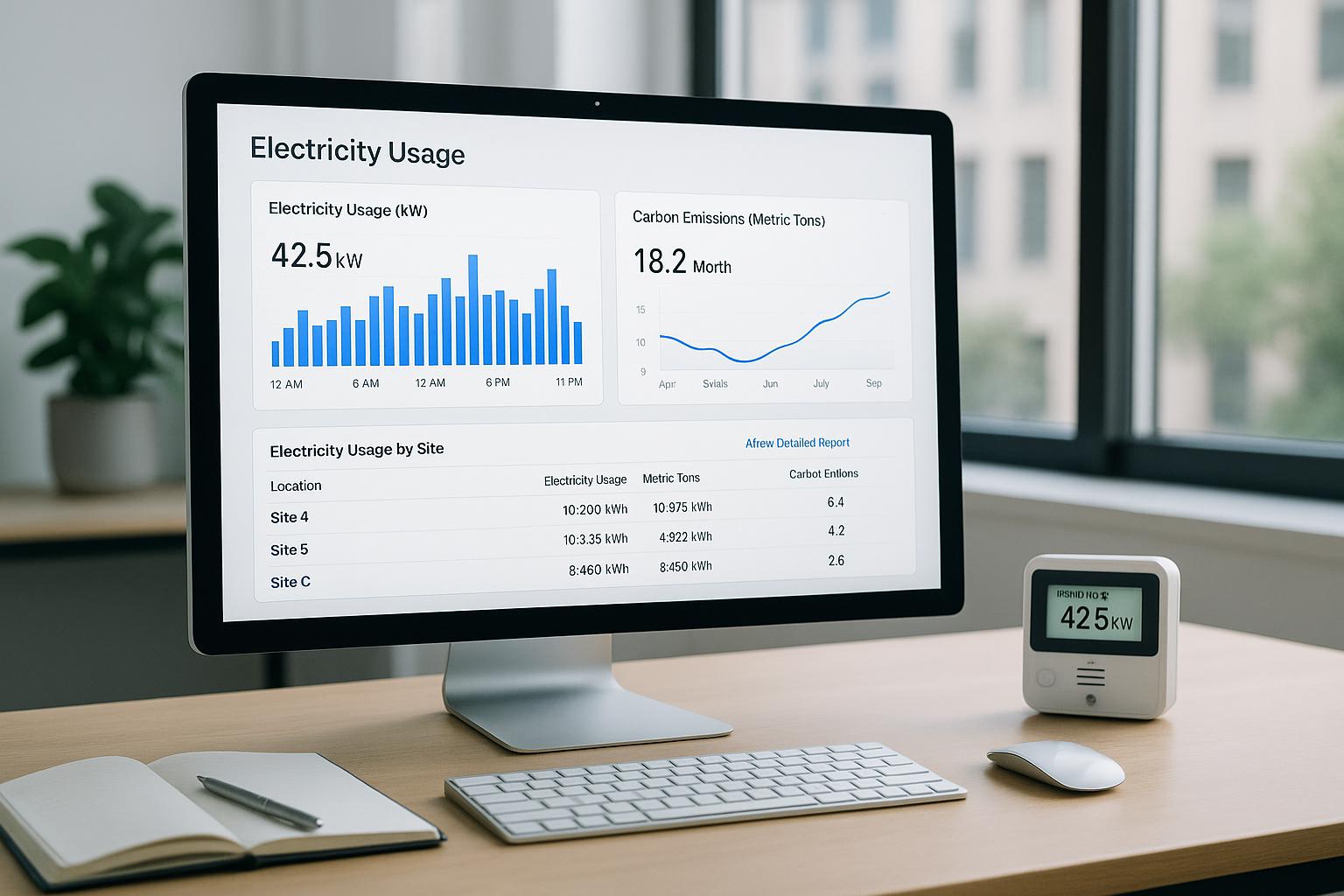
Real-Time Data: Tracks energy use in 15-minute or hourly intervals, offering precise consumption insights.
Improved Accuracy: Removes guesswork, ensuring consistent and reliable data for both location-based and market-based reporting.
Compliance Made Easy: Automatically aligns with frameworks like GHGP, SECR, and UK SRS, with detailed records ready for audits.
Reduced Manual Work: Data flows directly into sustainability software, cutting down on spreadsheets and manual entry errors.
Integration with Accounting Tools: Links energy data to platforms like Xero and QuickBooks, aligning carbon reporting with financial workflows.
Switching to smart meters transforms how companies manage Scope 2 emissions, saving time and ensuring compliance with evolving standards.
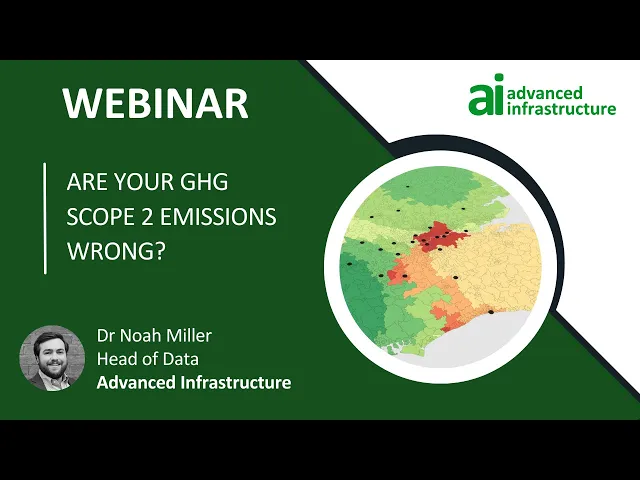
Are your GHG Scope 2 Emissions wrong?
How Smart Meters Solve Scope 2 Reporting Problems
Smart meters tackle the challenges of fragmented data and manual errors head-on. Instead of relying on monthly utility bills or manual data entry, these devices provide continuous, accurate energy data directly to sustainability systems. This shift simplifies data collection and ensures compliance is easier to manage.
Real-Time Energy Data Collection
Smart meters track energy usage in intervals as frequent as every 15 minutes or hourly, offering a detailed view of peak usage times and efficiency trends. This level of precision removes the need for guesswork, providing businesses with exact consumption data for any reporting period.
By standardising data collection across multiple sites, smart meters make it easier to consolidate and compare energy usage from various locations. This eliminates reliance on assumptions or extrapolated data, offering a clear and uniform dataset for reporting purposes.
Meeting Compliance Requirements
Smart meters do more than just improve accuracy - they also simplify compliance. With detailed timestamps and measurements, they create a reliable audit trail that aligns with frameworks like the GHGP, SECR, and UK SRS.
When paired with sustainability accounting software, smart meter data ensures compliance across multiple frameworks simultaneously. As one platform highlights:
"One system for all rules: neoeco keeps up with GHGP, SECR and UK SRS, and more so you never have to learn new frameworks."
The automated nature of smart meter data collection reduces the risk of missing reporting deadlines, which can often result from delays in receiving utility bills. Real-time access to data enables companies to prepare reports well in advance, making the audit process smoother. Additionally, smart meters support dual Scope 2 emissions reporting by providing accurate consumption data for location-based reporting (using regional grid emission factors) and detailed usage patterns that aid in renewable energy procurement for market-based reporting. For more, see how ISSB reporting integrates into a broader financial strategy.
Reducing Manual Work and Errors
By feeding data directly into sustainability systems, smart meters eliminate the need for manual data entry and cross-checking, significantly reducing the chance of human error. Common mistakes, such as transposing numbers or incorrect unit conversions, are far less likely when data is transferred automatically. These systems also include automatic validation checks to identify anomalies or inconsistencies in the data.
This automation dramatically cuts down processing time. Instead of spending hours sifting through utility bills and spreadsheets, accounting teams can focus on analysis and strategic initiatives. Routine tasks like data cleaning and categorisation are handled by the software, with features such as "data is automatically sorted and cleaned" ensuring a smooth workflow.
The benefits extend to audit preparation as well. Smart meter data creates comprehensive digital records that auditors can access directly via reporting platforms, eliminating the need to compile and organise paper bills or other documentation. Compliance tools often include features like:
"Easy auditor access: Invite auditors to view reports and evidence without sending endless emails."
For accounting firms managing multiple clients, smart meter integration revolutionises sustainability reporting. Automated data collection and streamlined processing allow firms to handle larger client portfolios without increasing staff hours, making these services more efficient and scalable.
Connecting Smart Meter Data with Accounting Software
Smart meters become even more impactful when their data is directly linked to sustainability accounting platforms. By integrating smart meter feeds into modern accounting software, businesses can align carbon reporting with their existing financial workflows. This creates a seamless bridge between real-time energy data and financial reporting.
neoeco: Bridging Finance and Sustainability
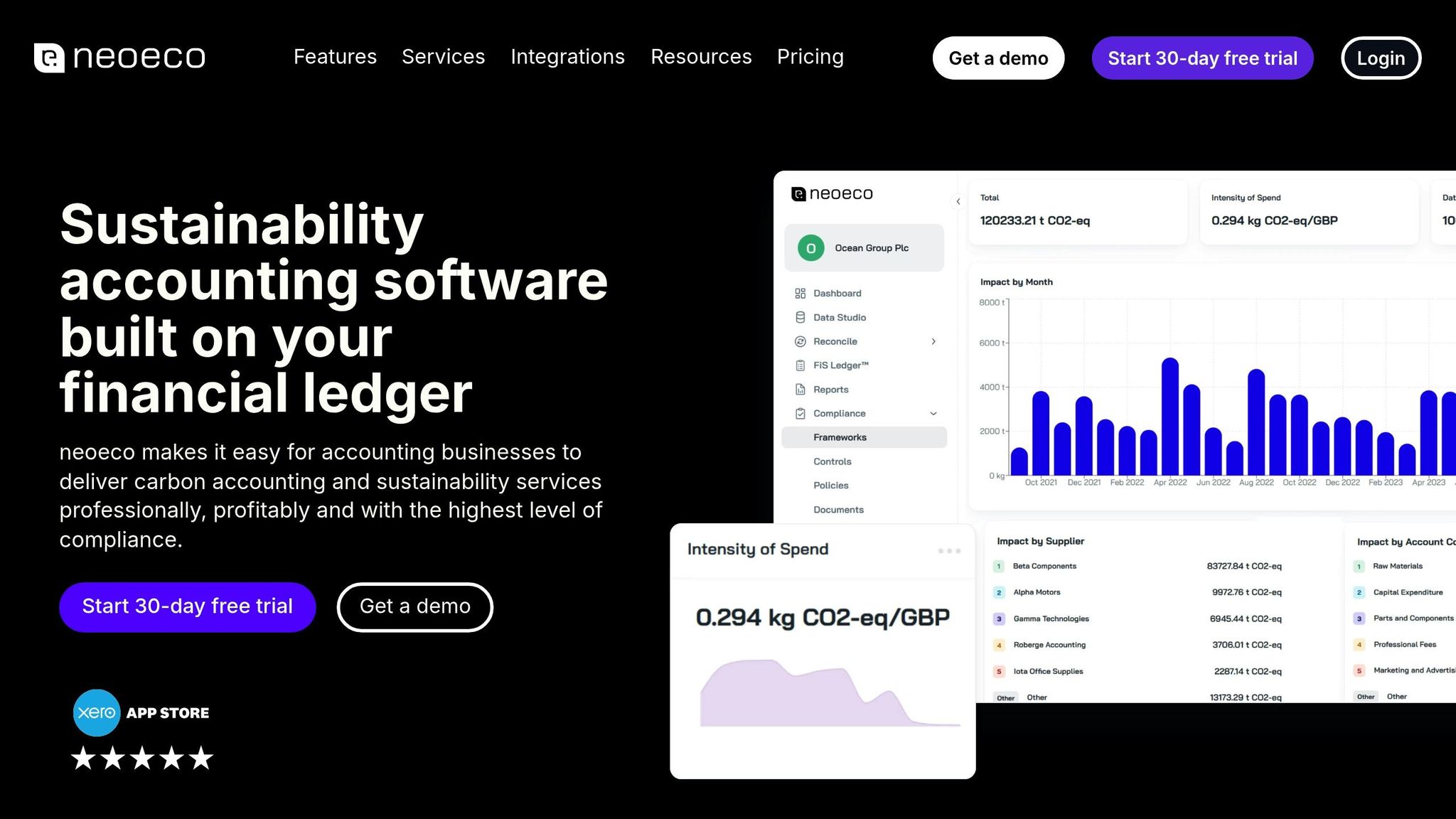
neoeco offers a clear example of how smart meter data can integrate with financial systems to support detailed Scope 2 reporting. The platform connects directly to financial data via tools like Xero, Sage, and QuickBooks. It automatically maps smart meter data to recognised emissions categories under frameworks such as GHGP, ISO 14064, SECR, and UK SRS. This integration links energy data to financial transactions, following the principles of Financially-integrated Sustainability Management (FiSM). By automating this process, neoeco eliminates the need for manual data entry, mirroring the earlier convenience brought by smart meter automation. This allows businesses to approach carbon accounting with the same precision as traditional financial reporting.
Reducing Manual Effort and Spreadsheets
Traditional Scope 2 reporting often involves downloading smart meter data into spreadsheets, categorising it by time periods, and manually converting it into carbon equivalents using emission factors. neoeco simplifies this process by automating the conversion of smart meter data into audit-ready reports. Its compliance-ready templates can generate reports for frameworks like SECR and UK SRS in just minutes. The platform also includes automated validation checks and live checklists to ensure reports are accurate, consistent, and ready for audit, even when handling data from multiple client sites.
Staying Ahead in Sustainability Reporting
With streamlined data flows, these integrations are vital for keeping up with changing reporting standards. As standards evolve, neoeco adapts automatically, maintaining compliance with frameworks like GHGP, SECR, and UK SRS. This removes the need for businesses to constantly learn new standards, ensuring sustained compliance and audit readiness. Additionally, neoeco enables firms to produce professional, branded client reports, enhancing credibility in sustainability reporting and creating opportunities for recurring revenue. This integrated system also supports broader sustainability goals, such as managing Scope 3 emissions, where energy procurement choices influence indirect emissions reporting across supply chains.
Smart Meters vs Traditional Energy Data Methods
The move from traditional energy monitoring to smart meter technology marks a significant change in how Scope 2 emissions are reported. This shift highlights why modern systems increasingly favour automated smart meter integration over older, manual methods.
Traditional energy monitoring depends on sporadic manual meter readings and spreadsheets, often relying on static emission factors. These methods can lead to inaccuracies and inefficiencies.
In contrast, smart meters provide real-time, detailed energy data. This continuous data stream eliminates the guesswork, delivering precise information for Scope 2 calculations. Automation also reduces the risk of human error, making audits more reliable and straightforward.
Comparison Table: Smart Meters vs Traditional Methods
Aspect | Smart Meters | Traditional Methods |
|---|---|---|
Data Frequency | Real-time | Monthly or quarterly readings |
Accuracy Level | Exact consumption | Estimates between readings |
Manual Effort | Minimal – automated collection | High – manual entry required |
Audit Readiness | Comprehensive audit trail | Limited documentation, often with gaps |
Compliance Support | Meets SECR, UK SRS, and GHGP standards | May require additional validation |
Integration Capability | Direct API feeds to accounting systems | Manual data transfer via spreadsheets |
Error Risk | Low – automated validation | High – prone to human errors |
Cost Efficiency | Reduces long-term admin costs | Ongoing costs for manual processing |
Smart meters are particularly useful for organisations using platforms designed for financially-integrated sustainability management, such as neoeco. By feeding smart meter data directly into accounting systems, these platforms bridge the gap between energy usage and financial reporting. This seamless integration eliminates the disconnect often seen with traditional methods, where operational data and financial records fail to align.
One common challenge with traditional methods is managing period-end cut-offs. Energy consumption from one reporting period can sometimes show up on the next period’s utility bill, leading to misaligned reporting. Smart meters solve this issue by providing precise, real-time data that aligns with reporting periods.
Another key difference lies in validation and verification. Traditional methods require manual cross-checking of utility bills against meter readings, which can be tedious and time-consuming when discrepancies arise. Smart meters, however, come with built-in validation checks and consistent data formatting. This makes it easier to integrate with modern sustainability accounting platforms, reducing administrative workload and improving data reliability. These advancements pave the way for a more streamlined and financially aligned approach to sustainability reporting.
Conclusion: Better Scope 2 Reporting with Smart Meters
Smart meters bring a game-changing level of accuracy to Scope 2 reporting by providing real-time energy data. This eliminates the need for guesswork and significantly reduces the chances of errors. For accounting firms juggling multiple clients, this continuous flow of precise information also cuts down on administrative tasks, making reporting far more efficient.
When paired with sustainability accounting platforms like neoeco, the benefits multiply. neoeco bridges the gap between financial data and sustainability metrics, turning manual reporting into a streamlined, audit-ready process that aligns with UK regulations. This not only simplifies compliance but also boosts operational efficiency for firms, ensuring they’re always prepared for audits.
The advantages don’t stop there. Automating the reporting process reduces errors, strengthens client trust, and even opens up new revenue streams. By delivering reliable and transparent reports, firms can build stronger relationships with their clients while enhancing their service offering.
As UK sustainability reporting standards continue to evolve, integrating smart meter data now ensures firms are ready for future challenges. The combination of real-time energy monitoring and financial integration creates a solid framework for staying compliant with current rules while adapting to new ones as they emerge.
In short, smart meters do more than improve Scope 2 reporting - they prepare it for the future. For accounting firms looking to expand into carbon accounting and sustainability services, smart meter integration offers a clear, reliable path to delivering results clients can depend on.
FAQs
How do smart meters improve the accuracy and ease of Scope 2 emissions reporting?
Smart meters deliver precise, real-time data on energy usage, removing the guesswork of manual estimations and outdated billing records. This level of detail ensures more accurate calculations for Scope 2 emissions, which are directly linked to electricity consumption.
By automating the data collection process, smart meters simplify compliance with frameworks like the GHG Protocol and UK-specific regulations such as SECR. They cut down on administrative tasks while enhancing the audit-readiness of sustainability reports, giving businesses a reliable foundation for their carbon reporting.
How does integrating smart meter data with accounting software make sustainability reporting easier?
Integrating smart meter data with accounting software makes sustainability reporting much simpler by offering precise, real-time energy consumption figures. This approach removes the hassle of manual data collection, reduces the risk of errors, and ensures businesses stay aligned with frameworks such as the GHGP and ISO 14064.
Automation also helps by linking energy usage directly to emissions categories, enabling companies to create audit-ready reports with ease. Tools like neoeco take it a step further by integrating financial data seamlessly. This allows accounting firms in the UK and Australia to provide reliable, finance-grade carbon reporting - no spreadsheets or manual data conversions required.
How do smart meters support compliance with emissions reporting frameworks and ensure audit-ready data?
Smart meters offer precise, real-time data on energy use, making it easier to meet emissions reporting requirements set by frameworks like the Greenhouse Gas Protocol (GHGP), ISO 14064, and UK-specific standards such as SECR. By providing detailed and accurate information, they remove the need for manual calculations or estimates, ensuring reports are dependable and ready for audits.
For accounting firms using platforms like neoeco, data from smart meters integrates seamlessly into financial systems. This allows energy consumption to be automatically categorised under recognised emissions classifications. The result? Improved reporting accuracy, time savings, and effortless compliance with changing sustainability regulations.