Top Tools for Dynamic Materiality Reassessment
Nov 18, 2025
Explore the top tools for dynamic materiality reassessment, ensuring compliance and efficiency in sustainability reporting for accounting firms.
Dynamic materiality reassessment is about regularly updating ESG priorities to keep pace with changing regulations, market demands, and stakeholder expectations. Unlike traditional annual evaluations, this approach ensures businesses remain compliant and relevant in a shifting landscape. Accounting firms, especially in the UK and Australia, are uniquely positioned to offer sustainability services, but they need specialised tools to manage this complexity effectively.
Key features of effective tools include:
Integration with financial systems (e.g., Xero, Sage, QuickBooks) for seamless data management.
Automated compliance mapping with frameworks like GHGP, SECR, and UK SRS.
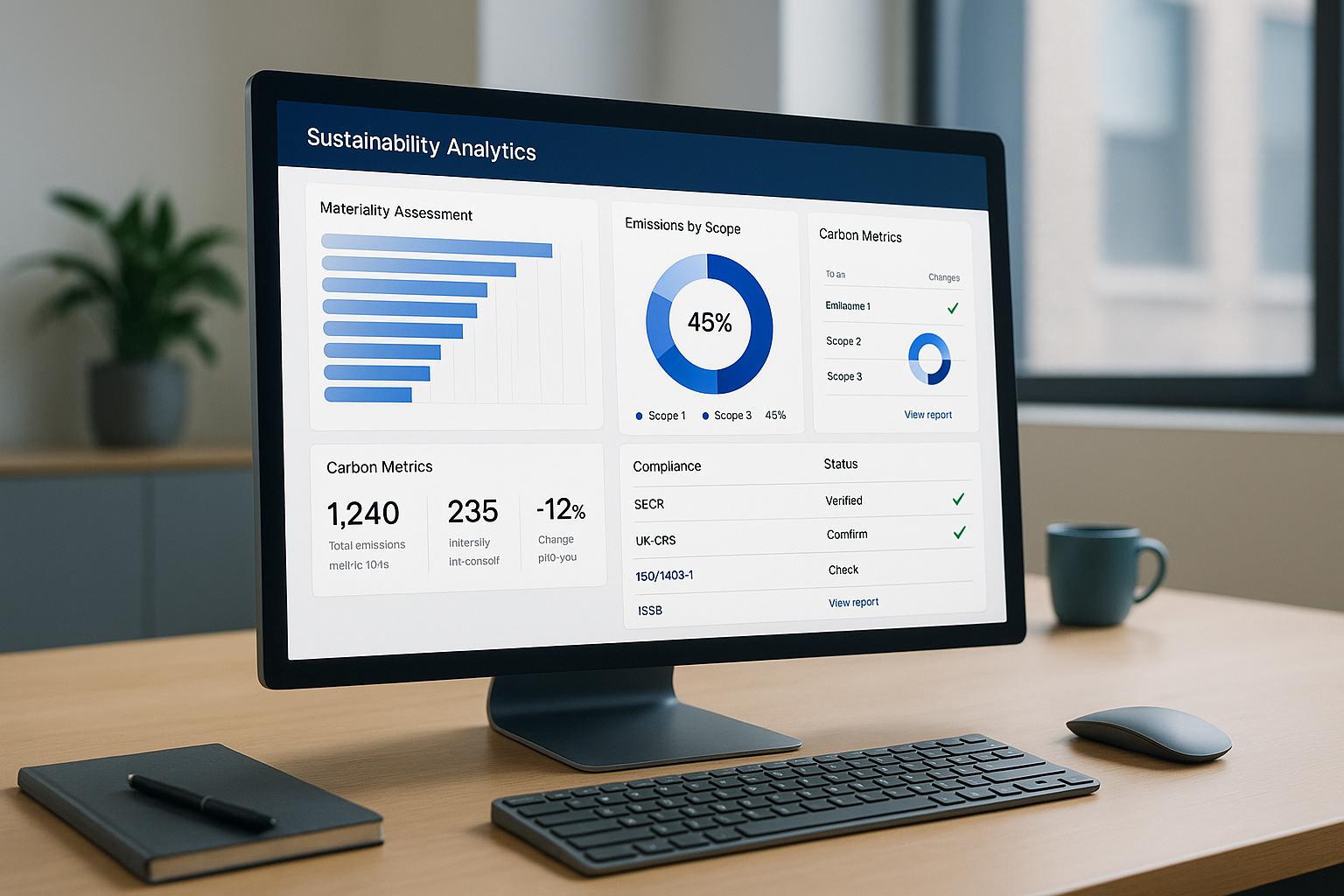
Real-time dashboards for tracking materiality updates and emissions metrics.
Audit-ready systems with secure evidence storage for ISO and ISSA standards.
One standout solution is neoeco, a sustainability accounting platform tailored for accounting firms. It simplifies dynamic materiality reassessment by automating financial data mapping to emissions categories, ensuring compliance, and keeping materiality insights updated in real-time. Pricing starts at £399/year for a Carbon-Only Plan, making it accessible for firms new to carbon accounting.
For firms looking to deliver accurate, professional ESG services while maintaining compliance, neoeco offers a practical, efficient way to navigate the growing demand for sustainability reporting.
Selecting the Right Materiality Assessment Approach | Impact, Financial, or Double Materiality
Key Features of Effective Dynamic Materiality Tools
When choosing tools for dynamic materiality reassessment, accounting firms need solutions that not only fit seamlessly into their existing workflows but also produce audit-ready outputs. The right platform simplifies sustainability reporting while maintaining precision and compliance.
Integration with Financial Systems
Dynamic materiality tools work best when they integrate directly with existing financial systems, using reliable financial data to support sustainability reporting. By connecting to popular platforms like Xero, Sage, QuickBooks, MYOB, and NetSuite, these tools remove the need for manual data transfers, cutting down on errors and ensuring sustainability metrics are based on verified financial transactions.
Automated mapping features save time by instantly categorising transactions - such as fuel or electricity purchases - using the correct emissions factors. Real-time synchronisation ensures sustainability metrics are updated with every transaction, allowing firms to respond quickly to new sustainability challenges. This smooth integration not only boosts efficiency but also lays the groundwork for strong compliance capabilities.
Compliance with Standards and Frameworks
Navigating regulatory requirements is one of the biggest hurdles in sustainability reporting. The most effective dynamic materiality tools stay aligned with key standards like GHGP, SECR, and UK SRS, ensuring firms meet all necessary compliance criteria. Automated compliance mapping aligns data collection and reporting with these frameworks, keeping emissions factors and calculation methods current.
Data security is another critical area. Leading platforms adhere to standards such as SOC 2 and GDPR, safeguarding sensitive financial information throughout the reporting process. Beyond meeting compliance needs, these tools offer features that specifically support accountants in their work.
Features That Support Accountants
Dynamic materiality tools should be designed to fit naturally into accounting workflows, improving accuracy, efficiency, and client service while maintaining high levels of control. Centralised data management is key, bringing together client information, project details, and calculations in one place for a clear and organised view.
Real-time dashboards allow accountants to track client sustainability metrics as they change, making it easier to provide timely insights. Smart matching features categorise transactions into the correct emissions categories automatically, reducing manual work and adapting to industry-specific sustainability needs - a crucial element for dynamic reassessments.
Additionally, these tools incorporate emerging requirements like ISSB reporting, helping firms offer comprehensive sustainability services that align with global standards. Secure evidence management systems provide a safe space for storing supporting documents, automatically backing up calculations, and enabling easy access to historical data. This not only supports current reporting but also aids in long-term trend analysis, ensuring firms can continuously evaluate materiality over time.
Top Tools for Dynamic Materiality Reassessment
Choosing the right tool for dynamic materiality reassessment can revolutionise how accounting firms manage sustainability services. However, few options cater specifically to the unique workflows and compliance demands of accounting professionals. Let’s take a closer look at neoeco, a standout platform for dynamic materiality reassessment.
neoeco: Sustainability Accounting Software Designed for Accountants
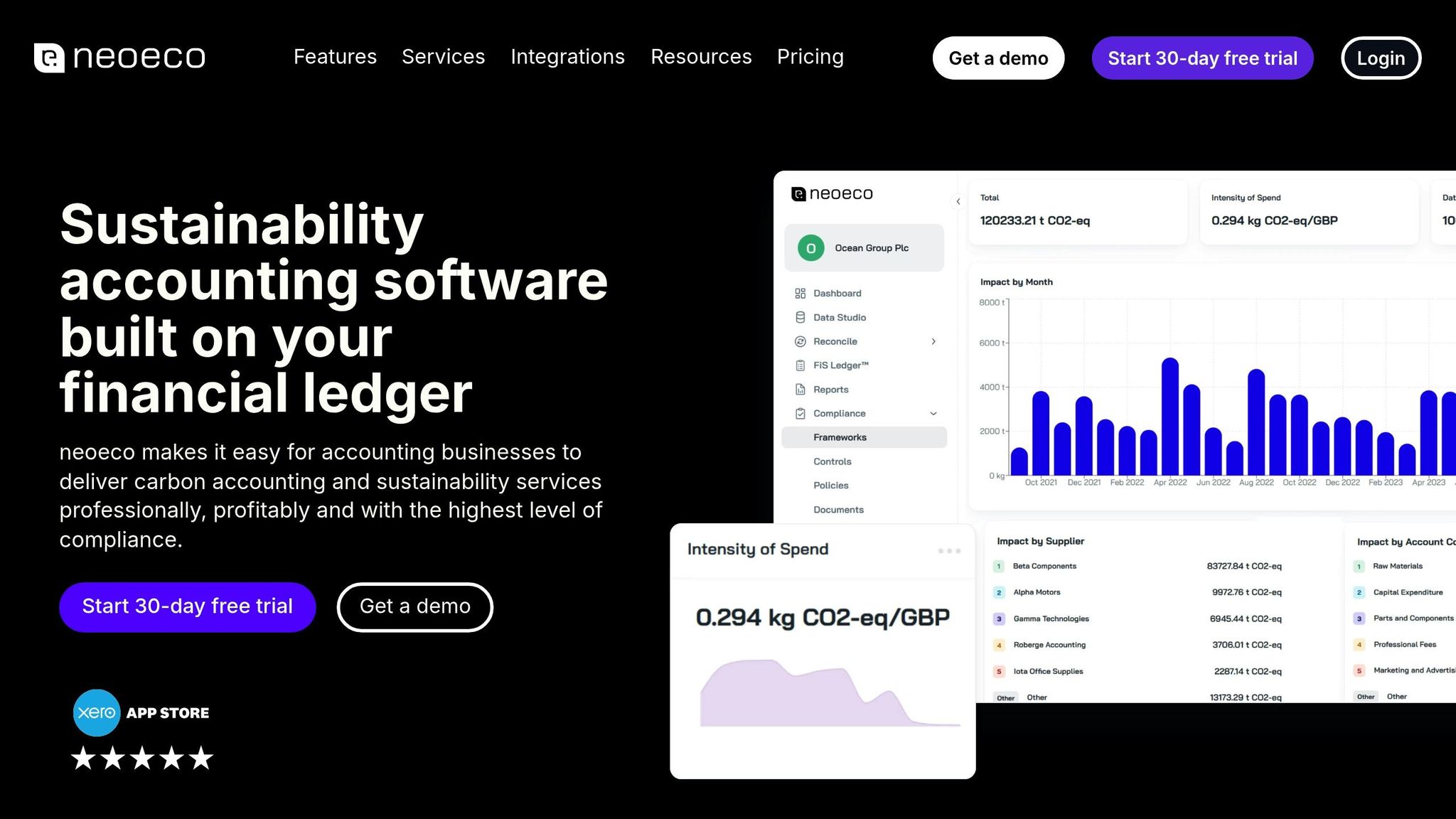
neoeco is a specialised sustainability accounting platform tailored for accounting firms in the UK and Australia. Unlike generic ESG tools, neoeco integrates seamlessly with widely used financial systems like Xero, Sage, and QuickBooks. This makes dynamic materiality reassessment an effortless addition to existing accounting workflows.
The platform employs a Financially-integrated Sustainability Management (FiSM) approach, enabling continuous materiality evaluations. It achieves this by automatically mapping financial transactions to recognised emissions categories under frameworks such as GHGP, ISO 14064, and national regulations like SECR, UK SRS, and ASRS 2. With every financial transaction, materiality assessments are updated in real-time.
"neoeco makes it easy for accounting businesses to deliver carbon accounting and sustainability services professionally, profitably and with the highest level of compliance." - neoeco
One of neoeco’s standout features is its intelligent transaction mapping system, which links ledger entries to Scope 1, 2, and 3 emissions categories. This ensures that materiality profiles are updated dynamically across multiple clients. The platform also strengthens dynamic reassessment by automating processes and simplifying audit controls. Its integrated Policy & Evidence Hub securely stores documentation aligned with ISO 14064 and ISSA 5000 standards, making materiality decisions audit-ready and defensible.
"neoeco runs on your clients' financial data, the numbers you already trust. No new systems, no steep learning curve, just an easy way to expand your services." - neoeco
For firms managing diverse client portfolios, neoeco automatically adjusts to changes in UK and Australian regulations. This ensures materiality assessments stay in sync with evolving compliance requirements without the need for manual updates.
"One system for all rules: neoeco keeps up with GHGP, SECR and UK SRS, and more so you never have to learn new frameworks." - neoeco
The platform’s real-time dashboards are another key feature, offering instant insights into shifting materiality thresholds, emissions intensity, and trends. This level of responsiveness is critical for maintaining accurate and timely materiality reassessments.
For firms just starting out with carbon accounting, neoeco offers a Carbon-Only Plan priced at £399 per year. This entry-level plan includes essential tools such as ledger integration, GHGP/ISO 14064 methodologies, and SECR-ready templates. It provides everything needed to implement dynamic materiality processes without a hefty upfront cost.
Tool Comparison Overview
Expanding on the key features discussed earlier, this section dives into how different tools cater to the specific requirements of accounting firms.
When it comes to dynamic materiality reassessment, the tools show clear contrasts in their integration and compliance capabilities. neoeco emerges as the only platform tailored specifically for accounting firms. Its financially-integrated approach ensures materiality assessments are automatically updated as financial data evolves. This eliminates the hassle of manual data entry or managing spreadsheets entirely.
Other platforms, however, tend to focus on generic carbon accounting. This often leaves accounting firms grappling with extra manual work, such as transferring data between systems and reconciling it regularly - an issue that neoeco effectively resolves.
Comparison Table
Feature | neoeco | Other Carbon Platforms |
|---|---|---|
Target Audience | Accounting firms in UK and Australia | General corporate ESG teams |
Financial Integration | Direct integration with Xero, Sage, QuickBooks, MYOB, NetSuite | Limited or no direct financial system integration |
Compliance Standards | GHGP, ISO 14064, SECR, UK SRS, ASRS 2, SOC 2, GDPR | Varies by platform; often generic compliance |
Transaction Mapping | Automatic mapping from ledger to emissions categories | Manual data entry or CSV uploads |
Audit Readiness | Built-in Policy & Evidence Hub with ISO 14064/ISSA 5000 alignment | Basic reporting without audit-specific controls |
Real-time Updates | Live materiality reassessment with financial data changes | Periodic manual updates required |
Pricing Model | £399/year for Carbon-Only Plan | Typically enterprise pricing starting £1,000+ |
Learning Curve | Minimal - works with existing accounting workflows | Steep - requires new ESG expertise |
What stands out is how neoeco directly addresses the unique challenges accounting firms face when managing dynamic materiality reassessment. For firms juggling multiple clients across various industries, neoeco’s automated system significantly cuts down administrative work while ensuring precision. Its compliance-ready templates further simplify the process, keeping materiality decisions in line with current UK and Australian regulations without constant manual adjustments.
This comparison underscores how these tools can be aligned with existing workflows, paving the way for more efficient practices.
Best Practices for Implementing Dynamic Materiality Tools
To implement dynamic materiality tools effectively, it's essential to weave them into your existing workflows. The idea is to select tools that complement your current processes, ensuring smooth integration, consistent compliance, and transparent communication with stakeholders. These practices help bridge the gap between today's operations and forward-looking sustainability management.
Aligning Tools with Existing Workflows
The goal is to enhance - not replace - your existing systems. Look for tools that integrate directly with your current financial platforms. This approach allows you to leverage your existing data while keeping the learning curve for your team manageable.
Features like smart matching can make a big difference here. These capabilities automatically connect financial transactions with relevant sustainability data categories, cutting down on manual entry and saving valuable time.
A phased rollout can also ease the transition. Start with clients who already maintain detailed financial records, allowing your team to familiarise themselves with the tool before moving on to more complex cases.
Maintaining Compliance and Reassessment
Staying compliant is an ongoing process, and automation can help you keep up. Choose tools that automatically update to reflect changes in ESG standards - such as GHGP, SECR, and UK SRS - so your team doesn't have to chase regulatory updates or learn new frameworks from scratch.
Clear audit trails are a must. Tools with built-in checklists ensure your materiality assessments are always up-to-date and ready for audits, helping you avoid last-minute scrambles.
A centralised hub for policies and evidence is invaluable. Securely storing compliance documents and supporting materials in one place simplifies retrieval during audits or reassessments.
Direct auditor access can further streamline verification. By allowing auditors secure access to reports, you build trust with clients and regulators alike.
Regularly verifying your data is equally important. Establish protocols to ensure all reassessment data is accurate, complete, and current. Use your tool's features to share validated information transparently with stakeholders, reinforcing confidence in your processes.
Streamlining Stakeholder Reporting
Once compliance is under control, focus on delivering clear and professional reports to stakeholders. Many modern tools include report builders that generate polished, branded documents featuring your firm's logo, charts, and commentary. This not only enhances communication but also reinforces your firm's expertise.
Real-time dashboards are another game-changer. They provide ongoing visibility into materiality assessments, allowing you to share updates with clients and boards anytime. This level of transparency encourages proactive engagement and demonstrates a commitment to continuous monitoring.
Maintaining control over the reporting process is crucial. Opt for tools that let your team handle data reconciliation, calculations, and reporting internally, avoiding reliance on third-party processors.
For firms managing Scope 3 emissions across multiple clients, automated reporting is a lifesaver. It reduces administrative workload while ensuring consistency in how complex data is presented to various stakeholders.
Conclusion
Reassessing materiality dynamically has become a must for accounting firms. With sustainability frameworks like GHGP, SECR, and UK SRS constantly evolving, firms need tools specifically designed to adapt to these changes while ensuring they're always audit-ready.
Firms that view sustainability as an opportunity for growth are reaping the rewards. Generic ESG platforms often fall short for accounting practices, disrupting workflows and requiring significant retraining efforts.
Specialised sustainability accounting software offers a better solution. It gives firms full control over reconciliation, calculations, and reporting, enabling them to deliver services with precision and profitability. This level of control is especially critical for dynamic materiality work, where accurate data and audit readiness can significantly impact client trust and relationships. It also lays the groundwork for forward-thinking advancements.
As the focus on ISSB reporting intensifies, firms investing in the right infrastructure today are positioning themselves as future leaders. neoeco demonstrates how integrating financial and sustainability management can turn compliance into a competitive edge, helping firms navigate an increasingly regulated environment with confidence and success.
Is your firm ready to meet the growing demand?
FAQs
What are the advantages of using neoeco for dynamic materiality reassessment in accounting firms?
neoeco empowers accounting firms to deliver carbon accounting and sustainability services with precision, profitability, and confidence in compliance. By connecting directly to clients' financial data, it eliminates the hassle of spreadsheets and manual data conversions, providing accurate, audit-ready carbon information.
The platform takes the complexity out of sustainability reporting by automatically aligning transactions with established emissions categories like GHGP and ISO 14064, as well as frameworks such as SECR, UK SRS, and ASRS 2. Whether your clients are SMEs or large private firms, neoeco’s finance-integrated approach seamlessly connects financial data with sustainability goals, helping both your firm and your clients stay ahead of future demands.
How does integrating financial systems improve the performance of dynamic materiality tools?
Integrating financial systems with tools designed for dynamic materiality simplifies the process of aligning financial data with sustainability metrics. These tools work directly with financial ledgers, automatically classifying transactions into established frameworks such as GHGP, ISO 14064, and national standards like SECR and UK SRS.
By removing the need for manual data entry or reliance on spreadsheets, this integration cuts down on errors and saves valuable time. For accounting firms, it means they can produce detailed, audit-ready sustainability reports while staying compliant with changing regulations. This approach effectively connects financial operations with sustainability goals, creating a solid base for businesses to adapt and thrive in the future.
Why is it essential for dynamic materiality tools to align with standards like GHGP, SECR, and UK SRS?
Standards like the GHGP, SECR, and UK SRS offer a reliable structure for measuring and reporting environmental impact, promoting both transparency and compliance. By adhering to these established frameworks, dynamic materiality tools enable accounting firms to create precise, audit-ready sustainability reports that satisfy both regulatory demands and stakeholder needs.
With neoeco, this process becomes much easier. It automatically maps financial transactions to emissions categories specified by these frameworks, removing the hassle of manual conversions or spreadsheet work. This guarantees that your reports are not only accurate but also meet the latest compliance standards.