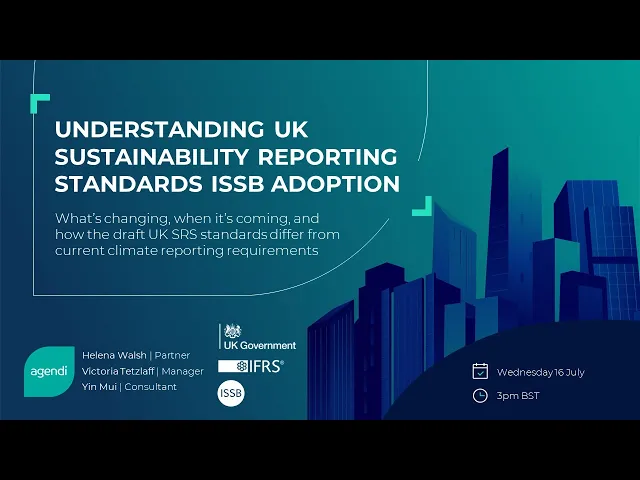
UK SRS and Stakeholder ESG Goals: Key Considerations

Dec 4, 2025
Practical guidance for accounting firms to meet UK SRS while aligning stakeholder-driven ESG goals, using integrated data for audit-ready reporting.
Balancing compliance with UK SRS and meeting stakeholder ESG goals is challenging but essential for businesses. UK SRS ensures organisations meet legal requirements, while stakeholder-driven ESG goals focus on broader priorities like investor expectations, customer demands, and social impact. The two approaches differ in scope, clarity, and resource demands but can work together to create a strong reporting strategy. Here’s the key takeaway:
UK SRS compliance: Focuses on clear regulatory frameworks like the Greenhouse Gas Protocol (GHGP) and SECR, ensuring emissions reporting is accurate and audit-ready. It provides a structured, predictable process but may not address all stakeholder concerns.
Stakeholder-driven ESG goals: Go beyond regulations to address diverse priorities, such as supply chain transparency or diversity metrics. This approach offers flexibility but requires more resources and continuous engagement.
Firms that integrate both approaches - starting with compliance and layering in stakeholder priorities - can help clients manage risks, meet expectations, and build stronger relationships. Tools that connect financial data with sustainability metrics simplify this process, making it more efficient and reliable.
Quick Comparison:
Aspect | UK SRS Compliance | Stakeholder-Driven ESG Goals |
|---|---|---|
Focus | Regulatory adherence | Broader stakeholder priorities |
Data Requirements | Standardised, emissions-focused | Diverse, from operations to HR systems |
Resource Intensity | Moderate | High |
Audit Readiness | Built-in standards | Varies by stakeholder |
Competitive Edge | Meets baseline expectations | Strong potential to stand out |
Understanding UK Sustainability Reporting Standards (ISSB Adoption)
1. UK SRS
The UK Sustainability Reporting Standard (UK SRS) marks a new chapter in how businesses disclose their sustainability efforts. For accounting firms, understanding its requirements is crucial to guide clients in meeting compliance while addressing broader environmental, social, and governance (ESG) expectations.
Compliance Frameworks
UK SRS aligns with global frameworks like the Greenhouse Gas Protocol (GHGP) and ISO 14064, ensuring compatibility with international standards. This alignment is particularly important for companies that need to report under multiple guidelines. For example, a business preparing UK SRS disclosures may also have to comply with Streamlined Energy and Carbon Reporting (SECR) or ISO 14064 requirements for greenhouse gas quantification. Luckily, these frameworks share similar methodologies, especially around categorising and measuring emissions.
GHGP provides the structure for dividing emissions into Scope 1, 2, and 3 categories, which UK SRS integrates into its reporting requirements. Meanwhile, ISO 14064 focuses on quantifying greenhouse gases, enabling firms to use a single, detailed dataset across multiple frameworks.
However, meeting these standards requires systems that can handle their specific demands. While GHGP primarily centres on emissions inventories, UK SRS goes further, requiring broader sustainability disclosures that traditional accounting software isn't built to manage. Specialised platforms like neoeco simplify this process by automatically mapping financial transactions to emissions categories across GHGP, ISO 14064, SECR, and UK SRS. This ensures accuracy and reduces administrative workload by using one dataset for multiple reporting needs.
This integrated approach is essential for addressing materiality in ESG disclosures.
Materiality Approach
UK SRS introduces a fresh perspective on materiality, shifting from financial significance to what matters most to stakeholders and the environment. This change requires accounting firms to help clients determine which sustainability issues genuinely impact their business and stakeholder relationships.
Material issues vary widely - some clients may need to focus on carbon emissions, while others might prioritise supply chain transparency or water usage. A thorough materiality assessment identifies which ESG factors need detailed disclosures and which can be summarised.
For accounting firms, this shift means stepping beyond traditional compliance roles. Clients now expect help with assessing materiality, prioritising ESG metrics, and translating these priorities into actionable, compliant disclosures. This requires a deep understanding of the client’s industry, stakeholder dynamics, and strategic goals.
To meet these demands, firms need robust tools and processes for managing ESG data, integrating it with financial systems, and producing audit-ready reports. A well-conducted materiality assessment can also lay the groundwork for long-term advisory relationships, turning compliance into part of a broader sustainability service package.
By refining materiality assessments, firms can help clients meet both regulatory requirements and stakeholder expectations while positioning themselves as trusted advisers.
Implementation Challenges
Implementing UK SRS compliance comes with its fair share of challenges, requiring collaboration between accounting firms and their clients to navigate successfully.
Resource limitations are a common issue. Many accounting firms lack in-house sustainability expertise, and clients often struggle to allocate staff time to reporting alongside their regular work. This skills gap can lead to incomplete disclosures or increased reliance on external consultants who may not fully understand the client’s financial context.
System integration is another hurdle. Popular accounting software like Xero, Sage, and QuickBooks wasn’t designed to track emissions or sustainability metrics. Firms need solutions that overlay sustainability data onto financial systems, avoiding the complexity of running separate platforms. Without this integration, managing parallel systems becomes cumbersome and prone to errors.
Audit readiness is equally critical. UK SRS disclosures demand the same level of rigour as financial statements, requiring clear audit trails, supporting documents, and evidence for every reported figure. Without purpose-built systems, maintaining this standard becomes challenging, especially as reporting scales up or external assurance is required.
To overcome these obstacles, firms must move away from manual processes like spreadsheets and adopt integrated platforms. These tools can automatically link financial transactions to emissions categories, track compliance progress, and organise supporting documentation in an accessible format. This shift is essential for delivering the accuracy and consistency UK SRS demands.
Addressing these challenges transforms compliance from a burden into an opportunity for firms to stand out in the market.
Stakeholder Alignment
UK SRS compliance isn’t just about ticking regulatory boxes - it’s also about meeting the diverse ESG goals of stakeholders. Different groups prioritise different aspects of ESG performance, and UK SRS provides a solid foundation for addressing these varied expectations.
For accounting firms, the key is to view UK SRS compliance as a starting point rather than the final goal. The real value for clients lies in building a reporting system that not only meets regulatory requirements but also supports effective communication with stakeholders. This means thinking about how sustainability data flows through the organisation and tailoring it for different audiences.
The best approach integrates financial and sustainability data from the outset, following principles like Financially-integrated Sustainability Management (FiSM). This method ensures that sustainability metrics are as reliable as financial figures, making stakeholder communications more impactful and simplifying audit processes.
Firms that align UK SRS compliance with stakeholder ESG goals can position themselves as strategic partners, not just compliance processors. This shift opens doors to recurring revenue streams and strengthens client relationships, turning sustainability into a competitive edge.
2. Stakeholder-Driven ESG Goals
Stakeholder-driven ESG goals take a different route to addressing sustainability. Instead of focusing solely on regulatory compliance, they prioritise the concerns of investors, employees, customers, and local communities. For accounting firms, this distinction is crucial when advising clients who aim to move beyond ticking regulatory boxes. It involves crafting strategies that not only align with the UK SRS framework but also cater to broader stakeholder expectations.
Compliance Frameworks
While the UK SRS provides a structured regulatory framework, stakeholder-driven ESG goals often rely on voluntary standards, adding layers of complexity. For instance, investors may prefer disclosures aligned with ISSB reporting, customers might prioritise carbon neutrality or supply chain transparency, employees could focus on diversity and inclusion, and local communities may emphasise water usage or biodiversity.
To meet these varied demands, accountants must consolidate data from different frameworks. Tools like GHGP and ISO 14064 can serve as a common language for communicating sustainability efforts. When sustainability data is as rigorously managed as financial data, it becomes easier to repurpose it for investor presentations, customer reports, or employee engagement.
However, many businesses struggle with managing multiple reporting frameworks simultaneously. Without robust systems, organisations risk creating fragmented datasets that are difficult to reconcile or verify. This becomes a significant issue when stakeholders ask detailed questions or seek assurance on specific metrics.
Materiality Approach
The concept of materiality takes on a different meaning in the context of stakeholder-driven ESG goals. While UK SRS focuses on what is material within a compliance framework, stakeholder-driven goals often prioritise issues based on external pressures, brand image, or competitive positioning.
For example, stakeholders may push for initiatives like reduced packaging or improved employee well-being - issues that may not directly impact financial materiality but are critical for reputation and stakeholder satisfaction.
This shift presents an opportunity for accounting firms to guide clients in distinguishing between genuine business priorities and potential distractions or "greenwashing" risks. A well-structured materiality assessment can help identify where stakeholder demands overlap with business value, regulatory needs, and operational feasibility. The aim is not to address every possible ESG metric but to establish a clear hierarchy: regulatory obligations first, followed by key stakeholder concerns that align with business strategy, and, finally, voluntary commitments that enhance brand positioning.
Implementation Challenges
Implementing stakeholder-driven ESG goals comes with its own set of hurdles, particularly as stakeholder expectations continue to evolve.
Many organisations, especially those without dedicated sustainability teams, face limited resources and expertise to measure, manage, and report on ESG goals. Accounting firms often step in to fill this gap, but without the right tools, the workload can quickly become overwhelming.
Data collection is another challenge. Stakeholder-driven goals require input from various parts of the organisation - HR systems for diversity metrics, supply chain databases for Scope 3 emissions, or customer feedback for satisfaction scores. Managing these diverse data sources and ensuring their accuracy can be a daunting task.
Standardisation adds another layer of complexity. Different stakeholders may demand different reporting formats or metrics. For instance, one investor might focus on carbon intensity per revenue, while another prioritises absolute emissions reductions.
Platforms like neoeco can simplify this process by integrating multiple frameworks and connecting directly to financial systems like Xero, Sage, and QuickBooks, reducing manual effort. For companies lacking in-house expertise, external support from customer success managers can provide hands-on help with measurement, management, and reporting. This blend of technology and expert guidance helps organisations overcome resource limitations while maintaining the level of detail stakeholders expect.
Stakeholder Alignment
Aligning stakeholder priorities requires more than just annual reports - it demands ongoing engagement and measurable targets.
Accounting firms can assist clients in setting up feedback mechanisms that capture stakeholder concerns early, whether through investor roadshows, employee surveys, or customer panels. This proactive approach can prevent issues from escalating and ensure that stakeholder input is translated into actionable goals.
Vague commitments like "become more sustainable" are ineffective. Instead, clients need specific, measurable targets with clear timelines and responsibilities. Accounting firms are well-positioned to help create this structured approach.
Audit readiness is another critical aspect. Stakeholders increasingly expect ESG data to meet the same standards of verification as financial statements, especially institutional investors relying on this information for decision-making. Preparing audit-ready sustainability reports, along with maintaining a robust policy and evidence hub, is essential.
Solutions that include integrated policy hubs and easy auditor access can streamline the verification process, ensuring both compliance and stakeholder communication are handled efficiently. This approach avoids duplication and builds trust with stakeholders.
For accounting firms, the opportunity lies in integrating stakeholder-driven ESG goals into their existing advisory services. By aligning sustainability data with financial systems - following principles such as Financially-integrated Sustainability Management - firms can provide advice that meets both compliance and stakeholder needs without adding unnecessary workload. This integrated strategy helps clients avoid overpromising and ensures that ambitious ESG targets are grounded in operational and financial reality, building credibility with stakeholders who value transparency and accountability.
Advantages and Disadvantages
Let’s build on the earlier discussion of UK SRS and stakeholder-driven frameworks by exploring the trade-offs they present for sustainability reporting. Below is a comparison of these two approaches across key dimensions that accounting firms often consider when advising clients on sustainability strategies:
Aspect | UK SRS Compliance | Stakeholder-Driven ESG Goals |
|---|---|---|
Primary Driver | Regulatory adherence and legal obligations under frameworks like GHGP, SECR, and UK SRS | Market demands, investor expectations, reputation management, customer preferences, and internal values |
Scope of Focus | Specific reporting frameworks with defined metrics and boundaries | Broader range of issues shaped by stakeholder priorities, often exceeding regulatory requirements |
Implementation Clarity | Clear guidance on reporting requirements, reducing ambiguity | Requires interpretation of diverse, and often shifting, stakeholder expectations |
Data Requirements | Standardised data collection aligned with financial transactions | Data from multiple sources, including operations, supply chains, HR systems, and customer feedback |
Resource Intensity | Moderate - focused on specific compliance tasks with clear endpoints | High - continuous engagement, measurement, and reporting across stakeholder groups |
Audit Readiness | Built-in audit requirements with established verification standards | Varies widely; some stakeholders demand rigorous assurance, others accept self-reported data |
Flexibility | Limited - must adhere to prescribed methodologies and formats | High - allows prioritisation of issues that align with strategy and stakeholder needs |
Competitive Advantage | Meets baseline expectations; limited potential for differentiation | Strong opportunity to stand out by addressing key material issues |
Cost Predictability | Predictable - compliance costs remain relatively stable year-on-year | Less predictable - evolving stakeholder demands require ongoing investment |
Risk Management | Focused on regulatory and legal risks | Addresses reputational, operational, and market risks alongside compliance |
UK SRS Compliance: Predictability with Limits
UK SRS compliance offers a clear, structured approach. It’s straightforward - clients know exactly what’s required, and firms can create repeatable processes that work across multiple clients. The prescriptive nature of UK SRS reduces time spent debating metrics, allowing more focus on accuracy. Tools like neoeco simplify the process by mapping financial transactions to emissions categories, producing audit-ready reports with minimal effort.
However, this approach has its drawbacks. It focuses on meeting regulatory requirements, which might not cover all the sustainability issues impacting a business. Companies that stick solely to compliance may miss opportunities to engage investors, attract eco-conscious customers, or improve efficiency through broader ESG initiatives. In competitive markets, simply meeting the minimum standards often isn’t enough to stand out.
Stakeholder-Driven ESG Goals: Flexibility with Challenges
Stakeholder-driven ESG goals allow organisations to address issues that are genuinely important to their business model, whether it’s supply chain transparency, employee well-being, or biodiversity efforts. This approach provides the flexibility to align sustainability efforts with strategic priorities, offering a chance to strengthen relationships with key stakeholders and demonstrate leadership.
But this flexibility comes with challenges. Without clear regulatory guidance, it can be difficult to decide which issues to prioritise. Stakeholders often have conflicting demands - investors might focus on carbon emissions, customers might care about packaging waste, and employees might prioritise diversity. Balancing these competing expectations requires careful coordination and clear communication.
Additionally, resource demands are higher. Unlike UK SRS compliance, which follows a defined annual cycle, stakeholder engagement is continuous. Organisations must manage diverse data sources, produce multiple report formats, and adapt to changing expectations. For companies without dedicated sustainability teams, this can be overwhelming.
Finding the Balance: A Dual Approach
For most organisations, the best strategy combines both approaches. UK SRS compliance ensures legal obligations are met and provides a solid regulatory foundation. Stakeholder-driven goals build on this, addressing broader concerns that influence reputation, market access, and long-term resilience.
Accounting firms play a crucial role in helping clients navigate these priorities. By integrating sustainability with financial systems, firms can support both compliance and stakeholder engagement without duplicating efforts. The key is to establish robust data systems first, then layer in stakeholder-specific reporting.
The ability to manage both approaches efficiently is a major advantage for accounting firms, especially when working with clients across different sectors. Clients increasingly expect their accountants to go beyond basic compliance and offer strategic advice on how sustainability fits into their overall business goals. Firms that can deliver on both fronts position themselves as trusted advisors, not just service providers.
Ultimately, the choice between UK SRS compliance and stakeholder-driven ESG goals depends on the client’s immediate needs and long-term ambitions. For smaller businesses or those in less scrutinised industries, compliance may suffice. But for companies facing investor pressure or competing in sustainability-focused markets, stakeholder engagement becomes a necessity. The challenge lies in sequencing these efforts to maximise both compliance confidence and strategic value.
Conclusion
UK SRS compliance and stakeholder-driven ESG goals work hand in hand. UK SRS provides the regulatory framework - offering clear guidelines, standardised metrics, and predictable compliance cycles. It ensures organisations consistently meet their legal obligations around emissions reporting. On the other hand, stakeholder-driven goals address the broader expectations of investors, customers, employees, and local communities. These goals are more adaptable, often stretching beyond regulatory requirements to align with wider strategic ambitions.
For accounting firms, the challenge is to integrate these regulatory and stakeholder frameworks effectively. Clients need both. They must comply with UK SRS mandates while also addressing market demands and stakeholder expectations that extend beyond compliance. Firms that can deliver on both fronts position themselves as trusted advisors, offering more than just regulatory support. This dual focus forms the cornerstone of a well-rounded reporting strategy.
To start, firms need a solid data infrastructure. Accurate, auditable financial data mapped to emissions categories is critical for both compliance and stakeholder reporting. Tools like neoeco are invaluable here. By linking transactions directly to established emissions frameworks such as the GHGP and UK SRS, firms can create a reliable foundation that supports both regulatory needs and broader ESG objectives. With this groundwork in place, integrating stakeholder-specific reporting becomes much more straightforward.
Once the data infrastructure is established, firms should adopt a two-step approach to reporting. First, help clients meet their UK SRS obligations. This builds trust, showcases competence, and establishes an efficient, repeatable process. Second, focus on the stakeholder issues most relevant to each client’s business - whether that’s supply chain transparency, diversity metrics, or biodiversity initiatives. This structured approach prevents firms from being overwhelmed by competing priorities while ensuring compliance remains intact.
Integrating sustainability with financial reporting is another essential step. Using tools like neoeco's FiSM approach, firms can ensure carbon data is as reliable and auditable as financial data. This not only enhances accuracy but also reduces the administrative workload for both firms and their clients.
As discussed earlier, balancing compliance with strategic stakeholder engagement is key to long-term success. The firms that excel will recognise that UK SRS compliance is just the starting point. By helping clients efficiently meet legal requirements and then guiding them towards broader ESG strategies, these firms can strengthen stakeholder relationships and unlock competitive advantages. Clients increasingly expect this dual approach - combining regulatory expertise with strategic foresight - from their accountants.
FAQs
How can businesses align UK SRS compliance with stakeholder ESG goals to improve sustainability reporting?
To align UK SRS compliance with stakeholder-focused ESG objectives, businesses need a well-planned strategy that connects financial data with sustainability metrics. This approach ensures that reporting not only adheres to regulations but also meets the expectations of investors, customers, and other key stakeholders.
Tools like neoeco can make this process much easier. These tools link financial transactions directly to established emissions frameworks like GHGP, ISO 14064, SECR, and UK SRS. By doing so, companies can generate precise, audit-ready reports without the hassle of manual data processing. This approach doesn’t just guarantee compliance; it also boosts the credibility and transparency of sustainability reports, enabling businesses to fulfil legal requirements and stakeholder expectations more effectively.
What challenges do accounting firms face with UK SRS compliance, and how can they address them?
Accounting firms in the UK often encounter hurdles when working towards SRS compliance. These include tackling intricate reporting standards, maintaining precise data, and integrating sustainability reporting with stakeholder-focused ESG objectives. On top of that, relying on manual workflows and spreadsheets can introduce inefficiencies and increase the risk of errors.
One way to address these issues is by using specialised sustainability accounting tools like neoeco. This software automates carbon accounting and links transactions directly to established frameworks such as UK SRS and SECR. By reducing manual input, neoeco not only streamlines the reporting process but also ensures firms can produce accurate, audit-ready data. This makes it easier to align financial reporting with sustainability objectives seamlessly.
Why is conducting a materiality assessment crucial for aligning UK SRS compliance with stakeholder ESG goals, and how can it be done effectively?
A materiality assessment plays a crucial role in aligning UK SRS compliance with the environmental, social, and governance (ESG) priorities of your stakeholders and organisation. It helps pinpoint the issues that truly matter, allowing accounting firms to meet compliance requirements while offering relevant and actionable sustainability insights.
To carry out a materiality assessment effectively, engage directly with stakeholders through methods like surveys, interviews, or workshops to uncover their key concerns. Pair this input with a thorough, data-driven analysis of regulatory obligations - such as those outlined in the UK SRS framework - and current industry trends. Tools like neoeco can simplify this process by linking financial transactions to recognised emissions categories. This ensures compliance and provides precise, audit-ready sustainability reports.