Checklist: Choosing ESG Reporting Software for Accountants

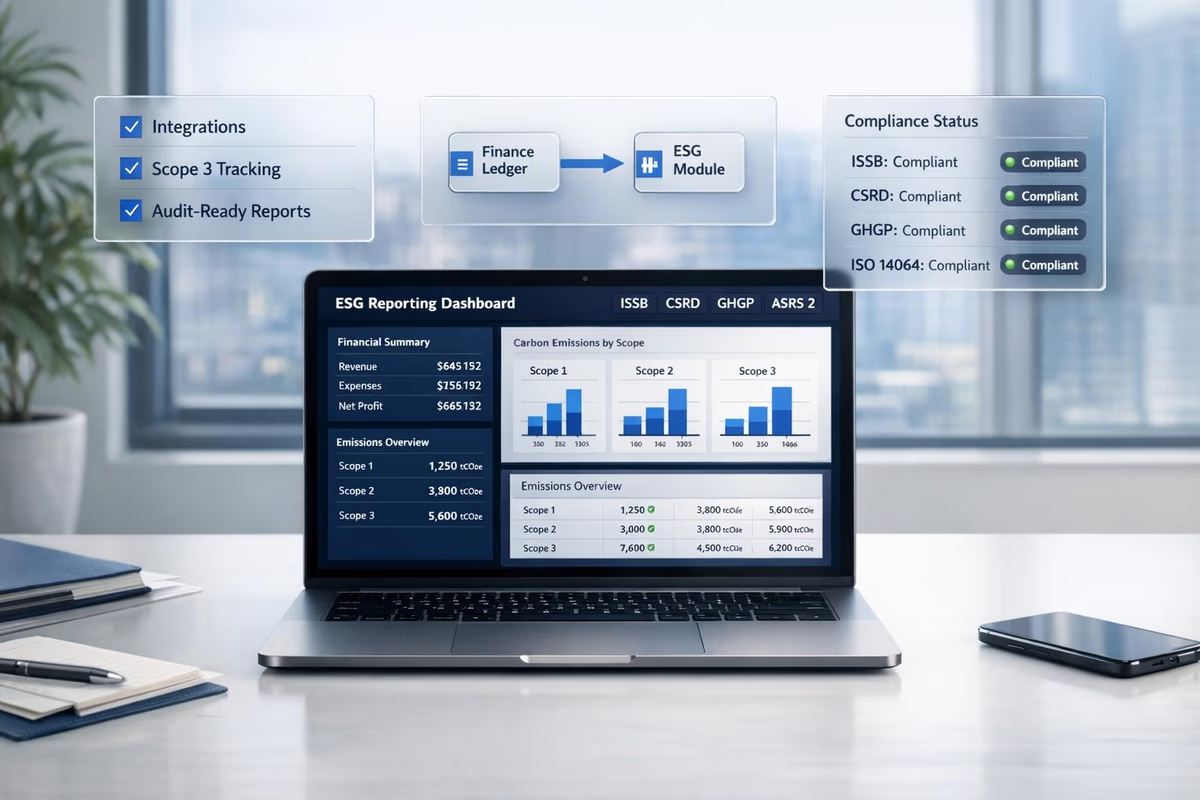
Sustainability reporting is no longer optional for accounting firms. With frameworks like ISSB and UK SRS expanding, the challenge lies in managing this growing demand efficiently. The right ESG reporting software can simplify compliance, reduce errors, and save time by automating processes and integrating directly with financial platforms like Xero, Sage, or QuickBooks.
Key Points to Consider:
- Integration: Ensure the software connects seamlessly with your existing financial systems to maintain data accuracy and reduce manual work.
- Compliance: Look for tools pre-configured for major standards like SECR, UK SRS, and ISSB reporting.
- Audit-Ready Outputs: Choose platforms that provide a full audit trail and professional, client-ready reports.
- Scope 3 Emissions: Opt for software that uses activity-based methods for accurate Scope 3 tracking, not just estimates.
- Security and Scalability: Prioritise platforms with strong data protection and multi-client management features.
- Pricing: Understand the total cost, including hidden fees, and test the software through free trials or pilots.
The right choice will transform ESG reporting from a tedious task into a streamlined service that aligns financial and sustainability goals. Start evaluating your options early to stay ahead of compliance deadlines.
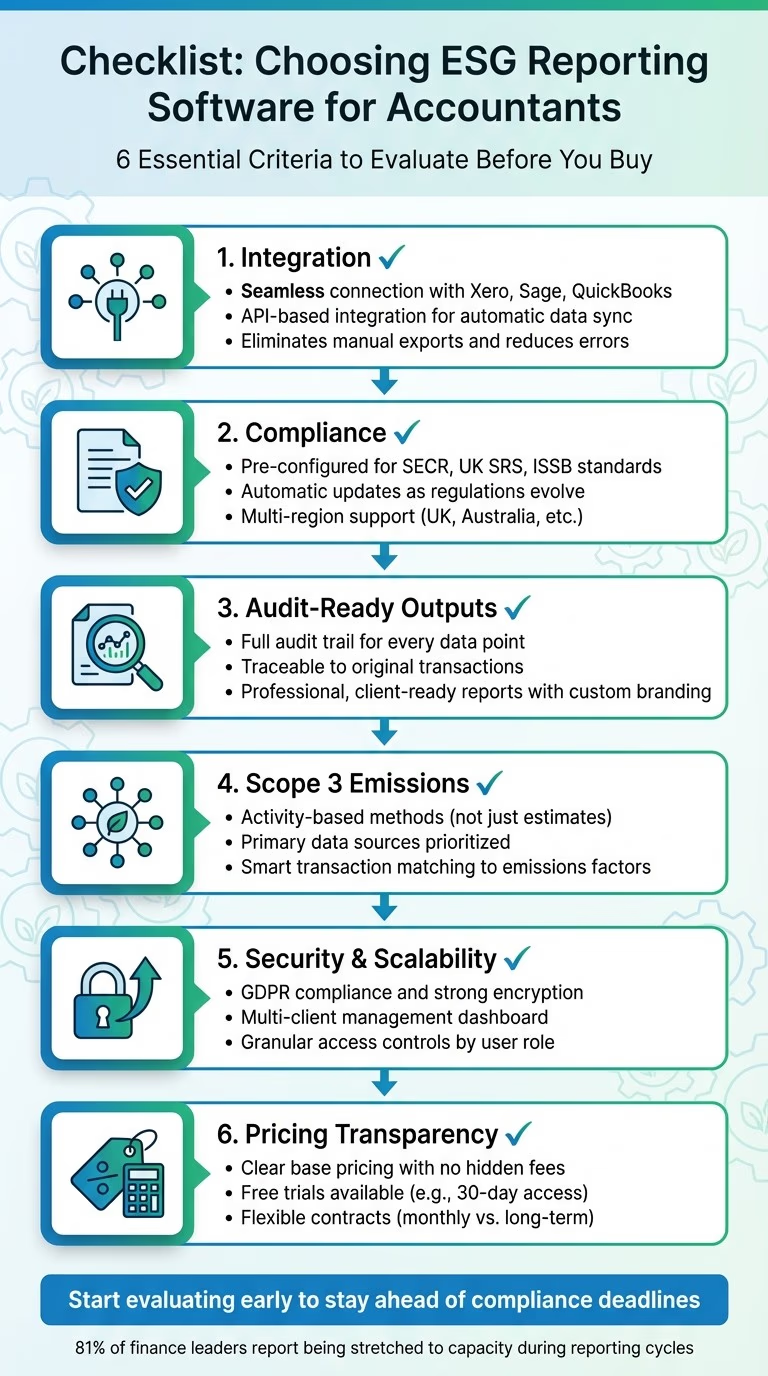
6 Essential Criteria for Choosing ESG Reporting Software for Accountants
Core Features to Look for in ESG Reporting Software
The right ESG reporting software should streamline your processes, cutting out manual tasks while ensuring accuracy and compliance. For accounting firms, there are three must-haves: seamless integration with financial systems, broad coverage of reporting standards, and outputs that are ready for audits. Without these, you risk swapping one set of spreadsheets for another - only now with an added subscription cost.
Financial System Integration and Automation
Your ESG software needs to connect directly to the accounting platforms you already rely on - whether it’s Xero, Sage, QuickBooks, MYOB, or NetSuite. Direct integration is key to maintaining data accuracy. Look for software that uses API-based integration to sync transaction data automatically, avoiding the need for manual exports and reducing the chance of errors.
The most effective platforms incorporate what’s often referred to as a "sustainability ledger." This system applies the same level of precision to carbon data as it does to financial data. For instance, neoeco operates directly on clients' financial ledgers, mapping transactions to over 90 impact factors across Scope 1, 2, and 3 emissions. This eliminates the need for manual conversions or spreadsheet updates. Instead, you get finance-grade data that can be traced back to its original transaction - ready for audits or assurance processes.
Support for Reporting Standards
It’s essential that your software supports major standards like SECR, UK SRS, ASRS 2, GHGP, and ISO 14064. As regulations evolve, your software should adapt automatically, sparing you the hassle of rebuilding templates or waiting for expensive updates.
Platforms designed with accountants in mind, such as neoeco, are pre-configured to comply with legislation across multiple regions, including the UK and Australia. They come with templates tailored to local requirements. If you’re helping clients prepare for ISSB reporting, make sure the software aligns with IFRS S1 and S2 from the start. Also, assess how the platform ensures reports are audit-ready, reducing the need for manual corrections.
Audit-Ready Data and Professional Reports
The last thing you want is software that generates reports requiring significant manual revisions before they’re fit for clients. Opt for platforms that provide a full audit trail, allowing you to trace every emissions figure back to its original financial transaction.
Look for features like centralised evidence storage, change tracking, and secure external access to ensure robust governance. Additionally, the ability to customise reports with your firm’s branding - logos, colours, and all - helps reinforce your professional image. At the same time, these compliance-ready outputs give clients the confidence they need in the accuracy of the reports.
Assessing Emissions Reporting Capabilities
Getting emissions reporting right across all three scopes is crucial. Scope 1 refers to direct emissions from sources you control - think company vehicles burning fuel. Scope 2 covers indirect emissions from purchased electricity, heating, or cooling. Scope 3 includes emissions from business travel, waste, purchased goods, and the broader supply chain. For most organisations, Scope 3 makes up the majority of emissions but is notoriously difficult to track.
Scope 1 and Scope 2 Emissions
Calculating Scope 1 and Scope 2 emissions tends to be more straightforward when using software that follows established frameworks like the Greenhouse Gas Protocol (GHGP) or ISO 14064. With the right tools, you can automatically pull data from utility bills and fuel purchases, linking each emissions figure to its source transaction through an audit trail. This eliminates the need for manual calculations and reduces the risk of errors often associated with spreadsheets.
Scope 3 Emissions and Supply Chain Data
Scope 3 is where many platforms struggle. Relying solely on spend-based vs activity-based methods can lead to significant inaccuracies. Instead, opt for software that uses activity-based methods and prioritises primary data sources. For example, Neoeco categorises transactions using recognised impact factors and automatically assigns supplier invoices to the correct Scope 3 emissions categories. This method ensures finance-grade Scope 3 data that is both traceable and defensible.
Key features to look for include smart transaction matching, which links ledger entries from platforms like Xero, Sage, or QuickBooks to relevant emissions factors for areas such as business travel, waste, and purchased goods. A centralised evidence hub is also essential, storing supplier statements and invoices so that your Scope 3 data is audit-ready without the hassle of tracking down paperwork.
Once you've confirmed these emissions reporting capabilities, you can shift your attention to evaluating the platform's data security, scalability, and user experience.
Security, Scalability, and Usability
Once accurate emissions data is in place, the next step is ensuring that ESG reporting systems are secure, scalable, and easy to use. These elements are critical for turning ESG reporting from a tedious requirement into a strategic advantage for accounting firms.
Data Security and Regulatory Compliance
Client data must be protected with the highest level of security. ESG platforms should comply with GDPR and implement strong encryption for both data in transit and at rest. Additionally, granular access controls are a must, ensuring that data visibility is limited based on user roles.
Audit-ready platforms are particularly valuable, as they maintain detailed audit trails, version control, and data lineage. This ensures that every change, calculation, and input is logged and traceable - key features when preparing for external assurance or regulatory inspections. Furthermore, as your practice grows, it’s important to evaluate how the platform supports multi-client management.
Multi-Client Management and Growth Capacity
Managing multiple clients with separate spreadsheets or disconnected tools can quickly become chaotic. Opting for a platform that centralises client management is a game-changer. For instance, neoeco offers a single dashboard where you can monitor all clients, projects, and metrics in one place, streamlining workflows and improving efficiency. This kind of centralisation enables firms to grow without being bogged down by administrative headaches or losing oversight.
It’s also crucial to understand how pricing scales as your firm expands. Some platforms charge based on the number of users, while others charge per client or by data volume. Clarifying these terms upfront will help you avoid surprise costs as your sustainability services grow.
Implementation and Training Requirements
The best tools integrate seamlessly with familiar financial data to reduce the learning curve and minimise errors. Platforms like neoeco are designed to work with popular accounting software such as Xero, Sage, or QuickBooks, allowing firms to extend their services without having to learn entirely new systems.
To ensure a smooth transition, start implementation at least one full reporting cycle before new standards take effect. This gives you time to test the system alongside your current processes. Custom demos tailored to your firm’s common ESG reporting challenges can also help identify the platform’s suitability. Additionally, check if the vendor provides role-specific training - core reporting teams might benefit from live sessions, while approvers may only need short video tutorials. Vendors offering consultative onboarding and ongoing support can make a significant difference in ensuring long-term success.
Pricing and Contract Terms
Once you've evaluated the core features and usability, the next step is to carefully examine pricing structures and contract terms. It’s important to understand the total cost upfront to avoid unexpected expenses and ensure the solution can scale with your needs.
Enterprise-grade tools often require long-term contracts, with pricing influenced by factors like company size, number of entities, data volume, and geographic location. On the other hand, platforms tailored for accountants, such as neoeco, typically offer more flexibility with monthly subscription plans and no binding contracts. This allows firms to adjust easily as compliance demands shift.
Clear Pricing Structures
Make sure you know exactly what the base price covers and what might come as additional costs. Common hidden fees include charges for implementation and setup, data migration, or IT-specific technical requirements. If live onboarding isn’t included, it could significantly increase your costs. Similarly, features like audit readiness - such as granting auditor access - might come with extra fees, so it’s worth confirming these details.
To avoid unnecessary expenses, create a list of essential features like XBRL tagging or cloud-based collaboration tools. This ensures you’re not paying for optional add-ons you don’t need. Additionally, request TEI (Total Economic Impact) reports or case studies to evaluate potential savings, such as reduced manual work or lower audit costs. With 81% of finance leaders in the UK and Europe reporting they are stretched to capacity during reporting cycles, investing in cost-efficient automation has become increasingly important.
Trial Periods and Contract Flexibility
Opt for vendors that provide free trials or pilot programmes to test the software before committing. For instance, neoeco offers a 30-day free trial with full access to its features, allowing you to evaluate its suitability for multi-client workflows without any financial risk. If you decide not to proceed, the trial automatically cancels to prevent unexpected charges.
It’s also vital to check how the pricing model works - whether it’s based on the number of users, clients, or reporting entities. This will help you gauge how well the solution can scale with your business. Ideally, test the software across an entire reporting cycle, preferably a year before new standards take effect, to uncover any potential gaps in functionality.
Conclusion and Next Steps
Integrating financial data effectively while ensuring compliance that's ready for audit isn't just a box-ticking exercise. It’s a strategic move that sets the foundation for future ESG success. The right ESG reporting software does more than streamline processes - it empowers your firm to deliver dependable, compliant sustainability services. Automation plays a key role here, reducing manual tasks, minimising spreadsheet errors, and ensuring your reports align with evolving standards like the UK SRS and SECR.
Before diving into a decision, take time to evaluate your firm’s unique needs. Start by discussing ESG data collection methods, timelines, and challenges with your team. Establish clear, measurable goals - such as cutting data collection time by 30% or shortening audit cycles by two weeks. Identify essential features, like direct integration with platforms such as Xero, Sage, or QuickBooks. Engaging stakeholders from finance, risk, and audit early in the process ensures the chosen software meets the needs of all departments. This groundwork is key to a smooth implementation.
It’s wise to plan your software rollout at least one full reporting cycle ahead of any new mandatory standards. This timeline allows you to test the system alongside your current processes, troubleshoot issues, and make adjustments before going live. Make use of trial periods - like neoeco’s 30-day free trial - to assess how well the platform fits into your existing workflows. Rigorous testing now ensures you’re prepared when compliance requirements tighten.
For firms in the UK and Australia, neoeco offers a tailored solution for integrated, audit-ready ESG reporting, eliminating the need for manual data conversions.
The firms that act early will be the ones clients rely on when compliance becomes non-negotiable. Define your needs, test thoroughly, and choose a solution that can scale with your ambitions.
FAQs
How does ESG reporting software help accounting firms stay compliant with changing regulations?
ESG reporting software simplifies compliance for accounting firms by automating the alignment of financial data with established frameworks like GHGP, SECR, and UK SRS. This ensures reports are not only accurate but also ready for audits, meeting the latest standards with ease.
These tools also offer real-time updates on regulatory changes, allowing firms to adjust promptly without the need for manual effort. By streamlining the reporting process, they minimise errors and save valuable time, enabling firms to concentrate on providing exceptional service to their clients.
What are the main advantages of connecting ESG software with your financial systems?
Integrating ESG software with financial systems offers a host of advantages for accounting firms. By connecting financial data with sustainability metrics, it reduces the chances of manual errors, cuts down dependency on spreadsheets, and delivers precise, audit-ready ESG reports. This level of automation simplifies workflows and ensures firms meet standards like GHGP, ISO 14064, and various national frameworks.
Another key benefit is enhanced compliance. Standardising data across different jurisdictions makes it easier to create consistent and comparable reports. Plus, access to real-time insights into sustainability impacts empowers firms to make well-informed decisions, tackle risks effectively, and maintain transparency. Beyond saving time and lowering costs, this integration strengthens stakeholder trust and positions your firm to handle future regulatory requirements with confidence.
Why is it important for accounting firms to track Scope 3 emissions accurately?
Accurately tracking Scope 3 emissions is a game-changer for accounting firms. It offers a full view of an organisation’s indirect emissions across its entire value chain. This is crucial not just for meeting sustainability regulations but also for managing environmental risks and preparing dependable, audit-ready reports.
When accounting firms gather precise Scope 3 data, they can help clients meet reporting standards like the GHGP and ISO 14064. Beyond compliance, this data strengthens their ability to deliver expert carbon accounting services. Reliable tracking doesn’t just build trust - it positions businesses to thrive in a market that’s increasingly focused on sustainability.