10 Tips for Completing the CDP Climate Change Questionnaire

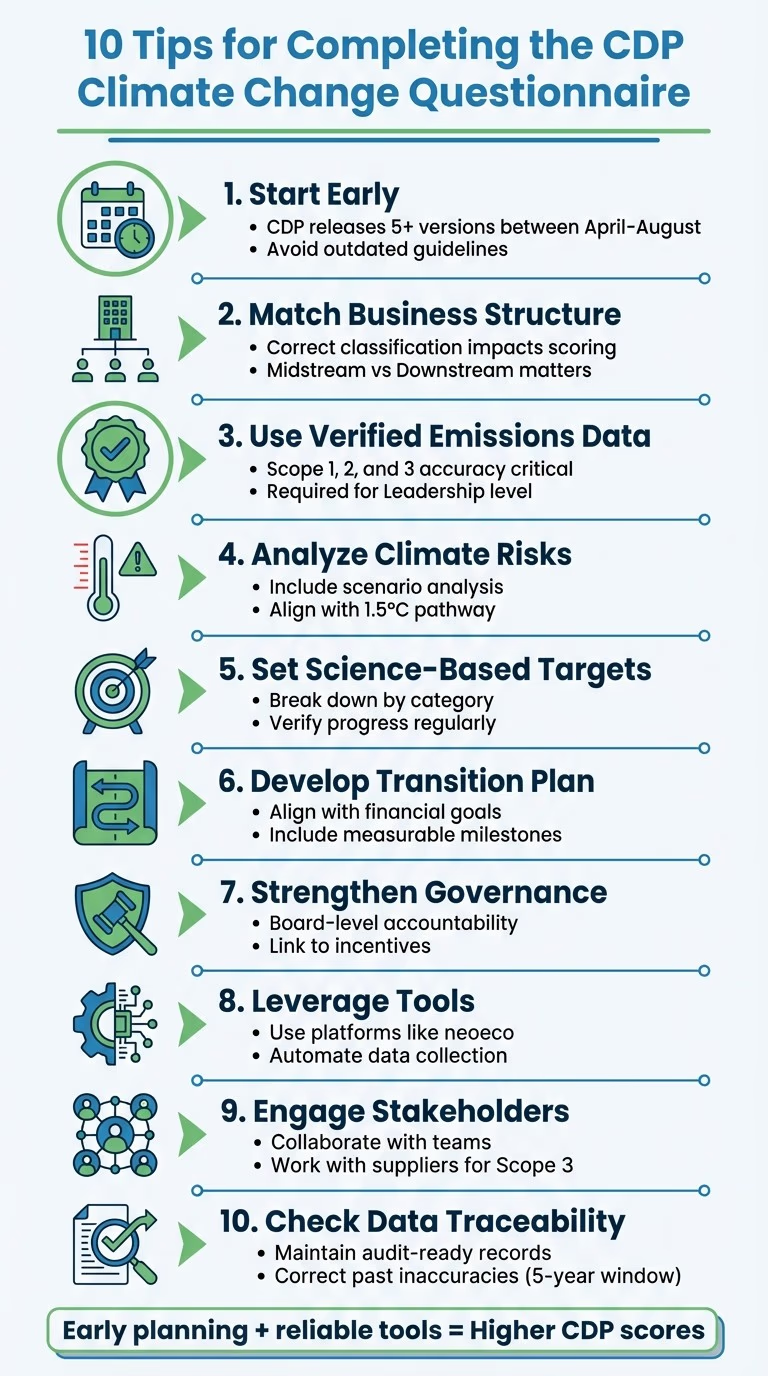
Filling out the CDP Climate Change Questionnaire can feel overwhelming, but starting early and focusing on accuracy can make all the difference. This guide highlights 10 practical tips to help you prepare, manage data, and improve your scores. Here's what you need to know:
- Start early: CDP frequently updates its methodology, so early preparation avoids last-minute issues.
- Match your business structure: Properly classify your operations to ensure accurate reporting and scoring.
- Use verified emissions data: Accurate Scope 1, 2, and 3 data is critical for better scores.
- Analyse climate risks: Include scenario analysis aligned with a 1.5°C pathway.
- Set science-based targets: Break down targets by category and verify progress.
- Develop a clear transition plan: Align plans with financial and operational goals.
- Strengthen governance: Ensure board-level accountability for climate-related actions.
- Leverage tools: Use platforms like neoeco to streamline data collection and reporting.
- Engage stakeholders: Collaborate with internal teams and suppliers for better data quality.
- Check data traceability: Maintain audit-ready records and correct past inaccuracies.
These steps help organisations align with updated 2026 CDP requirements, improve transparency, and achieve higher scores. Early planning and reliable tools are key to navigating the process effectively.
10 Essential Tips for Completing the CDP Climate Change Questionnaire
Webinar: Demystifying the 2024 CDP Questionnaire
1. Begin Preparation Well in Advance
Starting early is crucial. During the 2024 disclosure cycle, CDP released five different versions of the full corporate questionnaire and scoring methodology between 29 April and 27 August. These updates addressed logic errors, clarified instructions, and adjusted dependencies. If your firm delays preparations until the last minute, you risk working with outdated guidelines or overlooking changes that could impact your clients' scores. This constantly evolving framework highlights the importance of getting a head start and thoroughly preparing.
Alignment with 2026 CDP Updates
The 2026 questionnaire continues to follow an integrated approach, which significantly increases the workload. Clients must juggle multiple data streams simultaneously, making months of preparation essential.
Another reason to start early is the complexity of question dependencies. Many questions are conditional, appearing only after specific selections in earlier modules. For instance, sector-specific rows for industries like Financial Services or Cement might trigger additional data requirements. Testing the platform's conditional logic well in advance can help uncover all necessary fields and avoid surprises.
Data Accuracy and Transparency
Getting started early also improves data accuracy. Third-party verification, particularly for Scope 3 emissions, involves time-intensive tasks like engaging suppliers and mapping the value chain. As Omer Amar, Data Lead at Arbor, explains:
Success demands quality data systems, clear boundaries, quantified financial impacts, board oversight, and active supplier engagement to close Scope 3 gaps.
Early preparation ensures proper consolidation methods and dual-reporting for Scope 2 emissions. These technical details are critical for achieving higher scores, such as Management or Leadership levels.
Simplifying Processes for Accounting Firms
For accounting firms, it’s essential to regularly check the Version Control Table and verify reporting date ranges to ensure compliance with scoring requirements.
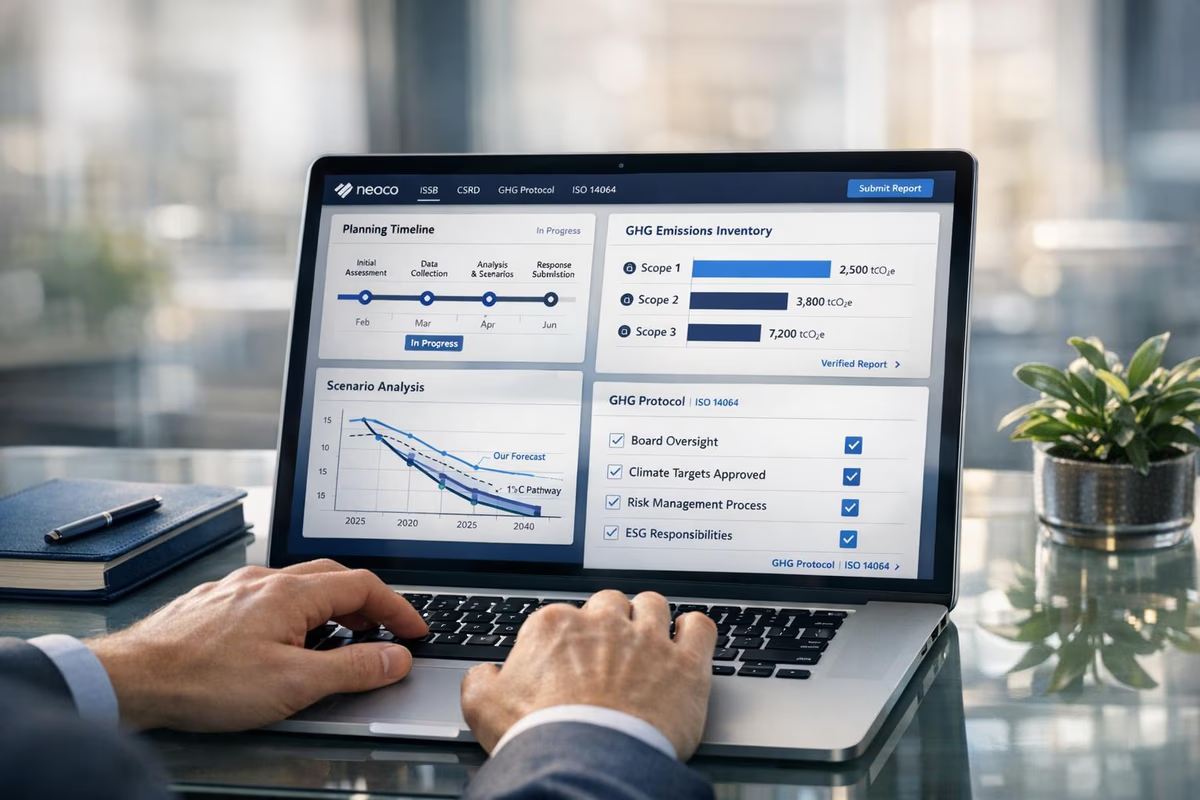
Tools like neoeco can make this process smoother by automatically mapping financial transactions to recognised emissions categories under GHG Protocol compliance, ISO 14064, and frameworks like SECR. This eliminates the need for manual conversions and ensures audit-ready data is available when verification begins, helping to avoid the last-minute rush that often disrupts CDP submissions.
2. Match Questions to Your Business Structure
Getting your business structure right is crucial for scoring well and staying compliant - especially for accounting firms guiding their clients. CDP tailors its questions based on your business classification. For example, if you choose "Midstream" instead of "Downstream" in the value chain mapping, you'll face a different set of questions and scoring rules. This means that properly identifying your business structure from the outset directly impacts both the data you report and the points you can achieve.
Alignment with 2026 CDP Updates
The 2025 and 2026 CDP disclosure cycles focus on maintaining stability and core functionality, with only minor tweaks to the questionnaire to enhance comparability year over year. The single integrated corporate questionnaire requires businesses to evaluate risks across their entire operations, supply chains, and product offerings all at once. This makes it even more important to ensure your business structure mapping reflects how various environmental challenges link across your divisions.
Scoring Impact on CDP Levels
Mapping your business structure incorrectly can hurt your scores across all CDP levels. At the Disclosure level, it could mean missing essential questions specific to your sector. At the Awareness level, it might lead to identifying risks in the wrong context - geographically or operationally. At the Management and Leadership levels, industry-specific questions, like those for insurance underwriting or cement production, will only appear if your activities are mapped correctly. By ensuring your business structure is spot on, you set the foundation for maximising your score and staying compliant.
Simplifying Implementation for Accounting Firms
For accounting firms managing multiple client disclosures, verifying consolidation approaches early is essential. The "Environmental performance - Consolidation approach" in Module 13 must align with each client's legal and financial structure to ensure data remains traceable. Tools like neoeco can help by automatically aligning financial and emissions reporting boundaries. This ensures that the chosen consolidation method - whether operational control, financial control, or equity share - is applied consistently across all modules, saving time and avoiding the hassle of manual cross-checking during final reviews.
3. Use Accurate GHG Emissions Data
Accurate greenhouse gas (GHG) data is the backbone of a strong CDP submission. Module 7 specifically requires verified data for Scope 1, 2, and 3 emissions. If the data lacks precision, your client’s score could take a hit - whether it’s at the Disclosure level or aiming for Leadership. Make sure the data is not only comprehensive but also traceable, adhering to recognised frameworks like the GHG Protocol. This emphasis on data quality ties back to the detailed preparation discussed earlier.
Data Accuracy and Transparency
In Module 1, you’ll need to outline your consolidation approach to ensure consistency in currency and unit measures across both financial and emissions data. For Scope 2, clearly differentiate between the two methodologies: location-based (using grid average intensity) and market-based (relying on contractual instruments). If any environmental performance data is excluded, you must justify these omissions in questions 8.1 and 9.1. Failing to do so could negatively impact your score.
Scoring Impact on CDP Levels
Precise and transparent data doesn’t just enhance credibility - it directly affects scoring outcomes. CDP’s scoring system, which progresses through Disclosure, Awareness, Management, and Leadership levels, places significant weight on data quality:
- At the Disclosure level, completeness and transparency are essential, including explanations for any gaps.
- During the Awareness stage, your data should provide a clear picture of the client’s carbon footprint and associated risks.
- To reach Management, you’ll need to demonstrate verified emissions reductions and set tangible targets.
- Achieving Leadership status requires high-quality, third-party verified data aligned with global environmental objectives.
Streamlining the Process for Accounting Firms
For firms handling multiple client disclosures, automated platforms can be a game-changer. They simplify the process of capturing and calculating Scope 1–3 emissions while maintaining a secure audit trail for Module 7. Running a gap analysis before submission helps you organise data and pinpoint any missing information across all scopes. For Scope 3 gaps, it’s worth reaching out directly to suppliers to gather primary data rather than relying on secondary estimates. Tools like neoeco can also reduce manual workload. This platform automatically maps transactions to recognised emissions categories under GHGP and ISO 14064, delivering finance-grade, audit-ready carbon data. It’s a practical way to ensure consistency and accuracy across all modules.
4. Complete Climate Risk and Scenario Analysis
Analysing climate risks and scenarios is a crucial step for organisations aiming to achieve Leadership-level scoring with CDP. The integrated questionnaire now requires organisations to specify the Representative Concentration Pathways (RCPs) and Shared Socioeconomic Pathways (SSPs) used in their analysis. Additionally, explicit temperature alignment - most commonly a 1.5°C scenario - must be included. This approach ensures organisations address both physical risks and socioeconomic transitions, integrating these considerations into their risk frameworks. It builds on earlier discussions about the importance of accurate data and thorough reporting.
Alignment with 2026 CDP Updates
From 2025 to 2026, CDP will focus on stability rather than introducing major structural changes. Organisations should use this time to refine their understanding of the current integrated framework. Question 5.1 in the questionnaire specifically asks for temperature alignment in scenarios, making the selection of a 1.5°C pathway critical for achieving Leadership-level scoring. The integrated framework also requires organisations to evaluate nature-related dependencies alongside climate risks, offering a more comprehensive view of their environmental exposures.
Scoring Impact on CDP Levels
The quality of your scenario analysis directly influences your progression through CDP’s four scoring tiers. At the Awareness level, organisations must identify environmental impacts and demonstrate basic scenario selection. Moving to Management requires integrating SSPs, RCPs, and temperature alignment into a clear risk mitigation strategy. To reach Leadership (A/A–), companies must conduct a full value chain analysis and include TCFD-aligned portfolio metrics, particularly for financial services clients. For accounting firms working with financial institutions, this includes addressing portfolio-specific questions like 12.1.3, which involves carbon footprinting and exposure metrics in line with TCFD guidelines.
Practical Steps for Accounting Firms
Accounting firms can begin by ensuring their chosen scenarios align explicitly with a 1.5°C pathway, documenting both the RCP and corresponding SSP. Extending the analysis to include upstream suppliers and downstream users is necessary across all scoring levels. Leveraging tools that integrate with clients’ financial data can reduce manual errors and simplify the process. For firms managing multiple client disclosures, platforms like neoeco can help automate the mapping of financial transactions to recognised emissions categories, ensuring the analysis is built on accurate, finance-grade data. Staying updated with CDP’s Version Control Table is also essential, as scoring criteria for Management and Leadership levels are frequently revised throughout the disclosure cycle.
5. Establish Science-Based Targets
Once you've gathered solid data and conducted a thorough risk analysis, the next step is setting science-based targets. These targets are key to moving a firm's CDP score from the Management level to Leadership. The 2025/2026 CDP disclosure cycles remain stable, with only minor changes to the questionnaire structure. This stability gives firms the chance to refine their target-setting strategies and focus on precision.
Alignment with 2026 CDP Updates
CDP has refined its requirements for target classifications. For example, Question 7.54.1 now demands clearer categorisation, shifting from broad "activity" classifications to more specific "consumption" and "production" categories. This ensures a sharper distinction between operational and value chain targets. Firms must also break down targets by consumption versus production, identify individual greenhouse gases like methane or nitrous oxide (instead of lumping them into aggregate CO2e) , often requiring Life Cycle Assessment (LCA) methodologies for granular reporting, and specify the status of each target (e.g., "Achieved and maintained") (Questions 7.53.1, 7.53.2, 7.54.3).
For accounting firms working with financial services clients, there’s an added layer of complexity. Portfolio-specific questions (7.30.17–7.30.22) now require firms to set asset alignment targets and use TCFD-compliant metrics. These updates build on earlier guidance about preparing data in advance and mapping it thoroughly, making accuracy an absolute priority at every stage.
Scoring Impact on CDP Levels
Setting precise targets isn’t just a formality - it’s crucial for advancing a firm's CDP score. At the Awareness level, firms need to identify their environmental impacts and define basic target parameters. At the Management level, progress must be demonstrated with updates on target status. To achieve Leadership (A/A–), firms must meet stricter criteria: targets must align with a 1.5°C pathway, undergo third-party verification, and cover the entire value chain with detailed Scope 3 emissions data.
It’s also essential to keep an eye on the CDP Version Control Table, as scoring methodologies for targets (like those in Questions 7.53 and 7.54) are regularly updated. Specific industries, such as Electric Utilities and Financial Services, often see revised point allocations, so staying informed is critical.
Ease of Implementation for Accounting Firms
For accounting firms, ensuring smooth implementation starts with aligning annual revenue and reporting period dates, as these are now mandatory data points (Questions 1.4.1, 14.4.1) that help contextualise the scale of science-based targets. Verified data is a must, and aligning with Module 13 ensures reported progress is backed by reliable information.
Firms managing multiple client disclosures can streamline processes using platforms like neoeco. These tools automate the mapping of financial transactions to recognised emissions categories under frameworks like GHGP and ISO 14064. They also produce audit-ready data, simplifying both target-setting and third-party verification. To avoid missing deadlines, firms should stay aware of platform closure dates - typically mid-October in previous cycles - and ensure all target data is submitted within the valid five-year reporting range.
6. Create a Climate Transition Plan
Alignment with 2026 CDP Updates
The updated CDP questionnaire now merges climate change with areas like forests, water security, plastics, and biodiversity, reflecting a more integrated approach to environmental reporting. Between 2025 and 2026, the questionnaire will see minimal changes, giving organisations a chance to focus on refining their transition plans without having to adapt to significant updates. This builds on earlier advice about the importance of detailed scenario analysis and precise data collection.
Transition plans are primarily addressed in Module 5 (Business Strategy), where companies must demonstrate alignment with the Task Force on Climate-related Financial Disclosures (TCFD) recommendations and the GHG Protocol. By incorporating non-climate issues into these plans, CDP encourages organisations to consider how various environmental factors interact.
An effective transition plan should include measurable milestones, specific actions, and a way to track progress. As discussed earlier, integrating climate scenario analysis into financial planning strengthens the credibility of these plans. CDP also advises embedding these plans into mainstream financial documents, such as annual reports, to showcase a firm's commitment. Clearly detailing scenarios (e.g., RCP 2.6/8.5), assumptions, and their financial implications ensures a well-grounded plan.
Scoring Impact on CDP Levels
A well-developed transition plan is essential for achieving Leadership scores. Questions 7.53 and 7.54 in the CDP questionnaire are directly tied to Leadership-level scoring for climate change. To advance beyond the Management level, companies must show clear connections between climate analysis and strategic actions, including the use of internal carbon pricing mechanisms. Since the questionnaire's integration, around 66% of companies now disclose nature-related data alongside climate information, marking a 21% rise in such disclosures.
Ease of Implementation for Accounting Firms
For accounting firms handling multiple client disclosures, creating a seamless transition plan relies on strong data practices developed in earlier steps. Verified Scope 1, 2, and 3 emissions data, along with accurate energy consumption figures, are critical for Module 7 compliance. Tools like neoeco simplify this process by automating the mapping of financial transactions to recognised emissions categories under GHGP and ISO 14064. This ensures the data is audit-ready and aligns with financially-integrated sustainability management.
To meet Module 4 requirements, firms should also establish a clear governance structure, outlining responsibilities from board members to management. Demonstrating accountability and linking governance to incentives strengthens responses and ensures a robust framework for transition planning.
7. Improve Governance and Integration
Alignment with 2026 CDP Updates
The single corporate questionnaire now requires governance to address climate change alongside other environmental concerns like water security, forests, plastics, and biodiversity. Since this integrated approach was introduced, 66% of companies now disclose nature-related information beyond climate - a 21% jump that highlights the growing recognition of interconnected environmental risks. For accounting firms, this shift calls for a more comprehensive perspective on board-level accountability.
With stable requirements set for 2025 and 2026, organisations have the opportunity to refine their governance practices without needing to adapt to major format changes. This stability allows firms to focus on formalising board oversight and ensuring clear environmental accountability. For instance, Question 4.1.2 requires that accountability be explicitly outlined in board-level policies to meet Management-level scoring criteria. Strong governance, paired with reliable data practices (as discussed earlier), is essential for effective disclosure.
These enhanced governance frameworks pave the way for better scoring outcomes.
Scoring Impact on CDP Levels
Robust governance is crucial for moving beyond Awareness into the Management and Leadership scoring levels. Recent updates have clarified which executive roles qualify for specific scoring points - for example, Question 13.3 no longer accepts "General Counsel" for certain scoring pathways. It’s important to ensure that designated individuals or committees align with CDP's updated standards for board-level accountability.
To optimise scoring, organisations must show that environmental concerns are integrated into their core business strategies. This includes linking management incentives to climate-related performance indicators and demonstrating board oversight of climate transition plans. Tools like neoeco simplify this process by providing audit-ready data that ties financial transactions to recognised emissions categories. This makes it easier to showcase financially-integrated sustainability management within governance structures.
Ease of Implementation for Accounting Firms
For accounting firms managing multiple clients, creating consistent and repeatable governance frameworks is critical. Start by reviewing board policies to formalise environmental accountability. Use the integrated questionnaire format to identify overlapping risks - such as the impact of water security on supply chain emissions - and incorporate these connections into governance disclosures. This comprehensive approach not only strengthens scoring but also enhances credibility.
8. Use Compliance-Ready Tools Like neoeco
Alignment with 2026 CDP Updates
The CDP questionnaire remained consistent for 2025–2026, giving firms the chance to develop repeatable workflows without constantly adjusting to new formats. This stability allows accounting firms to focus on improving efficiency. Compliance-ready tools must align with this steady framework, which now integrates climate change, forests, and water security into a single disclosure format.
The 2024 update introduced refined questionnaire logic, and tools that can automatically adapt to these structural changes help firms maintain accuracy without needing manual adjustments. With 23,000 companies disclosing through CDP in 2023 - a 24% jump from 2022 - the need for reliable and efficient software has grown significantly. This consistency is critical for ensuring data accuracy, a key factor in achieving higher CDP scores.
Data Accuracy and Transparency
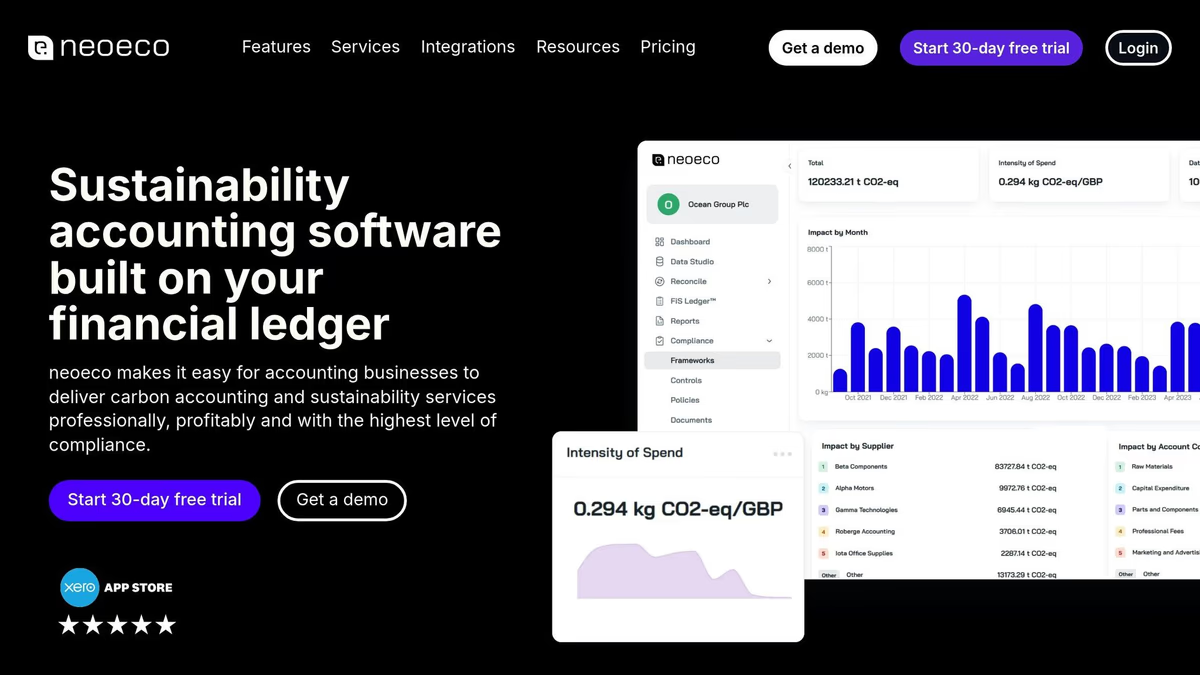
Accurate and traceable data forms the backbone of effective reporting. neoeco simplifies this by working directly with clients' financial ledgers, automatically mapping transactions to recognised emissions categories under frameworks like GHGP, ISO 14064, SECR, and UK SRS. This eliminates manual errors in data conversion and ensures every figure can be traced back to its original transaction.
Transparency is enhanced with tools that support restating Scope 1, 2, and 3 emissions when methodologies or boundaries change. This feature ensures consistency across reporting periods and highlights ongoing improvements. By incorporating financially-integrated sustainability management principles, firms can produce audit-ready reports that meet CDP standards as well as third-party verification requirements.
Scoring Impact on CDP Levels
Climbing CDP’s Disclosure-Awareness-Management-Leadership (DALM) framework requires more than ticking boxes. Companies must meet the criteria of one level before advancing to the next - for example, fulfilling Awareness (C) requirements before progressing to Management (B). Tracking Scope 3 emissions is particularly important for reaching the Management and Leadership levels, as these often represent the largest share of an organisation’s carbon footprint.
Compliance-ready software simplifies third-party verification, which is essential for improving CDP scores. For accounting firms handling multiple clients, tools that streamline the verification process can not only enhance scoring outcomes but also reduce administrative workloads.
Ease of Implementation for Accounting Firms
Once robust data and compliance processes are in place, the next priority is smooth implementation. Tools must integrate seamlessly into existing workflows. neoeco achieves this by connecting effortlessly with platforms like Xero, Sage, and QuickBooks. This ensures that client data flows into a single platform without requiring extra effort, enabling firms to manage sustainability reporting using already trusted financial data.
neoeco’s live checklist feature makes it easy to track progress by showing what’s complete, what’s missing, and what’s ready for review. With all client data consolidated in one platform and sustainability report templates available, firms can produce professional outputs without juggling endless email threads or spreadsheets. For accounting firms, adopting such a tool not only simplifies compliance but also enhances client scores and opens the door to offering sustainability services with minimal disruption or training.
9. Involve Internal and External Stakeholders
Alignment with 2026 CDP Updates
The CDP framework now explicitly designates roles such as General Counsel, CTO, and CGRO as responsible for climate-related accountability. Accounting firms should guide their clients to document these roles in Question 4.1.2, as board-level oversight is a critical factor for achieving Management and Leadership scoring levels. With 79% of the 2022 questions remaining either unchanged or only slightly modified for 2023, firms can prioritise refining stakeholder engagement strategies rather than adapting to constant questionnaire updates. The inclusion of policy and regulatory influence in the questionnaire further highlights the importance of involving government relations teams in the reporting process.
Data Accuracy and Transparency
Accurate and transparent CDP responses hinge on effective collaboration between internal teams and external partners. An integrated approach is becoming more critical, as nearly 66% of companies now disclose nature-related data alongside climate information.
Suppliers play a pivotal role in ensuring precise Scope 3 emissions reporting, which requires a shift towards activity-based vs spend-based carbon accounting methods. The Science-Based Targets Initiative (SBTi) mandates that companies set Scope 3 targets if these emissions account for over 40% of their total emissions, making granular supplier data essential. Moving away from spend-based estimates to activity-based data is increasingly seen as the gold standard for decarbonisation efforts. Establishing a centralised data collection system can help maintain consistency and accuracy, creating a reliable foundation for auditing.
Scoring Impact on CDP Levels
Stakeholder engagement directly influences CDP scoring outcomes. The following table highlights the key internal and external groups involved, their relevant questionnaire sections, and their impact on scoring:
| Stakeholder Group | Relevant CDP Question | Impact on Scoring |
|---|---|---|
| Board/Executive | C1.1a, C1.1b | Crucial for achieving Management and Leadership levels in Governance |
| Legal/General Counsel | C1.1a, C13.3 | Ensures verification accuracy and oversight of public policy engagement |
| Suppliers | C5.11.1, C12.1 | Key for value chain mapping and identifying risks |
| Finance/Accounting | C3.5, C3.5a, C3.5b | Needed for taxonomy alignment and transition plan spending |
Involving these groups strengthens disclosures and improves scoring potential. Proactively engaging with suppliers and external partners lays the groundwork for effective emissions reduction strategies. As Benroy Chan, Sustainability Associate at Schneider Electric, explains:
Ensuring stakeholders are continuously educated on the purpose and benefits of data collection efforts helps secure cooperation.
Ease of Implementation for Accounting Firms
Accounting firms can simplify stakeholder engagement by aligning responsibilities with the CDP "Positions' accountability" framework in Question 4.1.2. Engaging the General Counsel early ensures compliance and accuracy in disclosures, while involving technical teams addresses newer technology-related demands. Firms should also evaluate their reliance on suppliers to meet the requirements of Question 5.11.1. With over 24,000 CDP reports submitted in 2024, maintaining clear internal accountability and fostering strong supplier relationships is essential for producing high-quality, audit-ready responses.
10. Check and Improve Data Traceability
Alignment with 2026 CDP Updates
Having accurate data traceability is crucial for improving CDP scores and ensuring transparency in sustainability reporting. CDP now permits organisations to correct historical emissions data for up to five previous reporting years across Scopes 1, 2, and 3. This flexibility allows accounting firms to address past inaccuracies and maintain consistency as data collection methods evolve. Additionally, the 2026 questionnaire mandates subsidiary-level breakdowns of Scope 1 and 2 emissions (Question C7.7a), enabling traceability down to individual business units. By requiring this level of detail, CDP ensures that large organisations cannot obscure specific emissions sources, reinforcing the audit trail for both internal and external use. This enhanced granularity is a key step in achieving higher CDP scores.
Data Accuracy and Transparency
Traceability plays a direct role in CDP scoring through its 'Essential Criteria'. Failing to meet these criteria caps a company's score at the Awareness level (C or C-), regardless of achievements in other areas. As ClimateSeed highlights:
High-quality data is not just an accurate figure: it is contextualized, traceable, and aligned with the questionnaire's requirements.
For accounting firms, documenting all methodological choices is essential to maintain consistency year-over-year, particularly when assisting clients in meeting science-based targets. Proper traceability ensures reliable trend analysis and supports transparent reporting.
Scoring Impact on CDP Levels
Third-party verification is required to achieve Leadership status (A or A-) and qualify for the CDP A-List. Sustainserv elaborates:
The 'A' scorers, in our experience, have their data verified by an independent entity. Such third-party verification lends greater legitimacy to self-reported data, which CDP awards with higher scores.
Module 13 of the CDP questionnaire focuses on verification and assurance, asking organisations to specify which data points have undergone independent auditing. Companies must also clearly document any excluded Scope 3 emissions sources (Question C6.4) to maintain transparency and avoid penalties.
Ease of Implementation for Accounting Firms
For accounting firms, creating clear audit trails can be streamlined effectively. Tools such as the CDP x CO2 AI Product Ecosystem can automate product-level emissions tracking, reducing the risk of manual errors. For clients with complex organisational structures, subsidiary-level breakdowns (Questions C7.7 and C7.7a) offer a straightforward framework to map emissions to specific business units. The five-year window for restating data, as mentioned earlier, allows firms to apply improved methodologies retroactively, ensuring that trend analysis remains consistent and reliable. Platforms like neoeco further simplify the process by providing finance-grade carbon data, automatically categorised to recognised emissions standards. This ensures an audit-ready, traceable record that aligns with Leadership-level scoring criteria.
Conclusion
Achieving a successful CDP submission hinges on early planning and strong data management practices. Completing the CDP Climate Change Questionnaire isn't just about ticking boxes - it requires careful preparation, precise data collection, and well-defined governance. With CDP's methodology updated multiple times between April and August each year, starting early allows organisations to adapt to these changes without sacrificing the quality of their submissions. Over recent years, minor updates have helped firms establish repeatable workflows, ultimately boosting client scores over time.
Maintaining accurate, verifiable records is crucial, especially since CDP allows organisations to revise up to five years of historical emissions data for Scopes 1, 2, and 3. This flexibility highlights how essential it is to keep high-quality data that meets verification criteria and supports long-term trend analysis.
Clear board-level accountability and forward-looking reporting, such as climate transition plans aligned with a 1.5°C pathway, are also key to achieving higher scores. By combining these elements with a well-defined strategy and effective tools, organisations can significantly enhance their CDP performance.
FAQs
What are the biggest changes to expect in the 2026 CDP questionnaire?
The 2026 CDP questionnaire is set to cover a broader range of topics, including oceans, forests, water security, plastics, adaptation, and resilience. It will also align more closely with frameworks such as the Taskforce on Nature-related Financial Disclosures (TNFD). Additionally, the questionnaire will offer tailored approaches based on company size and sector, ensuring it better reflects the complexities of the global landscape and remains relevant across diverse industries.
How do I choose the right consolidation approach for emissions reporting?
To determine the most suitable consolidation approach, start by evaluating your organisation's structure, control relationships, and reporting needs. Align your method with established frameworks like the GHG Protocol, which allows you to consolidate emissions data based on either financial or operational control. It's also crucial to ensure compliance with local regulations, such as the UK SECR (Streamlined Energy and Carbon Reporting), and prioritise tracking emissions that are most relevant to your operations.
Using tools like neoeco can simplify this process. These tools can map transactions directly to recognised emissions categories, ensuring your reporting is both accurate and compliant.
What evidence is needed to achieve CDP Leadership (A/A-)?
To attain CDP Leadership status (A/A-), you need to demonstrate excellence in key areas such as governance, risk management, setting ambitious targets, and delivering measurable performance on climate-related issues. This requires providing verified and thorough emissions data, following the standards detailed in CDP’s guidance and scoring methodology. Make sure your evidence aligns closely with the criteria outlined in the CDP questionnaire and scoring framework to maximise your scoring potential.