SDG Reporting Tools: Privacy Features Compared

Nov 23, 2025
Explore the privacy and security features of SDG reporting tools essential for UK accounting firms navigating compliance and data protection.
When managing SDG reporting, UK accounting firms handle sensitive data like financial records and emissions metrics. This makes privacy and security non-negotiable. The right SDG reporting tool must comply with GDPR, support UK-specific regulations (SECR, UK SRS), and offer features like role-based access controls, audit logging, and secure data storage.
Key findings:
neoeco stands out with full SOC 2 and GDPR compliance, audit-ready controls, and integrations with Xero, Sage, and QuickBooks.
Other tools like UN Data Commons, SoPact, and Gold Standard lack transparency in privacy features, raising concerns for firms with strict compliance needs.
Quick Comparison:
Feature | neoeco | UN Data Commons for SDGs | SoPact SDG Reporting | Gold Standard SDG Tool |
|---|---|---|---|---|
Data Encryption | Yes (SOC 2, GDPR) | Not disclosed | Not disclosed | Not disclosed |
Role-Based Access | Yes | No | Partial | Not disclosed |
Audit Logging | Yes | No | No | Not disclosed |
UK Regulatory Support | SECR, UK SRS compliance | No | No | No |
For firms prioritising secure, compliant reporting, neoeco offers a clear advantage.
Privacy Requirements for SDG Reporting Tools
Data Types in SDG Reporting
SDG reporting tools handle a variety of sensitive data, including financial ledger details directly pulled from clients' accounting systems for carbon calculations. This data often includes purchase records, supplier payments, energy bills, and travel expenses - all of which are highly confidential and commercially sensitive.
Environmental and emissions data, such as carbon footprints and greenhouse gas emissions across all scopes, provide insights into operational strategies. Analysing this data can reveal inefficiencies, competitive advantages, or strategic decisions that businesses prefer to keep private.
Compliance files, which outline assessments, reduction strategies, and internal policies, carry reputational risks if exposed. For accounting firms managing multiple clients, strict data segregation is crucial to avoid any mix-up or unintentional sharing of sensitive information.
Additionally, unauthorised access to emissions data could expose critical supply chain relationships, operational strategies, or future plans. When personal data, such as employee travel patterns or individual carbon allowances, is embedded within operational metrics, the risk of breaching GDPR regulations becomes a serious concern.
These diverse data types demand tailored privacy measures to ensure secure handling and storage.
Required Privacy Features for SDG Tools
To safeguard sensitive information, SDG reporting tools must incorporate specific privacy features.
SOC 2 compliance: This certification demonstrates that the platform has strong security measures in place for protecting customer data.
Role-based access controls: These ensure that team members only access data relevant to their roles. For instance, a junior analyst shouldn't view strategic reduction plans, while senior partners may require full visibility. This is especially critical for managing Scope 3 emissions, where supply chain data must be carefully segregated among stakeholders.
Audit-ready controls: These allow for detailed tracking of compliance processes, creating a verifiable chain of custody that auditors can rely on.
Secure policy and evidence hubs: These provide controlled storage for compliance documents, enabling firms to organise records effectively while granting auditors easy access when needed.
These technical features form the backbone of compliance efforts for UK firms.
Compliance Requirements for UK Firms
Beyond technical safeguards, UK firms must meet stringent regulatory requirements, starting with GDPR. SDG reporting tools must align with GDPR principles, such as lawful data processing, data minimisation, and respecting individual rights. Clear data processing agreements and detailed records of activities are essential.
SECR (Streamlined Energy and Carbon Reporting) regulations add another layer of responsibility. Firms must manage energy consumption data, carbon calculations, and efficiency measures to meet mandatory reporting obligations.
The UK Sustainability Reporting Standard (UK SRS) further expands the scope for larger companies, requiring tools to handle sustainability metrics that include social and governance factors alongside environmental data.
Modern platforms like neoeco cater to these requirements by ensuring compliance with SOC 2 and GDPR standards while addressing UK-specific frameworks. This enables firms to deliver ISSB reporting services while maintaining robust data security and regulatory compliance.
The overlap between financial and sustainability data presents unique privacy challenges. To navigate this complexity, SDG reporting tools must combine advanced technical security with strong governance frameworks, ensuring client confidentiality across all reporting activities.
Data Protection: Insights on Privacy, Security, and Regulations
SDG Reporting Tools Privacy Features Compared
When choosing an SDG reporting tool, it's essential to evaluate the privacy and security features of each platform - especially for accounting firms managing sensitive client information. While neoeco provides detailed documentation of its privacy measures, other SDG tools leave much to be desired in terms of transparency. Below is a breakdown of how these platforms compare in addressing the privacy requirements of UK accounting firms.
UN Data Commons for SDGs
The UN Data Commons for SDGs allows open access to data but lacks specific privacy controls like comprehensive access management and audit logging. For UK accounting firms navigating GDPR regulations, the platform’s open data-sharing framework may raise concerns about confidentiality. A thorough review of its privacy practices would be advisable.
SoPact SDG Reporting
SoPact provides user permission features but doesn’t clearly outline its readiness for audits. Firms needing transparency in data handling or assurance of audit preparedness might find this platform’s privacy measures insufficient for meeting strict regulatory standards.
Gold Standard SDG Tool

Gold Standard prioritises data integrity but leaves key privacy aspects - such as access control and audit logging - unclear. Accounting firms with stringent data protection requirements may need to seek additional clarification on how this tool safeguards sensitive information.
neoeco: Privacy Features for Accounting Firms
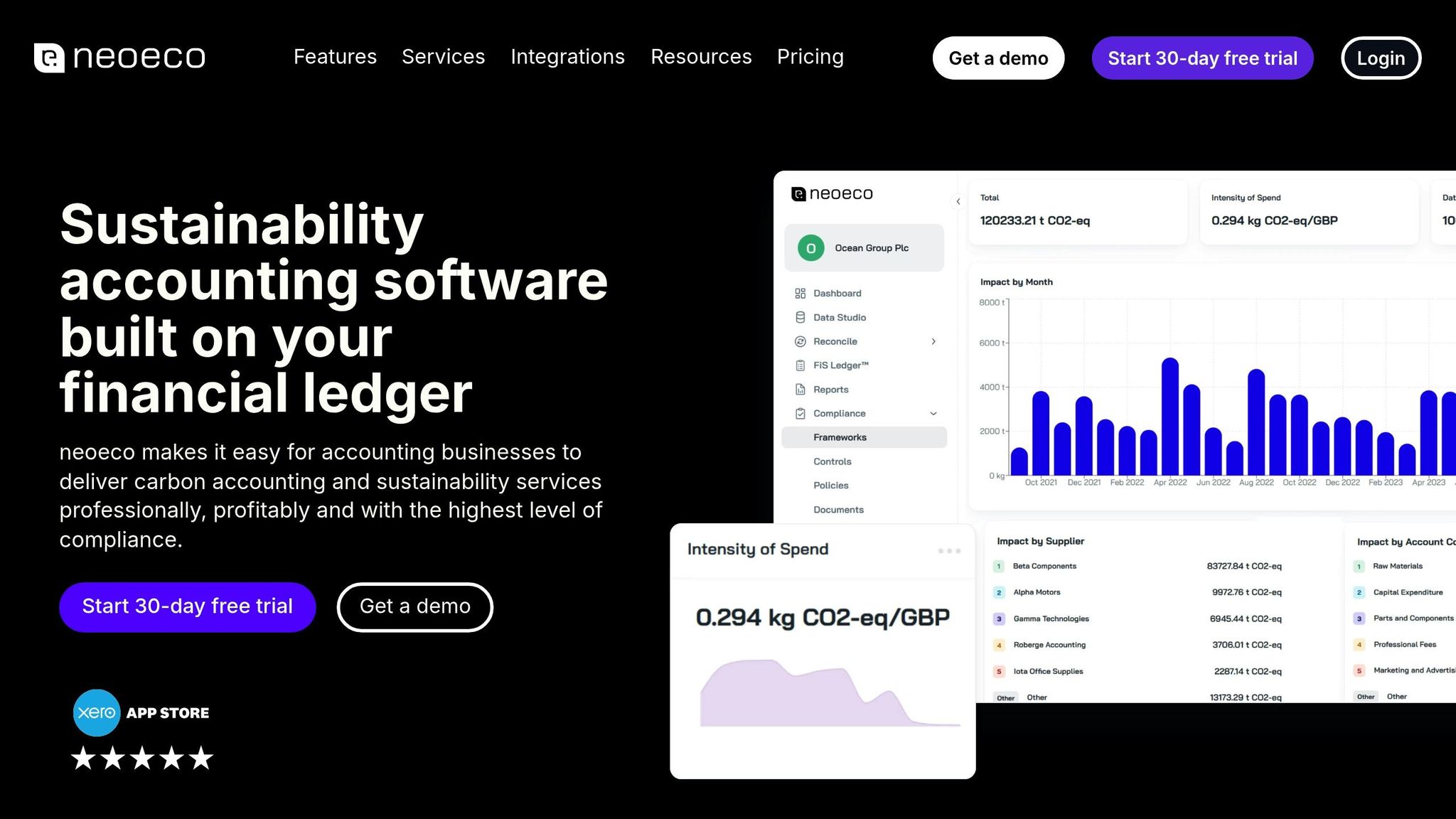
Designed with accounting firms in mind, neoeco delivers robust privacy protections, including full SOC 2 and GDPR compliance. The platform offers audit-ready controls with detailed activity tracking and a secure hub for storing compliance documentation. It also enables controlled access for auditors, ensuring external reviews can take place without compromising data security. Payment processing is handled through Stripe, meaning no card data is stored on the platform. Additionally, neoeco integrates directly with Xero, Sage, and QuickBooks, which reduces data movement and limits privacy risks.
Privacy Features Comparison Table
The table below outlines the privacy features of each platform, highlighting neoeco’s standout capabilities.
Feature | neoeco | UN Data Commons for SDGs | SoPact SDG Reporting | Gold Standard SDG Tool |
|---|---|---|---|---|
Data Encryption | Implied by SOC 2 and GDPR compliance | Not disclosed | Not disclosed | Not disclosed |
Access Controls | Role-based access with auditor permissions | Not disclosed | Not disclosed | Not disclosed |
Audit Logging | Comprehensive activity tracking | Not disclosed | Not disclosed | Not disclosed |
Compliance Standards | SOC 2, GDPR | Not disclosed | Not disclosed | Not disclosed |
Data Segregation | Client-level isolation | Not disclosed | Not disclosed | Not disclosed |
UK Regulatory Support | SECR and UK SRS compliance | Not disclosed | Not disclosed | Not disclosed |
This comparison underscores the gaps in privacy transparency for the UN Data Commons, SoPact, and Gold Standard SDG Tool. Meanwhile, neoeco stands out as a platform explicitly designed to meet the rigorous privacy demands of accounting firms, offering secure, audit-ready solutions. For firms prioritising strong data protection, neoeco presents a clear advantage.
How to Choose the Right SDG Reporting Tool for Privacy and Security
When selecting an SDG reporting tool, prioritising privacy and security is crucial. Here are some key factors to consider to ensure the tool aligns with your firm's data protection standards.
Start with Compliance Certifications
Check whether the tool complies with essential data protection standards. For UK accounting firms, GDPR compliance is mandatory, not optional. Ensure the tool provides clear documentation of its GDPR and SOC 2 compliance. This transparency should be your starting point when evaluating any platform.
Evaluate Data Control and Ownership
It's important to maintain full control over your clients' financial and sustainability data. Opt for tools that minimise external processing risks by integrating directly with financial systems like Xero, Sage, or QuickBooks. This reduces the need for data transfers between systems, helping to preserve data integrity and security.
Assess Audit-Ready Capabilities
Look for platforms with strong audit-ready features. Key functionalities include detailed activity tracking, controlled auditor access, and secure storage for compliance documentation. A dedicated hub for policies and evidence is especially useful for keeping compliance files organised and ensuring your firm is always prepared for audits.
Consider UK-Specific Regulatory Support
Beyond general data protection, ensure the tool supports UK-specific sustainability reporting frameworks. Platforms that align with standards like GHGP, SECR, and the UK SRS can ease the administrative burden of meeting multiple regulatory requirements. This ensures your reports comply with local regulations while safeguarding sensitive data.
Match Tool Capabilities to Your Client Portfolio
Your clients' privacy needs will vary. SMEs may require basic data protection, while larger enterprises often demand more extensive security measures, such as detailed audit trails. Choose a tool that can scale to meet the privacy and security demands of your diverse client base.
For firms adopting financially-integrated sustainability management, it’s vital to select a tool that connects financial and sustainability data seamlessly. At the same time, the tool should maintain strict access controls and ensure clear data separation between clients.
Verify Payment and Integration Security Practices
Examine the platform’s security protocols for payment processing and integrations with financial systems. Tools that rely on reputable payment processors like Stripe and implement robust compliance measures demonstrate a commitment to secure operations. Since financial systems often serve as the first point of data entry, understanding how the tool manages these connections is critical to maintaining overall data security.
Conclusion: Selecting a Secure SDG Reporting Tool
Choosing the right SDG reporting tool means finding the right balance between privacy, security, and functionality, all while keeping up with evolving sustainability standards. A closer look at various platforms shows clear differences in how they handle data protection and compliance.
When it comes to privacy and compliance, meeting standards like GDPR and SOC 2 is non-negotiable. As neoeco highlights, "neoeco is fully SOC 2 and GDPR compliant, ensuring your data is secured and protected", setting a strong benchmark for data security.
Seamless integration with accounting systems like Xero, Sage, or QuickBooks is another priority. These integrations not only improve efficiency but also reduce the risks associated with unnecessary data transfers.
Essential features like robust audit trails, secure evidence storage, and controlled access for auditors are critical for ensuring audit readiness and maintaining trust.
For UK firms, compliance with GHGP, SECR, and UK SRS regulations is a must. These tools should meet local requirements while safeguarding sensitive information.
The future of reporting lies in integrating financial and sustainability data. Companies embracing financially integrated sustainability management need tools that securely connect these areas, ensuring that advanced reporting capabilities never compromise data protection.
Ultimately, the right tool should enhance reporting capabilities, demonstrate strong compliance, and integrate smoothly with existing systems. By prioritising these factors, accounting firms can confidently produce secure, scalable, and future-ready sustainability reports.
FAQs
What privacy features should UK accounting firms prioritise when choosing an SDG reporting tool?
When choosing an SDG reporting tool, UK accounting firms need to focus on privacy features that prioritise data security and compliance with regulations. Here are some key factors to consider:
Data encryption: The platform should use strong encryption protocols to secure sensitive financial and sustainability data, whether it's being transmitted or stored.
Access controls: Opt for tools that provide role-based access, enabling firms to define who can view or modify specific data.
Regulatory compliance: Ensure the tool meets important data protection standards, such as the UK GDPR, to protect client information effectively.
A platform like neoeco can be a smart choice. It integrates seamlessly with financial ledgers and automates carbon reporting, reducing the need for manual data handling. This not only streamlines the process but also limits the risk of human error and unnecessary exposure of sensitive data.
How does neoeco comply with GDPR and other UK-specific regulations?
Neoeco is built with a strong focus on privacy and compliance, ensuring it fully meets GDPR and other UK-specific regulations. By working directly with clients' financial data - without relying on manual data transfers or spreadsheets - it significantly reduces data handling risks. This streamlined approach not only safeguards sensitive information but also delivers secure, audit-ready reporting.
The platform is also in line with established frameworks such as GHGP, ISO 14064, SECR, and UK SRS. This gives businesses the assurance they need to meet both regulatory and sustainability reporting standards, all while upholding top-tier data privacy and security practices.
Why is role-based access control important for SDG reporting tools, and how does it support accounting firms?
Role-based access control (RBAC) plays a key role in SDG reporting tools by ensuring that sensitive financial and sustainability data remains accessible only to authorised individuals. This approach safeguards data privacy, minimises the chances of unauthorised alterations, and helps organisations stay aligned with industry standards.
For accounting firms, RBAC streamlines collaboration by granting team members access solely to the information pertinent to their specific roles. This not only boosts workflow efficiency but also strengthens security measures, offering peace of mind to firms and their clients regarding the reliability of their sustainability reporting processes.