GHG Protocol vs ISO 14064: Scope 3 Standards Compared


Which framework should you use for Scope 3 emissions? It depends on your goals. The GHG Protocol is ideal for detailed internal reporting and voluntary disclosures, while ISO 14064 focuses on third-party verification and compliance. Both standards help organisations measure indirect greenhouse gas emissions across their value chains, but they differ in approach:
- GHG Protocol: Breaks Scope 3 emissions into 15 categories, offering detailed guidance for tracking emissions across upstream and downstream activities. It’s widely used for frameworks like CDP and SBTi but doesn’t include built-in verification.
- ISO 14064: Provides a high-level framework for reporting emissions, with a strong focus on verification through ISO 14064-3. It’s suited for compliance audits and certified reports.
For best results, many organisations use both: the GHG Protocol for calculations and ISO 14064 for external validation. Tools like neoeco simplify this dual approach by automating data mapping and generating audit-ready reports.
The GHG Protocol: Scope 3 Standards
The GHG Protocol stands as the most widely used framework for tracking and managing greenhouse gas emissions. Created by the World Resources Institute (WRI) and the World Business Council for Sustainable Development (WBCSD), it has become the go-to standard for emissions accounting worldwide. Its Scope 3 Standard is the only globally recognised method for measuring emissions across value chains.
The protocol divides Scope 3 emissions into 15 distinct categories, each covering a specific area of upstream and downstream activities. This structured breakdown helps organisations trace emissions linked to various aspects of their value chains, such as purchased goods, business travel, product usage, and end-of-life disposal.
How the GHG Protocol Works
The GHG Protocol uses a systematic approach to categorise emissions. It splits the 15 categories into upstream emissions (Categories 1–8) and downstream emissions (Categories 9–15). Upstream categories focus on indirect emissions from purchased or acquired goods and services, while downstream categories cover emissions from sold goods and services, including distribution and investments.
To make reporting easier, the protocol provides a detailed guidance document. This includes calculation methods like hybrid approaches and the use of Environmentally Extended Input-Output (EEIO) data. By setting clear boundaries for each category, the framework ensures that significant activities are accounted for without requiring exhaustive data collection. For businesses new to managing Scope 3 emissions, the protocol suggests starting with a screening exercise using industry-average or proxy data to identify the most impactful categories.
Benefits for Accounting Firms
The GHG Protocol offers several advantages for accounting firms. Its wide acceptance underpins major disclosure frameworks like CDP, SBTi, TCFD, and the EU's CSRD.
"The new Corporate Value Chain Standard provides a much needed harmonised global methodology for businesses to measure value chain greenhouse gas emissions." - Kelly Semrau, Senior Vice President of Global Corporate Affairs, Communication and Sustainability, S.C. Johnson
For firms helping clients with voluntary disclosures or internal sustainability initiatives, the protocol's detailed guidance and sector-specific tools simplify the often-complex process of emissions calculations. Its focus on measurement and accounting, rather than verification, makes it a practical resource for developing emissions reduction strategies and assessing overall climate impact. This is particularly relevant when evaluating the financial impact of carbon risk for clients. Additionally, the framework offers flexibility in how emissions are categorised, allowing firms to choose between equity share, operational control, or financial control methods when accounting for emissions from subsidiaries, joint ventures, and investments.
ISO 14064: Scope 3 Standards
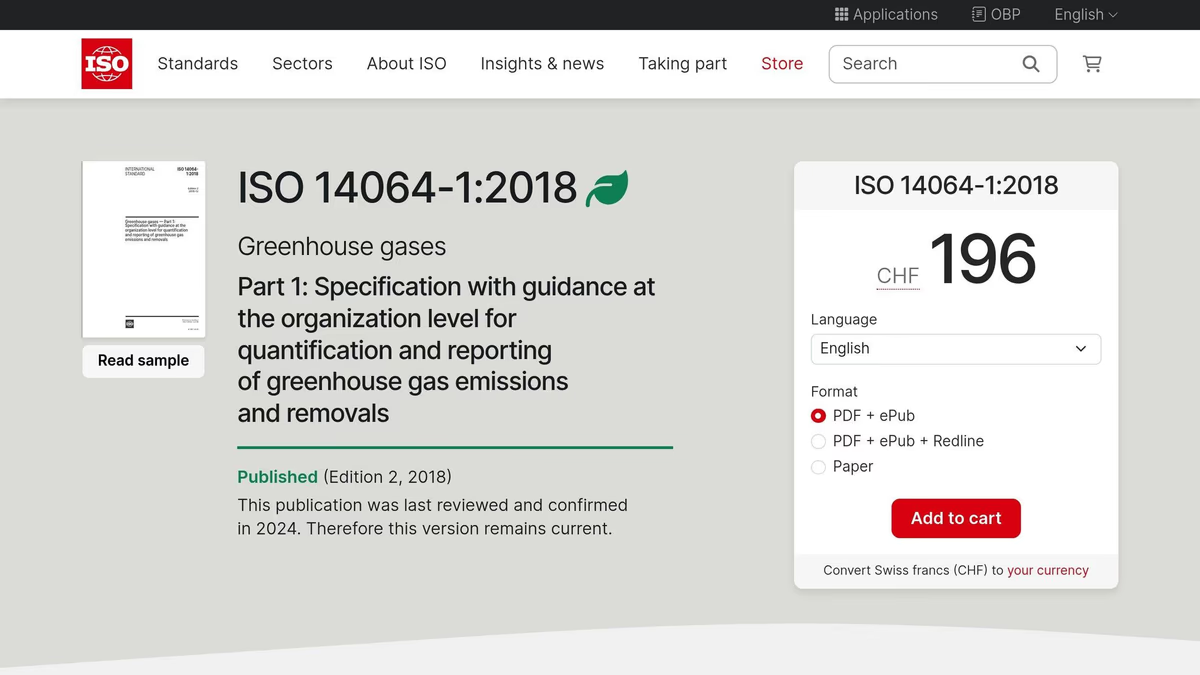
ISO 14064 is a globally recognised set of standards developed by the International Organisation for Standardisation (ISO) to help organisations measure, monitor, report, and verify greenhouse gas (GHG) emissions. While the GHG Protocol focuses on detailed methodologies for calculating emissions, ISO 14064 places a stronger emphasis on verification and compliance, ensuring that external validation is both thorough and reliable. Unlike the GHG Protocol's more granular approach, ISO 14064 is specifically tailored to support third-party verification and certification.
The framework is divided into three key parts: ISO 14064-1 deals with organisation-wide GHG inventories, covering direct and indirect emissions (corresponding to Scopes 1, 2, and 3); ISO 14064-2 provides guidance for project-specific GHG reductions, such as carbon offset initiatives; and ISO 14064-3 outlines the requirements for validating and verifying GHG data, facilitating formal third-party audits. This structure forms the backbone of ISO 14064's operational framework.
How ISO 14064 Works
When addressing Scope 3 emissions, ISO 14064-1 categorises them as "Other indirect emissions." Instead of breaking these emissions into 15 specific categories, as the GHG Protocol does, it offers a flexible, high-level framework for reporting. This flexibility allows organisations to adapt the standard to their unique circumstances while maintaining rigorous quality management and accurate record-keeping.
"The ISO document is shorter and less descriptive. The GHGP is longer, more detailed, and offers motivational reasons for GHG reporting, reflecting its aspirational character." - Matt Spannagle, Member of ISOTC207/WG5
The most relevant section for accounting firms is ISO 14064-3, which defines the formal audit process for third-party verifiers. This section ensures that reported emissions data is accurate and complete. The certification process typically takes three to six months, depending on the organisation's size and the complexity of its data. By providing a robust yet adaptable framework, ISO 14064 simplifies internal reporting processes and lays the groundwork for credible third-party verification.
Benefits for Accounting Firms
For accounting firms involved in compliance audits and verified reporting, ISO 14064 offers several key benefits. Its integrated verification standard enhances the credibility of client disclosures, particularly for international contracts and regulatory compliance. Additionally, it aligns with global regulations such as the EU Corporate Sustainability Reporting Directive (CSRD) and the SEC's climate disclosure requirements, making it an essential tool for preparing audit-ready data.
"ISO 14064 is built for third-party certification, making it ideal for organisations seeking independently verified reports." - carbonaccounting.uk
Many accounting firms rely on the GHG Protocol to structure and calculate emissions data internally, then turn to ISO 14064-3 for external verification. This complementary use of the two frameworks ensures reliable Scope 3 emission reporting. In fact, 92% of Fortune 500 companies responding to the CDP in 2016 used the GHG Protocol either directly or indirectly, underscoring the importance of ISO 14064 as a verification standard for these widely adopted reports. This dual approach enhances trust and reliability in emissions reporting, particularly for firms managing complex data sets.
GHG Protocol vs ISO 14064: Side-by-Side Comparison
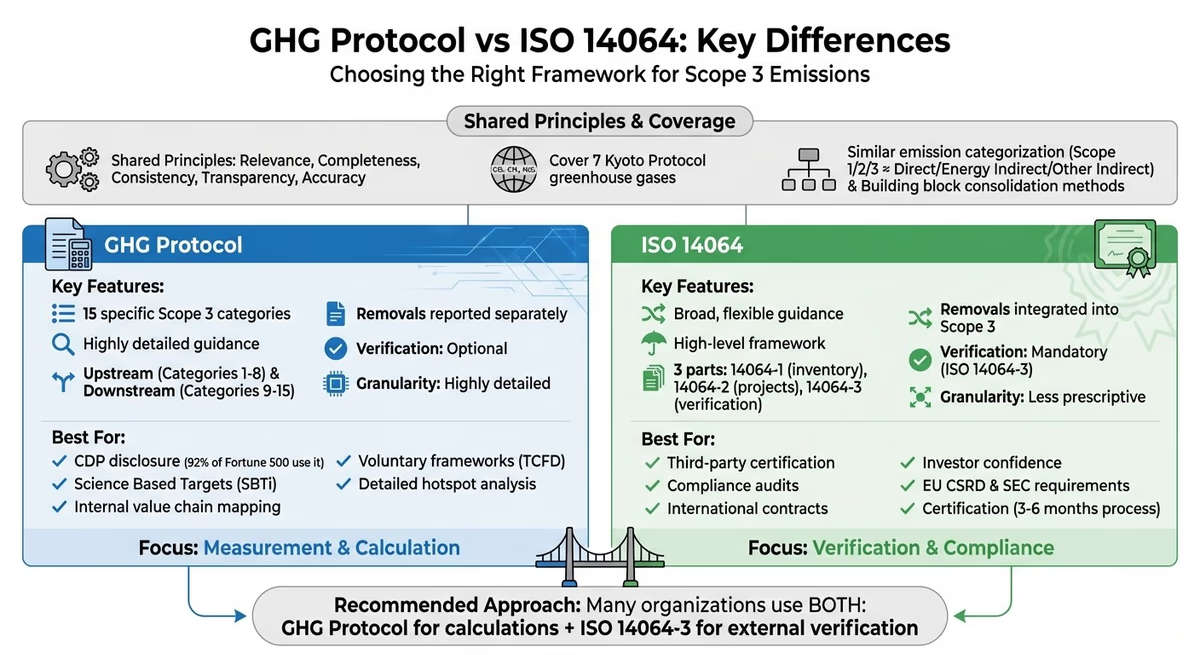
GHG Protocol vs ISO 14064 Standards Comparison for Scope 3 Emissions
What They Have in Common
Both the GHG Protocol and ISO 14064 share a foundation of essential principles for emissions reporting. They emphasise relevance, completeness, consistency, transparency, and accuracy. Both frameworks also require accounting for the seven greenhouse gases identified in the Kyoto Protocol: carbon dioxide (CO2), methane (CH4), nitrous oxide (N2O), hydrofluorocarbons (HFCs), perfluorocarbons (PFCs), sulphur hexafluoride (SF6), and nitrogen trifluoride (NF3).
When it comes to categorising emissions, the two standards use comparable approaches. The GHG Protocol’s Scope 1, 2, and 3 emissions align closely with ISO 14064-1’s Direct, Energy Indirect, and Other Indirect emissions. Both rely on "building block" methods to consolidate data, defining organisational boundaries based on operational control, facility ownership, or equity share.
"In the majority of cases a company GHG report that meets ISO needs would also meet GHGP needs, and vice versa." - Matt Spannagle, Member of ISOTC207/WG5
This alignment is particularly useful for organisations aiming to produce audit-ready reports that combine rigorous calculation with the option for independent validation. While the GHG Protocol provides detailed methodologies for calculations, ISO 14064-3 offers a structured process for third-party verification. For businesses grappling with Scope 3 emissions and their broader reporting strategies, understanding both frameworks is key to effective compliance and reporting.
Where They Differ
Despite their shared principles, these standards differ significantly in their focus and application. The GHG Protocol dives into 15 specific Scope 3 categories, offering detailed guidance for each one. ISO 14064, on the other hand, takes a broader, high-level approach, providing flexible guidance.
| Feature | GHG Protocol | ISO 14064 |
|---|---|---|
| Detail | 15 specific categories | Broad, flexible guidance |
| Removals Integration | Reported separately | Integrated into Scope 3 |
| Verification | Optional | Mandatory (ISO 14064-3) |
| Granularity | Highly detailed | Clear inclusions, less prescriptive |
One major distinction is the role of verification. The GHG Protocol does not include a built-in standard for verification, leaving external assurance as an optional step. In contrast, ISO 14064-3 is designed specifically for third-party certification, offering a formal process for validating and verifying greenhouse gas data. This makes ISO 14064 a strong choice when regulatory compliance or investor requirements necessitate independently verified reports.
Another key difference lies in how carbon removals, such as those from forestry or land-use projects, are handled. ISO 14064-1 incorporates these removals directly within organisational reporting. In comparison, the GHG Protocol treats removals separately, addressing them through dedicated guidance documents. This distinction can influence how organisations structure and present data on carbon sinks and related activities.
Which Standard Should You Use?
When it comes to Scope 3 methodologies, choosing the right standard really hinges on your client's specific reporting objectives.
When to Use the GHG Protocol
The GHG Protocol is the go-to choice for clients focusing on voluntary disclosure frameworks like the Carbon Disclosure Project (CDP), Science Based Targets initiative (SBTi), or the Task Force on Climate-related Financial Disclosures (TCFD). Back in 2016, a staggering 92% of Fortune 500 companies relied on the GHG Protocol, making it a trusted option for organisations prioritising these frameworks and aiming for detailed supply chain mapping , often supported by Life Cycle Assessments.
If your client needs to pinpoint emission "hotspots" across their value chain - whether it’s from purchased goods or business travel upstream, or the use of sold products downstream - the GHG Protocol’s sector-specific tools offer the depth required. This makes it especially useful for large, globally-operating enterprises or organisations creating their first detailed carbon inventory. Its compatibility with financially-integrated approaches to Scope 3 management further strengthens its appeal.
However, if external verification is a key priority, ISO 14064 might be the better fit.
When to Use ISO 14064
ISO 14064 is ideal for clients who need third-party verification to build credibility with investors, regulators, or contractual partners. Its mandatory ISO 14064-3 verification process ensures external assurance, which is particularly valuable for compliance audits and investor confidence.
"ISO 14064 provides the internationally recognised framework that organisations use to measure, report, and verify their GHG emissions with consistency and integrity." - Carbon Accounting UK
This structured approach makes ISO 14064 an excellent choice for compliance audits and international contracts, where achieving "certified" status can enhance ESG credentials. The certification process usually takes three to six months, depending on the complexity of the organisation. For SMEs seeking verified carbon claims or companies preparing for mandatory CSRD audits under frameworks like the EU's CSRD, ISO 14064 delivers the level of formal assurance that external stakeholders demand.
Decision Guide: Matching Goals to Standards
Here’s a quick guide to help match client objectives with the most suitable standard:
| Client Goal | Recommended Standard | Why |
|---|---|---|
| Setting Science Based Targets | GHG Protocol | Required foundation for SBTi validation |
| CDP Disclosure | GHG Protocol | Trusted by 92% of Fortune 500 CDP respondents |
| Third-Party Certification | ISO 14064 | Built-in verification via ISO 14064-3 |
| Contract Bidding (ESG Requirements) | ISO 14064 | Provides formal "stamp of approval" |
| Internal Value Chain Strategy | GHG Protocol | Offers 15 categories for detailed hotspot analysis |
| Compliance Audits | ISO 14064 | Structured verification for regulators |
| Project-Level Carbon Offsets | ISO 14064-2 | Specific requirements for offset projects |
For comprehensive results, many organisations use the GHG Protocol for internal calculations and ISO 14064 for external verification - combining technical precision with formal assurance.
How neoeco Supports Scope 3 Reporting Under Both Standards
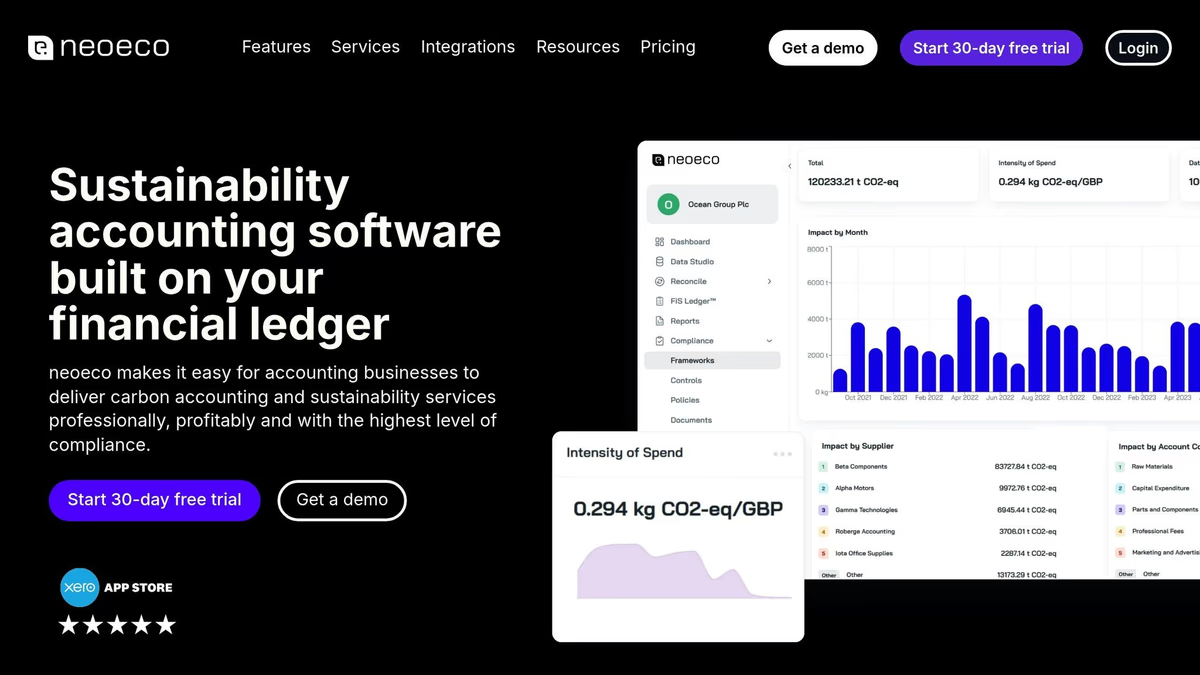
For accounting firms juggling Scope 3 emissions reporting, neoeco simplifies the process by providing a single platform that aligns with both the GHG Protocol's measurement framework and ISO 14064's verification standards.
neoeco's Scope 3 Reporting Features
Accurate Scope 3 reporting hinges on seamless financial integration. Designed specifically for accounting firms in the UK and Australia, neoeco connects directly with financial tools like Xero, Sage, and QuickBooks. It automatically maps transactions across the GHG Protocol's 15 Scope 3 categories - covering everything from purchased goods and services to investments - saving countless hours that would otherwise be spent on manual spreadsheet work by transitioning to activity-based data.
The platform also ensures data integrity and traceability systems through built-in controls. Additionally, neoeco provides compliance templates that organise data for both in-depth internal reviews and ISO 14064 verification. This comprehensive approach makes it easier for firms to guide their clients through the compliance process.
What This Means for Accounting Firms
neoeco fits seamlessly into your existing workflows, taking care of mapping, categorisation, and compliance tasks. This allows you to focus on offering strategic advice to clients while also broadening the scope of your services.
With neoeco, you get a centralised solution for managing sustainability reporting - whether it's a basic carbon footprint analysis or a fully verified ISO 14064 report. The platform grows with your practice, ensuring clarity for internal teams and confidence for external stakeholders. Pricing starts at £399 per year for carbon-only reporting, making it an accessible option for firms looking to enhance their sustainability services.
Conclusion
Each standard serves a specific purpose in carbon reporting. The GHG Protocol, with its 15 categories, is ideal for internal carbon footprinting and voluntary frameworks like CDP and SBTi. On the other hand, ISO 14064 emphasises verification and certification, particularly through its formal ISO 14064-3 process.
"The GHG Protocol provides depth, structure, and alignment with global initiatives, while ISO 14064 offers clarity, flexibility, and third-party assurance." - CarbonAccounting.uk
In essence, the GHG Protocol is best suited for internal strategies and voluntary reporting, while ISO 14064 is the go-to for certified, compliance-ready reports. Many organisations find value in combining both - using the GHG Protocol for calculating emissions and ISO 14064-3 for external verification.
Platforms like neoeco streamline this process by automating transaction mapping and generating audit-ready documentation. This makes Scope 3 reporting under both standards seamless, eliminating the need for manual spreadsheets. Learn more about how financially integrated reporting simplifies Scope 3 management.
FAQs
What’s the difference between the GHG Protocol and ISO 14064 for Scope 3 emissions?
The GHG Protocol and ISO 14064 both assist organisations in addressing Scope 3 (value-chain) emissions, but they serve different purposes and are applied in distinct ways.
The GHG Protocol provides a Scope 3 Standard that includes detailed guidance on 15 emission categories, along with methods for data collection and calculation. It’s a popular choice for corporate reporting frameworks such as CDP and the Science-Based Targets initiative, offering a structured approach to emissions accounting.
ISO 14064, by contrast, is a broader standard that spans organisational inventories, project accounting, and third-party verification. While it does cover Scope 3 emissions, it doesn’t break them down into specific categories like the GHG Protocol. Instead, its strength lies in offering a solid framework for verification and certification of emissions data.
In practice, organisations often use the GHG Protocol for detailed emissions calculations and disclosures, while ISO 14064 is favoured for ensuring data accuracy through third-party assurance and compliance. Together, these standards provide complementary tools for thorough and reliable carbon reporting.
What are the benefits of using both the GHG Protocol and ISO 14064 for carbon accounting?
Using the GHG Protocol alongside ISO 14064 gives organisations a thorough and dependable method for tracking and reporting carbon emissions. The GHG Protocol serves as a globally recognised framework for calculating emissions across Scope 1, 2, and 3, and it underpins many reporting initiatives, such as CDP and the Science-Based Targets initiative.
On the other hand, ISO 14064 adds value by offering a widely accepted standard for verifying and certifying emissions data. This ensures third-party validation, enhances credibility, and aligns with audit-ready standards. Together, these frameworks enable organisations to create precise, finance-grade carbon inventories that comply with regulations, support voluntary goals, and strengthen trust with stakeholders.
Which standard is more suitable for companies needing third-party verification of their emissions data?
For organisations needing third-party verification of their emissions data, ISO 14064 often stands out as the preferred standard. Specifically, Part 3 of ISO 14064 is designed to handle the verification and validation of greenhouse gas statements. It offers a solid framework to ensure emissions data is accurate, reliable, and aligned with international best practices.
Although the GHG Protocol is a popular tool for emissions reporting, it doesn't provide the same level of detail when it comes to verification processes. This makes ISO 14064 a better fit for organisations seeking to meet stricter verification standards.