Real-Time Data for Scope 1, 2, and 3 Emissions

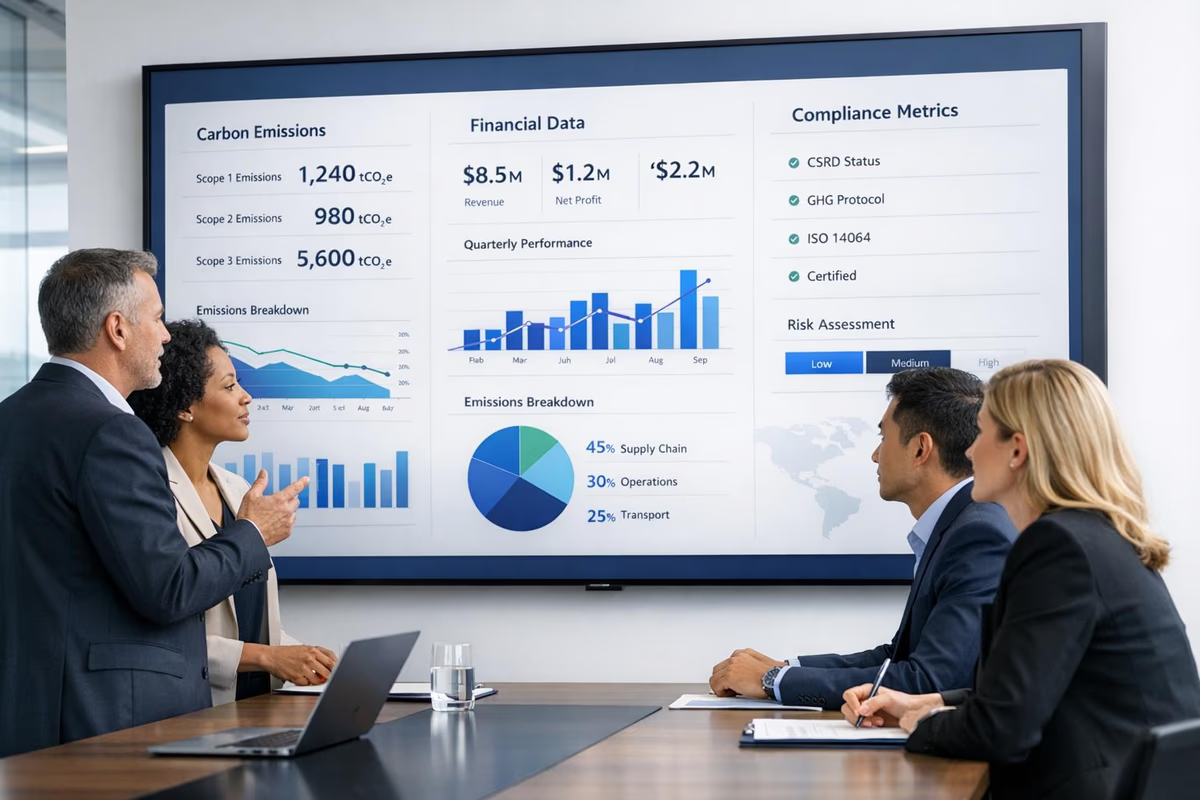
Real-time emissions tracking transforms how companies measure and report carbon emissions. By integrating financial systems like Xero or Sage with emissions data, businesses can monitor Scope 1, 2, and 3 emissions continuously, ensuring accuracy and audit readiness. This approach is particularly useful for Scope 3, which often accounts for the majority of emissions. This is often addressed through supplier ESG data integration to improve reporting accuracy. Automated platforms eliminate manual errors, simplify compliance with frameworks like SECR, and enable organisations to identify emissions trends and hotspots. For accounting firms, this creates opportunities to offer reliable sustainability services while streamlining their processes.
Key Highlights:
- Scope 1: Direct emissions from owned or controlled sources (e.g., company vehicles, fuel use).
- Scope 2: Indirect emissions from purchased energy (e.g., electricity, heating).
- Scope 3: Indirect emissions across the value chain (e.g., supplier activities, product disposal).
- Technology Integration: Tools like neoeco link financial transactions to emissions categories, enabling continuous tracking.
- Benefits: Improved accuracy, reduced manual effort, audit-ready reports, and compliance with UK regulations like SECR.
Real-time tracking not only simplifies compliance but also creates new revenue streams for firms, as sustainability services become a growing demand.
How Can We Effectively Track Scope 3 Emissions In Supply Chain? - Smart Logistics Network
What Are Scope 1, 2, and 3 Emissions and Where Does the Data Come From?
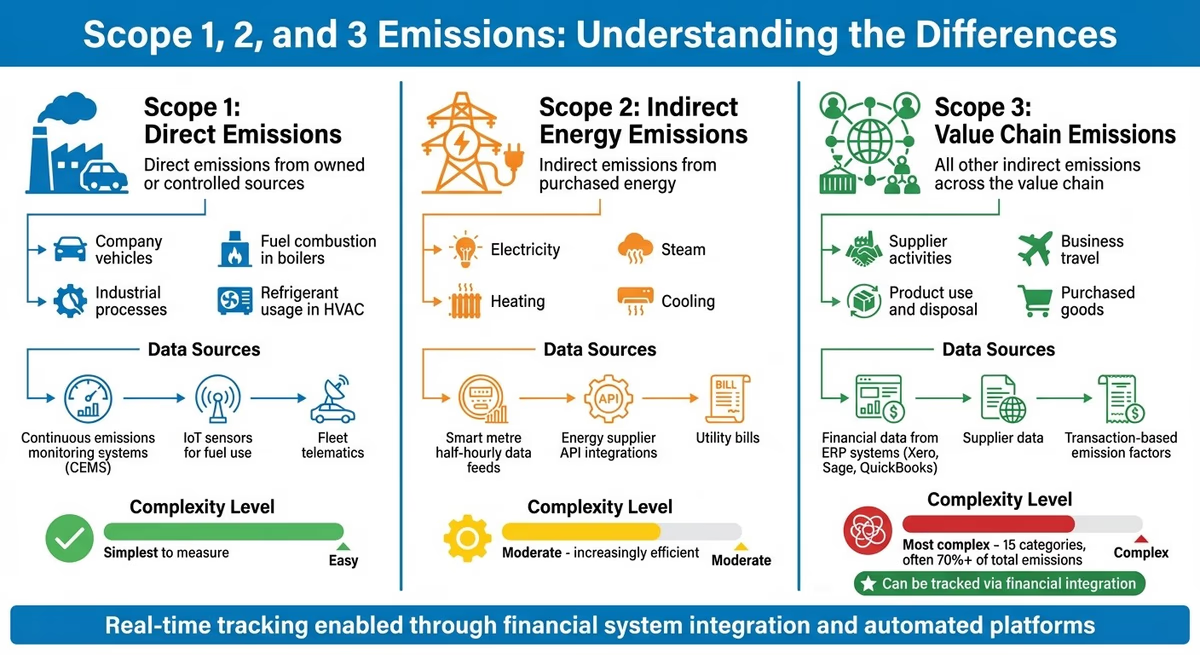
Understanding Scope 1, 2, and 3 Emissions: Sources and Tracking Methods
Understanding the three scopes of emissions is the foundation of precise carbon accounting. According to the GHG Protocol, each scope involves unique data sources and collection methods. Here's a closer look at how data is gathered and monitored for each emission scope.
Scope 1: Direct Emissions
Scope 1 emissions are those directly produced by sources that an organisation owns or controls. These include emissions from fuel combustion in boilers, company-owned vehicles, and industrial processes. Real-time tracking is possible with tools like continuous emissions monitoring systems (CEMS), IoT sensors to monitor fuel use in fleet vehicles, and systems to track refrigerant usage in HVAC equipment. Since this data comes directly from the organisation's operations, Scope 1 emissions are generally the simplest to measure.
Scope 2: Indirect Emissions from Energy Use
Scope 2 emissions come from the energy an organisation purchases, such as electricity, steam, heating, or cooling. While the actual emissions occur at the energy provider's facilities, they are attributed to the organisation because they result from its energy consumption. Thanks to advancements in technology, tracking Scope 2 emissions has become more efficient. For instance, many UK energy suppliers now provide half-hourly data feeds through smart metres and API integrations, allowing organisations to monitor their energy use continuously instead of relying on quarterly bill estimates.
Scope 3: Indirect Emissions Across the Value Chain
Scope 3 emissions cover all other indirect emissions within an organisation's value chain. These include upstream emissions, like those from suppliers and business travel, and downstream emissions, such as those linked to product use and disposal. With 15 categories ranging from purchased goods to end-of-life treatment, Scope 3 is the most complex to measure, requiring activity-based data and collection from various external sources.
One practical way to manage Scope 3 emissions is by leveraging financial data. By integrating ERP systems such as Xero, Sage, or QuickBooks, organisations can link transactions directly to emission categories. For example, a supplier payment of £5,000 can be translated into carbon equivalents using established emission factors. This method utilises existing financial records to provide continuous and audit-ready emission data.
How Technology Enables Real-Time Emissions Monitoring
Advancements in technology have completely changed the way emissions are tracked. Instead of relying on outdated quarterly estimates, businesses now have access to continuous, finance-grade data that’s always ready for auditing. This shift eliminates the delays of traditional reporting, allowing companies to monitor their carbon footprint in real time with the same level of precision as financial accounting. It’s a seamless way to align emissions tracking with financial systems.
Cloud Platforms and Automation Tools
Cloud-based platforms have introduced a smarter way to track emissions by working at the transactional level - essentially creating a "green ledger." Gone are the days of juggling spreadsheets and manual calculations. These platforms integrate directly with financial systems, automatically mapping every transaction to the correct emissions category under frameworks like GHGP, ISO 14064, SECR, UK SRS, and ASRS 2.
Take platforms like neoeco, for example. They connect directly to tools like Xero, Sage, or QuickBooks, transforming existing financial records into carbon accounts that are ready for audits. Every transaction is automatically converted into accurate, audit-ready carbon data.
| Feature | Manual Spreadsheets | Specialised Platforms (e.g., neoeco) |
|---|---|---|
| Data Source | Manual entry from various sources | Direct integration with financial ledgers |
| Automation Level | Low (manual entry and calculation) | High (automated transaction mapping) |
| Accuracy | Prone to human error | High accuracy with robust methodologies |
| Audit Readiness | Requires extensive manual preparation | Automated audit controls and secure evidence |
AI and Machine Learning for Data Analysis
AI and machine learning are changing the game for emissions data analysis. These tools can process massive datasets to uncover anomalies and fill in data gaps, ensuring the information meets audit-grade standards even before reporting begins. But they don’t stop there - AI systems also identify patterns and flag unusual spikes, helping organisations pinpoint where changes in their carbon footprint are occurring.
For businesses managing complex portfolios or multiple clients, AI platforms simplify baseline management. They can automatically adjust historical emissions data to account for acquisitions or divestitures, removing the need for tedious manual recalculations. This is particularly useful for firms aiming to maintain accuracy across changing business structures. Tools for aligning ESG data with ISSB show how AI fits into a financially integrated emissions strategy, keeping baselines up to date with minimal effort.
While automated analysis handles the heavy lifting, real-time data capture ensures the information is grounded in reality.
Sensors and IoT Devices
IoT sensors, smart metres, and telematics devices are revolutionising emissions tracking by capturing data directly at the source. Whether it’s measuring fuel usage in delivery vehicles, monitoring electricity consumption in warehouses, or tracking refrigerant levels in HVAC systems, these devices provide continuous insights that replace outdated quarterly estimates.
By embedding data capture at the operational level, organisations can ensure their emissions data is finance-grade and ready for audits. Modern platforms take this one step further by automatically ingesting and standardising data from utility providers and logistics partners, reducing errors and streamlining the entire process. As SAP aptly puts it:
Companies can't manage what they don't measure
This highlights the importance of real-time sensors in delivering precise, ongoing measurements that are critical for effective carbon management.
How to Implement Real-Time Emissions Tracking Using Financial Data
To enable real-time emissions tracking, companies can leverage their existing financial systems. By integrating sustainability data directly into financial ledgers, businesses can eliminate the need for cumbersome spreadsheets and produce audit-ready carbon accounts.
This approach builds on technological advancements and transforms emissions tracking by connecting it seamlessly to financial data.
The Financially-Integrated Sustainability Management (FiSM) Approach
The FiSM approach embeds carbon tracking directly into financial systems, ensuring emissions data matches the precision of financial records. Every transaction - such as fuel purchases or electricity bills - is automatically assigned to the correct emissions category using recognised frameworks like the GHGP, ISO 14064, SECR, or UK SRS.
Platforms like neoeco simplify this integration by linking directly to established accounting tools like Xero, Sage, and QuickBooks. This eliminates the need for separate sustainability systems and ensures that all data is backed by auditable evidence. It also aligns naturally with global reporting standards like ISSB, where financial and sustainability disclosures are interconnected.
This method ensures that emissions tracking is continuous, accurate, and compliant with reporting requirements.
Implementation Steps
Once the FiSM framework is in place, implementation becomes more straightforward. Here’s how to get started:
- Focus on Key Scope 3 Categories: Begin by identifying the most relevant Scope 3 emissions categories for your business. Since these often represent over 70% of total emissions, targeting key areas first keeps the process manageable while maintaining accuracy.
- Integrate Financial and Emissions Systems: Start with spend-based data to enable real-time tracking of transactions. Over time, refine the system by incorporating activity-based or supplier-specific data for increased precision. Automating data capture by connecting internal systems with external data providers reduces manual input and ensures a steady flow of information.
- Set Up Real-Time Dashboards: Use platforms equipped with automated audit controls and evidence hubs to monitor progress effectively. These dashboards attach supporting documentation to each data point, simplifying audits and ensuring compliance. For SECR, this means reporting energy use in kWh, Scope 1 and 2 emissions in tonnes of CO₂e, emissions intensity ratios, and efficiency measures. With over 10,000 UK businesses affected by SECR, such systems are increasingly necessary.
Why Real-Time Emissions Tracking Matters
Real-time emissions tracking is transforming how accounting firms approach sustainability reporting. Gone are the days of scrambling for data at year-end. With real-time systems, firms can produce carbon accounts that meet the same high standards as financial reports. Unlike manual methods, which are prone to errors, specialised platforms like neoeco streamline the process by linking financial records directly to emission categories. This creates a "Green Ledger" that helps organisations continuously refine their emissions management.
Better Accuracy and Audit Readiness
Real-time data removes much of the uncertainty that often complicates annual reporting. By integrating emissions tracking into financial systems, every transaction - whether it's a fuel purchase or an electricity bill - is automatically categorised under frameworks like GHGP, ISO 14064, SECR, or UK SRS. The outcome? Audit-ready reports with built-in controls and evidence hubs.
These automated platforms also attach supporting documents to each transaction, creating a clear evidence trail. This eliminates the need for endless email threads or last-minute searches for receipts, making compliance a smoother process. Firms can also use an ESG compliance checker to ensure they meet evolving standards. For accounting firms, this means they can consistently deliver reliable reports to clients without significantly increasing their workload.
Finding Emission Hotspots and Trends
Continuous monitoring provides insights that annual reviews often miss. With real-time data, firms can identify inefficiencies such as excessive energy use or carbon-heavy logistics as they occur. This level of detail allows firms to focus on specific high-emission areas rather than relying on broad averages.
Aligning emissions reporting with regular financial reviews - whether monthly or quarterly - enables organisations to shift from reactive to proactive management. Processing times shrink from weeks to days, giving firms the ability to engage with suppliers on emissions issues before regulatory or cost pressures escalate. For more on managing emissions effectively, learn how activity-based data improves Scope 3 reporting.
New Revenue Opportunities for Accounting Firms
Real-time emissions tracking doesn't just enhance accuracy - it also creates new business opportunities for accounting firms. As sustainability reporting becomes a requirement for more businesses, firms equipped with the right tools can offer these services efficiently and profitably. Platforms like neoeco, which integrate seamlessly with Xero, Sage, and QuickBooks, allow firms to expand into sustainability reporting without disrupting their existing workflows or needing extensive retraining.
Beyond compliance, firms can provide ongoing advisory services, helping clients interpret emissions data, pinpoint reduction opportunities, and prepare for shifting regulations. This opens the door to recurring revenue streams while strengthening client relationships. With neoeco's Carbon-Only Plan starting at £399 per year, firms can enter this growing market with minimal upfront costs, all while maintaining the precision and reliability expected in financial reporting.
Conclusion
Switching to real-time emissions tracking takes sustainability reporting from being a yearly headache to a seamless, ongoing process. By linking carbon data directly to financial transactions, businesses can achieve the same level of precision and reliability as they do with financial reporting. This approach eliminates the risks of spreadsheet errors and ensures reports are ready for audits and compliant with key frameworks.
With tools like Green Ledgers, emissions can now be tracked as accurately as financial data - sometimes even at the level of individual transactions. This level of detail allows businesses to spot emission hotspots in real time, offer timely advice to clients, and respond quickly to regulatory demands. Instead of focusing on speeding up processing times, this capability enables firms to make faster, smarter decisions, improving client relationships and giving them a competitive edge.
Beyond compliance, this approach opens doors for growth. For accounting firms, platforms such as neoeco make the shift to sustainability services straightforward. With seamless integration into tools like Xero, Sage, and QuickBooks, these platforms help firms diversify their offerings. Features like automated transaction mapping, a secure evidence hub, and live dashboards not only simplify compliance but also create new revenue opportunities. As Stephen Pell, a Xero user, put it:
End to end reporting solution built for accountants. Seamlessly integrates with Xero! - Stephen Pell, Xero User Review
FAQs
How does tracking emissions in real time enhance audit readiness?
Tracking emissions in real time strengthens audit readiness by ensuring a steady stream of verified, precise data is available in one unified system. This approach removes the hassle of manual data handling, minimises the risk of errors, and helps businesses align with crucial reporting frameworks like CSRD and ISSB.
With automated processes that map transactions to established emissions categories, real-time tracking provides a transparent, audit-ready record. This not only makes reporting more straightforward but also boosts confidence in the accuracy and dependability of the data organisations rely on.
What are the advantages of linking emissions data to financial systems?
Integrating emissions data with financial systems brings a host of advantages. By merging carbon metrics with transaction records, organisations can streamline processes by eliminating duplicate data entry and reducing manual errors. This creates a single, reliable source of truth that is both finance-grade and audit-ready. With real-time data updates, businesses can continuously monitor Scope 1, 2, and 3 emissions, allowing them to quickly pinpoint problem areas and take corrective action.
This integration also makes compliance much easier. Emissions data can be automatically mapped to frameworks like the UK SECR, UK SRS, and EU CSRD, saving time and reducing the risk of non-compliance. Having financial and sustainability data on one platform enables firms to produce accurate, audit-ready reports swiftly, which can help build trust with stakeholders.
On top of that, linking emissions data with financial insights can significantly improve strategic decision-making. Accountants can identify suppliers with a large environmental impact, engage with them more effectively, and suggest cost-efficient methods to lower emissions - all without leaving their existing workflows. This not only boosts operational efficiency but also helps firms position themselves as leaders in both profitability and sustainability.
How can accounting firms use real-time emissions data to create new revenue streams?
Accounting firms have an opportunity to turn real-time emissions data into a powerful service by weaving carbon metrics into financial reporting workflows. By employing automated tools, firms can track Scope 1, 2, and 3 emissions directly at the transaction level. This approach ensures clients receive audit-ready data that aligns with compliance frameworks like SECR, UK SRS, and the forthcoming CSRD standards. With this capability, firms can offer services like ongoing monitoring, pinpointing emissions hotspots, and scenario planning - helping clients act swiftly on opportunities to reduce their carbon footprint.
The availability of real-time data also unlocks fresh advisory possibilities. For example, firms can connect emissions data to supplier-level insights, allowing them to guide clients on ESG-compliant procurement, negotiate contracts with lower environmental impact, and maintain supply chain compliance. These advisory services, which tap into the growing demand for sustainable business practices, can command premium fees. Moreover, by integrating emissions data with platforms like Xero, Sage, or QuickBooks, firms can combine carbon reporting with existing audit services, offering clients a seamless and more comprehensive solution.
The continuous and detailed nature of this data also paves the way for firms to develop advanced analytics tools. Dashboards, KPI trackers, and predictive models are just a few examples of tools that can be created and offered as additional services. By licensing or selling these tools, firms can turn compliance work into a steady revenue stream while establishing themselves as leaders in sustainability-focused financial advice.