Checklist: Conducting Materiality and Risk Analysis
Dec 30, 2025
Checklist to align materiality and risk analysis with IFRS S1/S2: set thresholds, prioritise risks and automate audit‑ready sustainability reporting.
Materiality identifies information critical for decision-making, including financial and societal impacts.
Risk analysis ranks potential threats, such as climate risks or regulatory changes, affecting financial and sustainability reporting.
Aligning these processes ensures better resource allocation, stronger internal controls, and compliance with frameworks like IFRS S1 and S2 (effective from 1 January 2024).
Key Steps:
Identify stakeholders and gather data: Engage investors, employees, and regulators to define material issues. Use both quantitative (e.g., revenue, emissions) and qualitative data (e.g., reputational risks).
Set materiality thresholds: Combine financial benchmarks (e.g., 5% of net income) with non-financial factors like legal and reputational risks.
Map material topics to frameworks: Align findings with standards like SECR, UK SRS, or IFRS S1/S2 for compliance.
Conduct risk analysis: Identify risks tied to material topics, assess their likelihood and impact, and prioritise them based on cost, feasibility, and deadlines.
Develop mitigation strategies: Focus on reducing risks efficiently while staying within regulatory timelines.
Tools:
Platforms like neoeco simplify these processes by automating data collection, setting thresholds, and generating compliant reports. This reduces manual errors and ensures audit readiness.
By integrating materiality and risk analysis, businesses can meet regulatory expectations, support decision-making, and address stakeholder concerns effectively.
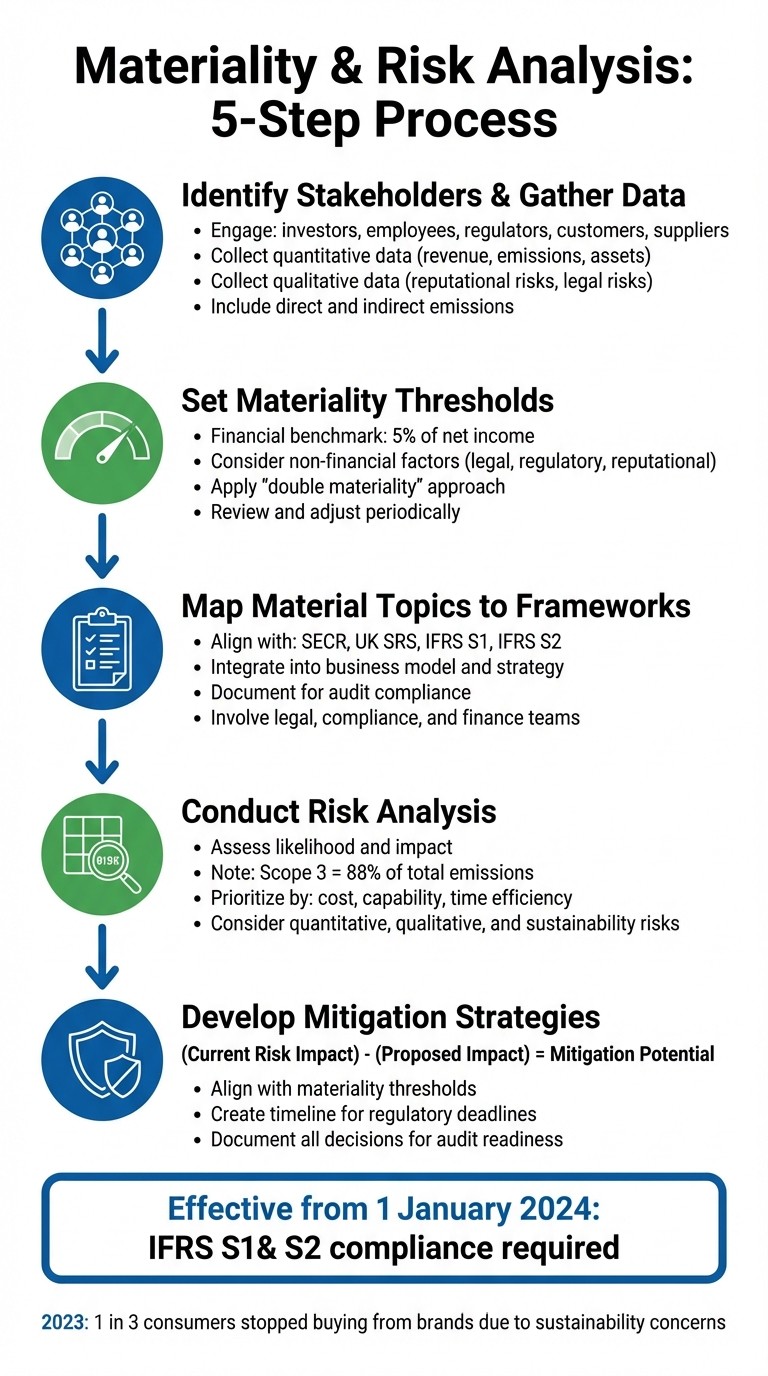
5-Step Materiality and Risk Analysis Process for Sustainability Reporting
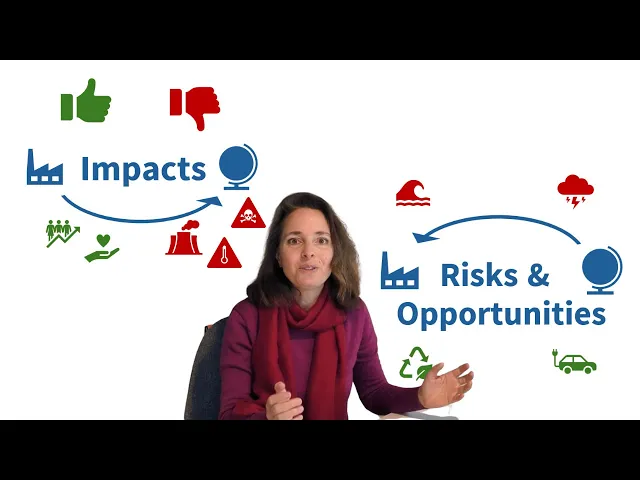
Double Materiality: Impacts Risks Opportunities (IROs) for (ESRS) ESG Reporting
Checklist for Conducting Materiality Analysis
Conducting a structured materiality analysis helps identify crucial issues while filtering out less relevant ones. This process involves engaging with stakeholders, defining clear thresholds, and aligning material topics with the right reporting frameworks. Here's a step-by-step guide to help you navigate it effectively.
Step 1: Identify Stakeholders and Gather Data
Start by defining the scope and objectives of your analysis. For UK-specific reporting, consider frameworks like SECR or UK SRS and think about the expectations of your stakeholders. Key groups to focus on include current and potential investors, lenders, and other creditors. Broader engagement should also include customers, employees, suppliers, and regulators to ensure a comprehensive understanding of material issues.
Survey these stakeholders to uncover what they see as critical. Their input ensures you capture the issues that genuinely influence decision-making. This step also helps reflect a variety of perspectives in your analysis.
Collect both quantitative data (e.g. revenue, assets, carbon metrics) and qualitative insights (e.g. reputational or legal risks). Make sure to include both direct and indirect emissions to fully assess environmental impacts. Benchmarking your findings against industry peers can provide valuable context and ensure your approach stays aligned with broader standards.
Once you've gathered the data, establish clear thresholds to distinguish material topics from less significant ones.
Step 2: Set Materiality Thresholds
Define thresholds using a mix of quantitative benchmarks and qualitative judgement. For instance, a common financial reporting benchmark is 5% of net income - if an issue exceeds this level, it's generally considered material. However, you should also weigh non-financial factors like legal, regulatory, and reputational risks.
Many modern approaches now use "double materiality", which considers both financial impacts and the concerns of external stakeholders. This ensures that sustainability-related topics, which might not directly affect the bottom line, are still given due attention.
It's essential to revisit and adjust these thresholds periodically. Changes in your business environment, industry trends, or regulatory requirements may shift what is considered material. For SECR compliance, you might also explore setting intensity reduction targets, such as emissions per unit of product or per £ of revenue, to track progress relative to business growth.
With your thresholds in place, the next step is to connect these material topics to the relevant reporting frameworks.
Step 3: Map Material Topics to Reporting Frameworks
After identifying material topics and defining thresholds, align them with the appropriate reporting standards. For UK businesses, this often includes SECR for energy and carbon disclosures, alongside broader frameworks like IFRS S1 for general sustainability reporting and IFRS S2 for climate-related risks and opportunities.
Incorporate these material topics into your overall business model and strategy. Document your mapping process to support audits and demonstrate compliance with sector standards. For detailed guidance on integrating these frameworks into your financial strategy, check out this resource on IFRS S1 vs. S2 stakeholder perspectives.
Make this a collaborative effort by involving teams from legal, compliance, and finance. Their input ensures the mapping process benefits from diverse perspectives and remains thorough.
Checklist for Risk Analysis
After identifying your materiality findings, the next logical step is to conduct a risk analysis. This process is essential for pinpointing and prioritising vulnerabilities, ensuring you're prepared to tackle potential reporting errors, compliance gaps, or reputational challenges. A systematic approach not only strengthens your internal controls but also ensures you're audit-ready. Start by identifying specific risk factors tied to your material topics.
Step 1: Identify Key Risks
To begin, examine your material topics through three perspectives: quantitative financial thresholds, qualitative financial aspects, and sustainability-related information. Each perspective offers unique insights:
Quantitative thresholds help highlight significant transactions or errors that require disclosure.
Qualitative aspects focus on elements that shape your company’s narrative and strategic priorities.
Sustainability information gathers diverse stakeholder viewpoints to identify non-financial risks that could influence decision-making.
As one FRC Project Participant and non‐executive director noted:
"Materiality is not just a mechanical thing that you add up for misstatements".
In sustainability reporting, it’s vital to pinpoint critical areas within your value chain. For instance, Scope 3 emissions often make up around 88% of total emissions for most sectors, posing both compliance and reputational risks. To integrate these emissions into your financial data, check out how activity-based data improves Scope 3 reporting in real time.
Once you've identified risks, assess and rank them to ensure your focus remains on the most critical areas.
Step 2: Assess and Prioritise Risks
Evaluate each risk by considering its likelihood and potential impact, keeping in mind how investors perceive your business as a whole. Avoid treating financial, qualitative, and sustainability risks as separate entities - investors look at all information holistically, and your prioritisation should reflect this.
To prioritise effectively, consider factors like cost, operational capability, and time efficiency:
Cost: What are the upfront and ongoing expenses involved?
Operational capability: Do you have the necessary expertise, or are you tied to existing supplier contracts?
Time efficiency: Can the risk be addressed within regulatory deadlines?
Factor | Prioritisation Consideration |
|---|---|
Quantitative Thresholds | Set limits for correcting errors and disclosing significant transactions. |
Qualitative Aspects | Focus on what matters most to your company’s narrative. |
Operational Feasibility | Assess your ability to make changes or adapt processes. |
Time Efficiency | Ensure risks can be mitigated within required timeframes. |
Differentiate between risks you can directly manage - like supplier choices - and those shaped by larger trends, such as changes in national energy policies. Keep in mind that in 2023, one in three consumers stopped buying from brands due to sustainability or ethical concerns, underlining the importance of accurate and transparent reporting.
Step 3: Develop Mitigation Strategies
Once risks are prioritised, it’s time to create actionable mitigation strategies. Use this simple formula to measure the potential impact of your strategies:
(Current Risk Impact) – (Proposed Impact) = Mitigation Potential.
This calculation helps you identify which strategies will deliver the most effective results, saving time and resources.
Involve various departments - such as legal, compliance, and finance - to bring diverse perspectives into your planning. When evaluating strategies, focus on these key factors: cost, availability of solutions, operational feasibility, utility of the change, time efficiency, and potential for improvement. Create a timeline that aligns with your reporting cycles and regulatory deadlines.
Make sure your mitigation strategies align with the materiality thresholds you established earlier. Document every decision, including the professional judgement applied, to ensure your process can withstand audits and regulatory scrutiny. Regular reviews of your strategies and thresholds are essential to adapt to changes in the business landscape or evolving stakeholder expectations. For more insights on aligning these strategies with broader reporting standards, explore how ISSB reporting fits into a financially integrated strategy.
Using Technology to Support Materiality and Risk Analysis
Handling materiality assessments and tracking risks manually can be a time-consuming and error-prone process. This is especially true for businesses managing intricate value chains, where Scope 3 emissions often make up about 88% of total emissions in many industries. By leveraging technology, businesses can streamline data collection, align transactions with compliance frameworks, and maintain audit-ready documentation - completely eliminating the need for cumbersome spreadsheets.
The real hurdle isn’t just the sheer volume of data but ensuring seamless integration. Traditional methods often oversimplify the complexity of materiality and risk analysis. Modern sustainability accounting tools, however, bridge the gap by connecting financial thresholds with sustainability metrics, offering the comprehensive insights that investors need for informed decision-making. A prime example of this is neoeco, a platform that automates both data collection and analysis.
How neoeco Automates Materiality Assessment
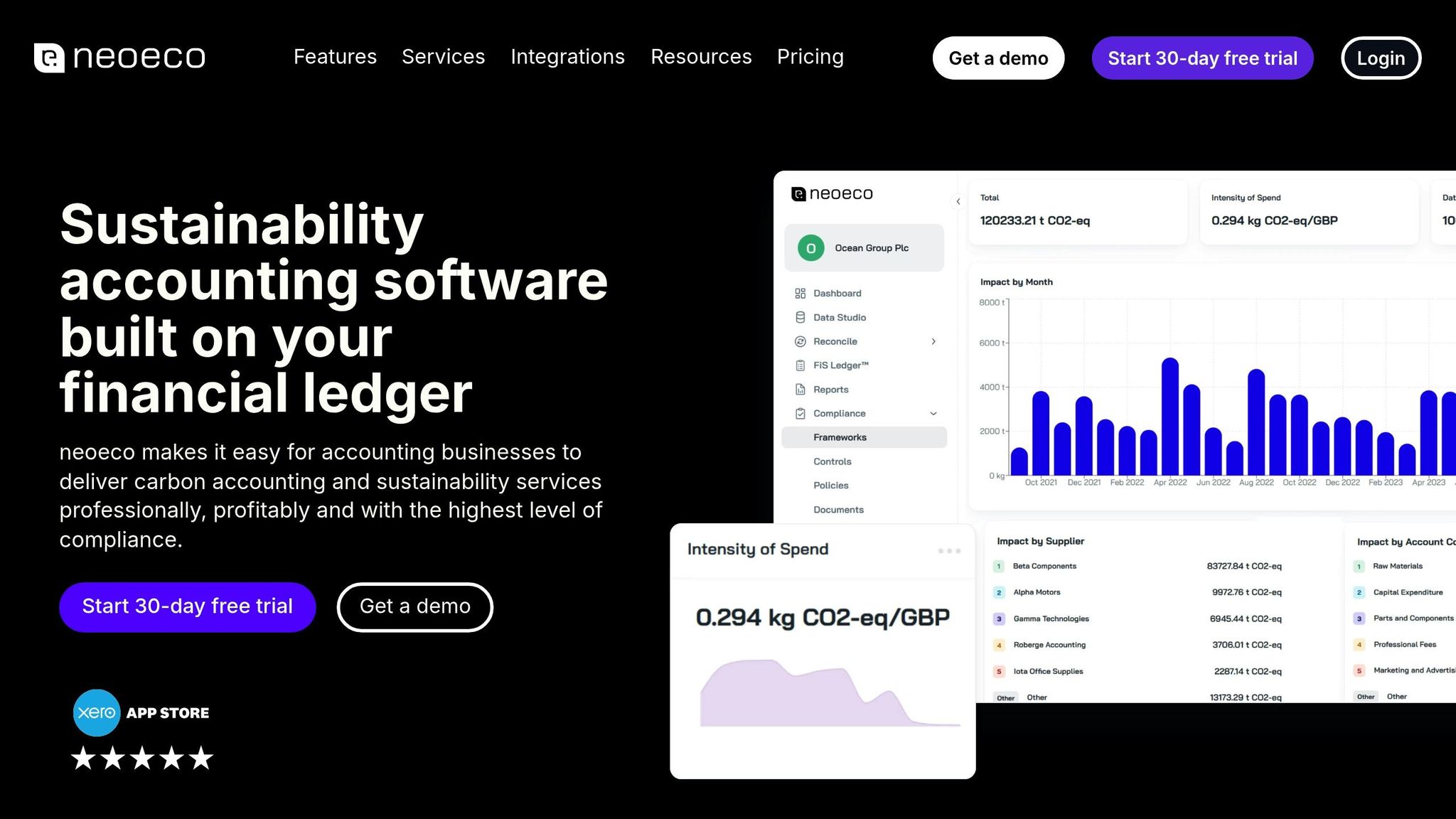
neoeco simplifies materiality assessments by directly integrating with popular financial systems like Xero, Sage, and QuickBooks. It automatically maps transactions to recognised emissions categories under frameworks such as GHGP, ISO 14064, and national standards like SECR and UK SRS, significantly reducing the manual errors that often arise with spreadsheets.
By pulling data directly from General Ledgers at the transaction level, neoeco identifies key drivers behind material discrepancies. This level of detail transforms materiality assessments from being just a compliance task into a tool for gaining strategic insights.
Moreover, neoeco ensures thorough documentation of the entire decision-making process. This includes capturing the scope, objectives, and professional judgments - essential elements for meeting regulatory scrutiny. This is particularly critical when preparing for CSRD audit timelines. With increasing legislative demands like SECR and the EU’s CSRD, having such documentation integrated into your workflow isn’t just helpful - it’s essential.
Real-Time Risk Monitoring with neoeco
Beyond documentation, neoeco provides real-time risk monitoring to help businesses stay on top of compliance. Static, once-a-year assessments are no longer enough in an era where regulations and stakeholder expectations evolve rapidly. neoeco’s live dashboards offer continuous tracking against both national and international standards, clearly highlighting what’s complete, what’s pending, and what needs review. This dynamic approach ensures businesses can quickly adapt to shifting risks and regulatory changes.
The platform also features a live checklist, allowing users to monitor performance across emissions trends and intensity. You can set specific benchmarks - like a 5% net income threshold for disclosures - and track progress against science-based targets with deadlines extending up to 2050. When auditors or reviewers need access, you can securely invite them, ensuring a transparent and traceable process.
This real-time visibility isn’t just about compliance; it’s also a reputational safeguard. In 2023, one in three consumers stopped supporting brands due to concerns about sustainability or ethics. neoeco equips businesses to identify and address potential vulnerabilities early, helping them mitigate both compliance and reputational risks before they escalate into larger issues.
Conclusion
Materiality and risk analysis play a crucial role in shaping how investors, lenders, and other stakeholders view your organisation. As one investor highlighted in FRC research, "What I think should or shouldn't be in the annual report and accounts? It's no secret sauce – it's the important information". As discussed, the key lies in blending quantitative data with qualitative insights. Moving away from a simple tick-box mentality requires adopting a materiality-focused approach that ties financial thresholds to qualitative judgements and sustainability-related considerations.
Accountants today face the challenge of navigating intricate regulatory frameworks like CSRD, SECR, and UK SRS while dealing with the practical hurdles of data collection. Scope 3 emissions, in particular, present a significant compliance obstacle. Traditional manual methods simply cannot handle the sheer scale and complexity of value chain data required for accurate reporting.
This is where neoeco steps in. The platform simplifies data collection, aligns financial transactions with recognised emissions standards, and ensures audit-ready documentation is always accessible. It also tracks progress towards science-based targets, offering real-time dashboards that clearly show tasks that are complete, pending, or needing attention. For organisations aiming to approach ISSB reporting with confidence, neoeco’s automation transforms the process of materiality and risk analysis. What was once a laborious task becomes a strategic opportunity to enhance compliance and decision-making.
FAQs
How does combining materiality and risk analysis improve decision-making for accountants?
Combining materiality assessments with risk analysis allows accountants to zero in on the issues that truly matter to both the business and its stakeholders. By pinpointing key sustainability impacts, dependencies, and risks across the value chain, companies can sift through less relevant data and focus on areas that affect financial and strategic outcomes the most.
This approach integrates materiality thresholds with the likelihood and impact of risks, leading to smarter resource allocation, stronger governance, and clearer reporting. It also ensures that disclosures comply with IFRS Sustainability Disclosure Standards, offering investors timely and accurate insights into risks that could influence future cash flows or damage reputation.
For accounting firms in the UK, tools like neoeco simplify this process. They automate data mapping, connect client transactions to recognised emissions categories, and produce audit-ready reports. This makes assessments faster, more precise, and finance-grade - helping firms make better strategic decisions.
How can technology make materiality and risk assessments easier for accountants?
Technology has transformed how materiality and risk assessments are conducted, making the process far more efficient. By automating data collection, categorisation, and analysis, it replaces the need for tedious manual spreadsheets and repetitive calculations. The result? Less time spent on grunt work and fewer chances for errors.
For accounting firms in the UK, tools like neoeco are a game-changer. This platform connects directly with a client’s financial ledger, mapping transactions to recognised emissions categories under frameworks like GHGP, ISO 14064, SECR, and SRS. Gone are the days of manual data conversions - neoeco provides finance-grade carbon data and audit-ready reports effortlessly. Accountants can now integrate sustainability into financial workflows without breaking stride, allowing them to focus on their expertise and decision-making rather than getting bogged down by administrative tasks.
Why is it crucial to align material topics with frameworks like IFRS S1 and S2?
Aligning material topics with frameworks such as IFRS S1 and S2 is crucial for ensuring sustainability disclosures align with the International Sustainability Standards Board (ISSB)'s definition of materiality. This process ensures that organisations provide information that is not only useful for decision-making but also complies with reporting standards, fostering trust among investors and stakeholders.
Adhering to these frameworks helps organisations include the necessary qualitative characteristics - like accuracy, relevance, and comparability - in their disclosures. This, in turn, strengthens decision-making processes and boosts confidence in sustainability reporting, which is becoming increasingly important in today's regulatory environment and for meeting investor expectations.