IoT Energy Monitoring for SECR Compliance


SECR compliance is now simpler with IoT energy monitoring. Businesses in the UK subject to SECR regulations must report energy use, emissions, and efficiency measures. IoT devices streamline this process by collecting real-time energy data, reducing errors, and ensuring audit readiness.
Key points:
- SECR applies to companies meeting at least two of these: £36m turnover, £18m balance sheet, or 250+ employees.
- IoT sensors track energy use (electricity, gas, transport fuel) in real-time, replacing manual processes.
- Automated systems integrate data into financial platforms, ensuring accurate, compliant reports.
- Failing to comply can lead to fines and rejected reports.
IoT monitoring not only simplifies compliance but also helps businesses track energy use more effectively, saving time and reducing costs.
What Accounting Firms Need to Know About SECR
SECR Basics
Streamlined Energy and Carbon Reporting (SECR) is a mandatory framework in the UK requiring eligible companies to disclose their annual energy use, greenhouse gas emissions, and energy efficiency measures in their Directors' Report. This framework ties energy reporting directly to a company’s annual accounts.
SECR requires four main disclosures: UK energy consumption (including electricity, gas, and transport fuel), Scope 1 and Scope 2 emissions, an intensity ratio (such as emissions per £1 million of turnover), and a narrative on energy efficiency actions during the reporting period. Quoted companies, however, must report global energy use and emissions instead of limiting it to UK figures. Additionally, all calculation methodologies must be clearly explained in the final report.
Understanding these fundamentals is essential for identifying which organisations need to comply.
Who Must Comply with SECR?
UK companies or LLPs must comply with SECR if they meet at least two of the following criteria: an annual turnover of £36 million or more, a balance sheet total of £18 million or more, or 250 or more employees.
Companies using 40,000 kWh (40 MWh) or less during the reporting period are exempt from full disclosure but must include a statement in their Directors' Report confirming their low energy use. Parent companies can submit a group-level report, allowing subsidiaries covered under this report to skip individual reporting.
Common SECR Reporting Challenges
One of the biggest hurdles in SECR compliance is fragmented data collection. Energy bills might arrive quarterly, transport mileage records could be stored in separate systems, and facility managers often keep spreadsheets for individual sites. Pulling all this information together manually near the reporting deadline not only increases workload but also raises the risk of errors.
Without proper systems in place, creating the verifiable audit trail regulators require can be nearly impossible. This is where financially integrated sustainability management tools - like neoeco - can help. These solutions connect energy data directly to financial systems, ensuring smoother compliance and reducing the risk of last-minute mistakes.
Another common issue is the incomplete disclosure of emissions calculation methodologies. Companies must go beyond simply reporting numbers - they need to detail how those figures were calculated, including the conversion factors used and how they addressed any data gaps.
For better accuracy and efficiency, organisations should consider using IoT solutions to streamline data collection and minimise these challenges.
IoT Based Smart Energy Monitoring System (EMS) by Eleics | Energy Management System
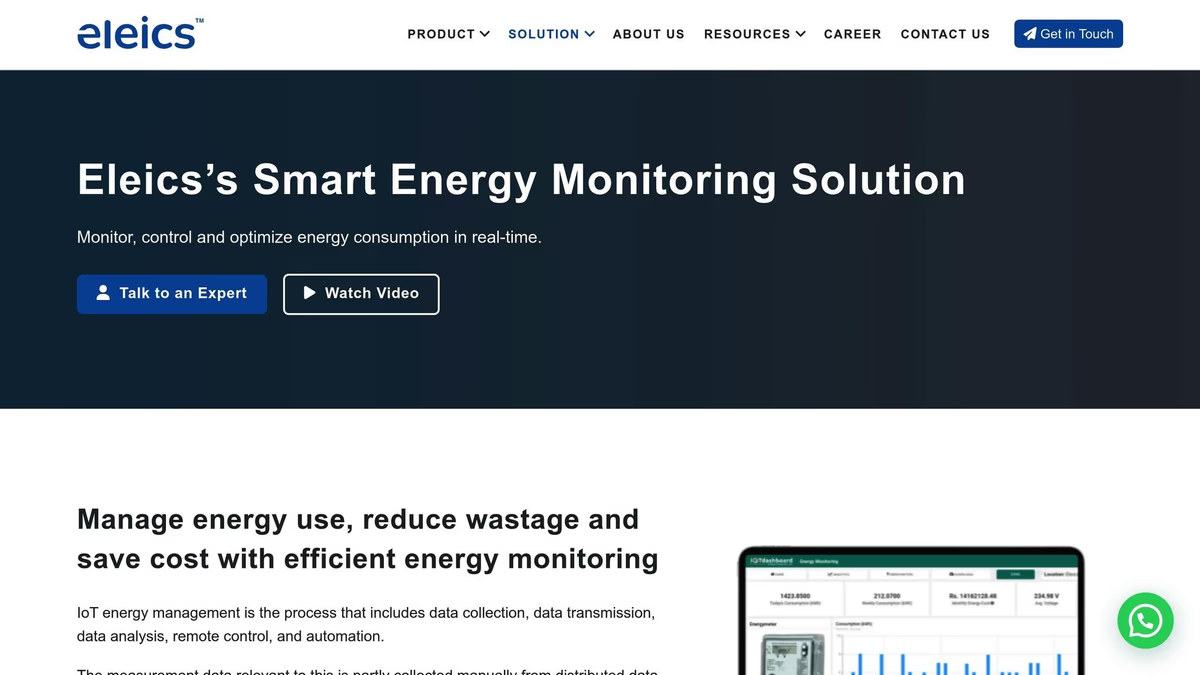
How IoT Devices Support SECR Energy Monitoring
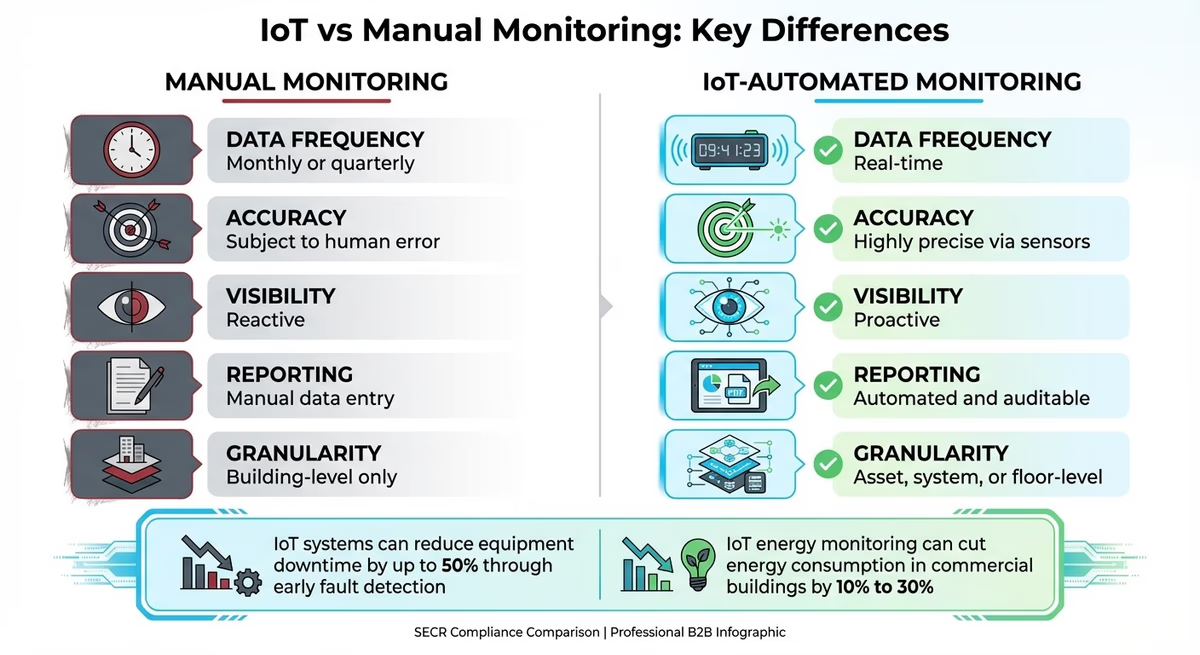
IoT vs Manual Energy Monitoring for SECR Compliance
IoT's Role in Energy Data Collection
IoT devices eliminate the need to wait for quarterly energy bills or rely on manual metre readings. Using connected sensors like smart metres, energy metres, and smart plugs, these devices collect detailed, real-time energy data. This information is then transmitted securely through protocols such as Wi-Fi or LoRaWAN to cloud platforms.
For SECR compliance, this translates to detailed, traceable, and auditable data streams that seamlessly integrate into reporting tools to calculate Scope 1 and 2 emissions (while LCA supports Scope 3 reporting). Automation takes this a step further, with algorithms that can detect anomalies, compare current consumption against historical data, and send alerts if usage exceeds predefined limits. This approach fits neatly into financially-integrated sustainability management, where operational energy data flows directly into compliance reporting systems.
Key IoT Technologies for SECR Reporting
IoT devices designed for real-time data collection are essential for accurate SECR reporting. Some of the most effective options include:
- Smart metres: Capture detailed energy consumption data from buildings and industrial processes.
- Wireless energy metres: Monitor specific equipment, such as HVAC systems or production machinery.
- LoRaWAN sensors: Enable low-power, long-distance data transmission across large industrial sites.
Advanced submetering systems can even collect data as frequently as every 10 seconds. For example, RAM Pharmaceuticals in Jordan used industrial IoT submetering to reduce waste and identify energy patterns across critical equipment.
When choosing IoT infrastructure, LoRaWAN works well for large industrial sites due to its long-range capabilities, while Wi-Fi is better suited for stable office environments. It’s also important to ensure that your IoT platform offers encrypted data storage and verifiable logs for SECR compliance audits.
IoT vs Manual Monitoring: Key Differences
Switching from manual to IoT-enabled monitoring transforms how organisations manage SECR compliance. Traditional methods depend on monthly or quarterly energy bills, which often lead to a reactive approach where inefficiencies are only identified long after they occur. IoT systems, on the other hand, provide real-time insights, allowing for proactive management. Research shows that real-time monitoring can reduce equipment downtime by up to 50% through early fault detection.
| Feature | Manual Monitoring | IoT-Automated Monitoring |
|---|---|---|
| Data Frequency | Monthly or quarterly | Real-time |
| Accuracy | Subject to human error | Highly precise via sensors |
| Visibility | Reactive | Proactive |
| Reporting | Manual data entry | Automated and auditable |
| Granularity | Building-level only | Asset, system, or floor-level |
IoT energy monitoring systems can cut energy consumption in commercial buildings by 10% to 30%. This makes them not just a tool for compliance but also a smart investment in reducing operational costs. Additionally, these systems integrate seamlessly with platforms like neoeco, simplifying SECR reporting with audit-ready data streams.
Connecting IoT Data with Accounting Systems for SECR
Integrating IoT data with accounting systems takes real-time energy monitoring to the next level, ensuring a smooth process for SECR compliance.
Using neoeco for Audit-Ready SECR Reports
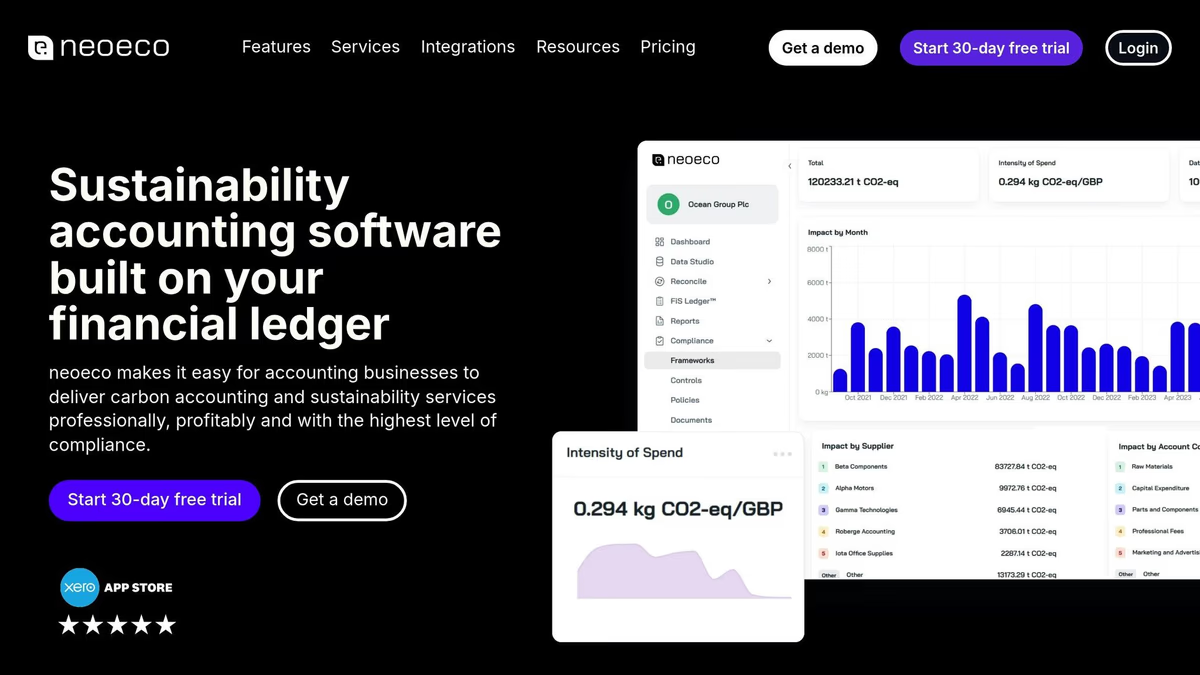
The true potential of IoT energy monitoring is unlocked when the data seamlessly integrates with accounting systems. Tools like neoeco connect directly with financial platforms such as Xero, Sage, and QuickBooks, automatically mapping IoT energy data to SECR emissions categories in line with GHGP and ISO 14064 standards.
By automating the identification of energy transactions and applying the correct conversion methodologies, neoeco eliminates the need for spreadsheets and reduces the risk of manual errors. With the UK government’s digital SECR taxonomy allowing energy and carbon data to be reported in the same XBRL format as financial accounts, this integration simplifies filing with Companies House. This not only streamlines compliance but also ensures businesses remain audit-ready at all times.
For firms managing multiple clients, neoeco offers a centralised dashboard that simplifies SECR reporting. Features include one-click report generation, live checklists to track progress, and a central hub for storing supporting documentation. The Premium plan, priced at £99 per month per company, includes pre-built SECR audit packs, ensuring businesses are always prepared for audits without the last-minute rush during reporting periods.
Benefits of IoT and neoeco Integration
Integrating IoT energy monitoring with neoeco significantly improves both efficiency and accuracy, addressing the common pain points of manual data handling and fragmented processes. Traditional SECR reporting often involves laborious manual data collection, time-consuming spreadsheet work, and repeated follow-ups with clients. In contrast, this integrated approach cuts administrative time by around 50% and enhances data quality through automated validation.
| Aspect | Traditional Reporting | IoT + neoeco Integration |
|---|---|---|
| Data Collection | Manual spreadsheets and emails | Automated from integrated systems |
| Processing Speed | Weeks or months | Real-time updates; instant reports |
| Data Quality | Prone to human error | Automated validation (45%+ improvement) |
| Audit Readiness | Labour-intensive manual prep | Continuous audit-ready data and evidence |
| Administrative Workload | High | 50% reduction in admin time |
This integration also creates new revenue streams for accounting firms. Firms can offer branded client reports, track emissions intensity trends through real-time dashboards, and provide advisory services for Scope 3 emissions management - all within a single platform. With plans starting at £34 per month per company, the Standard tier is ideal for firms working with SMEs. Meanwhile, the Enterprise tier caters to larger practices, offering unlimited users and customisable client portals.
Best Practices for IoT Implementation in SECR Reporting
Step-by-Step IoT Deployment for SECR
Start by clearly defining your SECR scope. Identify the entities, sites, and facilities that will be included for Scope 1 and Scope 2 emissions reporting (Scope 3 remains optional). This step is essential to avoid confusion when consolidating data from multiple locations.
Once the scope is clear, install smart meters and IoT sensors across all relevant sites. These devices provide accurate, real-time data on energy consumption from buildings, industrial processes, and transport fleets. Automating meter readings not only eliminates human error but also ensures continuous monitoring.
After setting up the devices, centralise data collection using a cloud platform. This helps aggregate and standardise data from all sites. Finally, link IoT data to software that automates emission calculations. By applying government-approved emission factors from DEFRA, this software converts energy usage into CO2e. To avoid inconsistencies later, standardise data formats, measurement units, and reporting procedures across departments from the outset.
With the IoT deployment complete, the focus shifts to securing data and preparing for audits.
Ensuring Data Security and Audit Readiness
Protecting data is critical. Use encryption and multi-factor authentication to secure IoT data transmissions and prevent unauthorised access to sensitive energy consumption information. The stakes are high, with SECR regulations impacting around 11,900 UK companies and accounting for approximately 12% of the country's total emissions - equivalent to 42 million tonnes of CO2e.
"Digital transformation in the energy sector demands sophisticated strategies for navigating complex compliance landscapes." - Omnium
Take advantage of the UK's Smart DCC infrastructure and Dual Band Communications Hubs. These tools ensure high-frequency data processing and reliable signals, even in challenging building environments. Keep detailed audit trails for every data point, including timestamps, data sources, and responsible parties. Store SECR reports and supporting documents for at least two compliance cycles to streamline future audits. While third-party verification isn’t legally required, it can boost stakeholder confidence and make your reported figures more defensible.
Once your data security and audit protocols are solid, you can focus on scaling IoT solutions across multiple locations.
Scaling IoT Solutions for Multi-Site Operations
After establishing a strong IoT foundation and ensuring data security, the next step is scaling across multiple sites. Expanding IoT systems group-wide requires careful planning. Parent companies must include all qualifying subsidiaries in their SECR reports. Use your centralised cloud platform to maintain a unified view of data across sites.
To ensure consistency, use standard intensity metrics - such as emissions per square metre or per unit of turnover - across all locations for reliable benchmarking. Involve finance, operations, and sustainability teams early on to assign roles for data ownership and verification. For multi-site leased environments, remember that the party responsible for energy consumption (typically the one paying the bill or managing the meter) is also responsible for SECR reporting. If your company manages complex client portfolios, consider how ISSB reporting could integrate into a financially-aligned strategy for long-term compliance confidence.
Conclusion
IoT energy monitoring is transforming SECR compliance by replacing outdated, manual methods with automated solutions that deliver precise, audit-ready data. With smart metres and sensors collecting real-time energy usage across multiple sites, the risk of manual data consolidation errors is eliminated. For accounting firms, this shift reduces the time spent on data gathering from weeks to mere minutes, all while maintaining the high standards expected by clients and auditors.
neoeco simplifies this process by integrating IoT data into compliance-ready reports. Their Standard plan, priced at £34/month, offers one-click SECR reports with AI-powered mapping. For £99/month, the Premium plan provides comprehensive audit packs covering ISO 14064 transport emissions and SECR, complete with evidence hubs and live checklists. This approach not only streamlines reporting but also helps organisations showcase measurable environmental progress.
The potential impact of these advancements is significant. Improving energy efficiency in UK buildings could reduce emissions by 40% by 2030. However, achieving this goal depends on accurate baseline data - something manual processes simply cannot deliver at scale. By adopting IoT monitoring and integrating it with financial systems, accounting firms can elevate their role from compliance facilitators to strategic advisers.
Using dual reporting with detailed intensity ratios can also set your SECR disclosures apart, clearly demonstrating carbon savings year-on-year. These insights are crucial as stakeholders increasingly focus on performance and sustainability metrics.
As regulations grow more complex, the need for robust solutions becomes even more pressing. Combining IoT technology with financially-integrated sustainability management not only addresses current SECR requirements but also lays the groundwork for future UK SRS and ISSB standards. Embracing these tools today ensures you're prepared for the challenges of tomorrow.
FAQs
How can IoT devices help with accurate SECR compliance reporting?
IoT devices play a key role in improving the accuracy of SECR compliance reporting by automating the collection of energy data directly from meters and sensors. This automation removes the need for manual data entry, minimises the risk of human error, and ensures precise, real-time tracking of energy usage.
With continuous monitoring and detailed insights, IoT devices simplify the process for UK accounting firms to meet SECR requirements. This efficient approach not only ensures compliance but also aids in making more informed decisions about energy management and sustainability efforts.
What are the consequences of failing to comply with SECR regulations?
Failing to adhere to SECR (Streamlined Energy and Carbon Reporting) regulations can bring more than just regulatory scrutiny - it can harm a company's reputation and invite enforcement actions. Although specific fines or penalties aren't clearly detailed, non-compliance can erode trust by falling short of the transparency and accountability that SECR aims to promote.
Accurate reporting of energy consumption isn't just about ticking boxes; it's an opportunity for businesses to show their dedication to sustainability and responsible practices. Tools like IoT energy monitoring systems or platforms such as neoeco can make the compliance process easier and help minimise the chance of errors along the way.
What are the best IoT technologies for monitoring energy use and ensuring SECR compliance?
IoT technologies designed for real-time energy monitoring play a key role in helping organisations meet SECR compliance requirements. Devices like smart meters and connected sensors simplify the process by automating energy consumption data collection. This means you get accurate, up-to-date insights without relying on manual efforts.
These tools work effortlessly with energy management systems, pulling together data from multiple sources to provide a clear and detailed picture of energy usage and emissions. The result? More accurate reporting and smoother compliance with SECR standards. Plus, they empower organisations to make smarter decisions about improving energy efficiency and reducing their environmental impact.